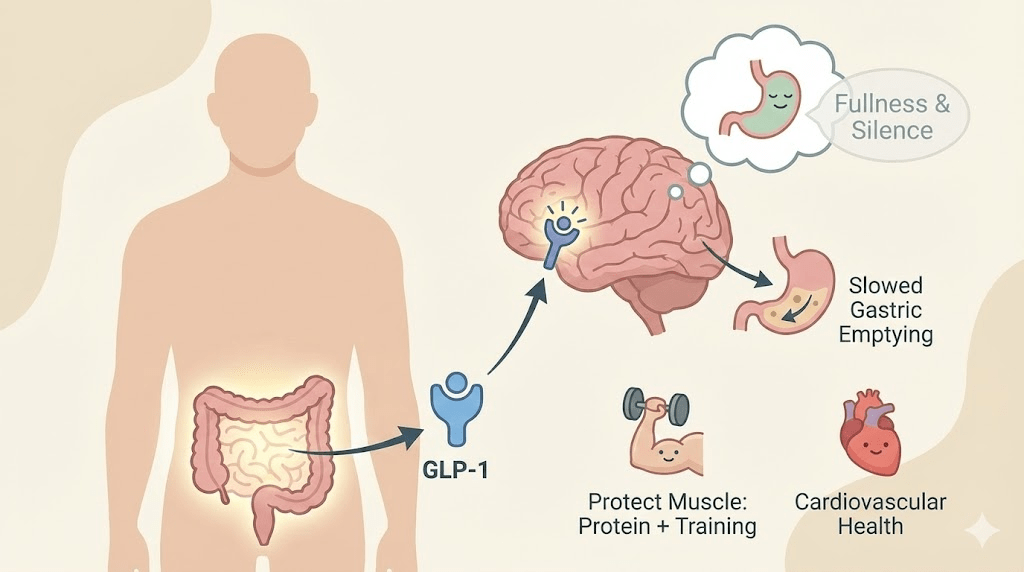

VettaWell logoVettaWell

Calm wellness updates via email and SMS.

Legal

  • Privacy Policy
  • Terms of Service
  • Email WhiteList

Navigation

  • Feed
  • About
  • Authors
  • Editorial Standards
  • EventsNEW
  • Subscribe
  • Contact
  • Contribute
  • Careers

© 2025 VettaWell. All rights reserved.

VettaWell logoVettaWell
FeedAboutAuthorsEditorial StandardsEventsNEWSubscribe
Back to Feed
Weight Loss2026-01-27 23:51Subscriber contribution
Portrait placeholder for Nadia Solberg with a soft, natural background
Editor:Nadia Solberg• Registered Nutrition Educator & Weight-Loss Writer

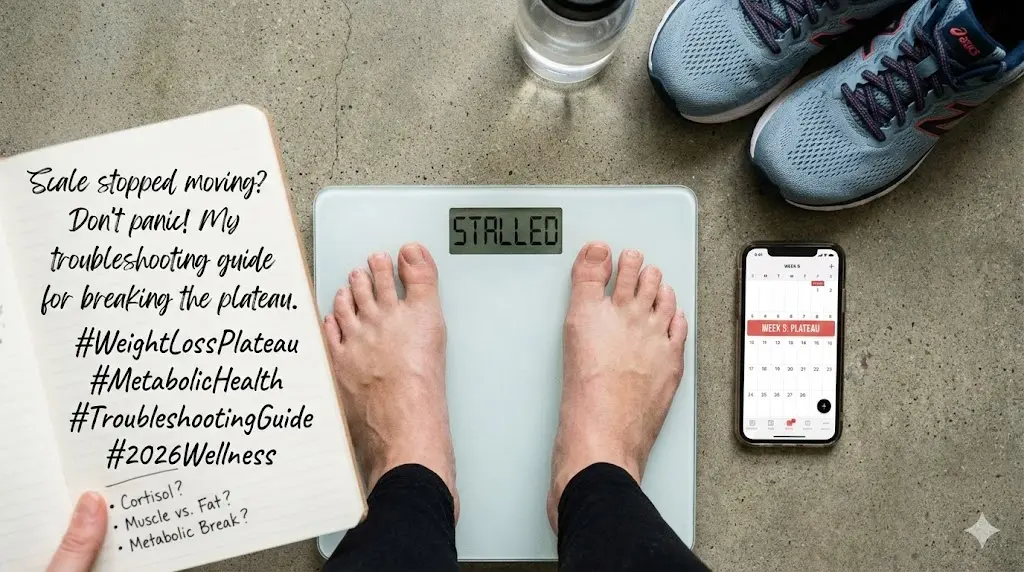
Weight Loss Plateau: A Troubleshooting Guide When the Scale Stops Moving

A person standing on a sunlit mountain path looking at a compass, representing the strategic navigation required to break through a weight loss plateau.

In the wellness journey of 2026, we have come to understand that the path to vitality is rarely a straight line. We start with enthusiasm, watching the numbers on the scale drop week after week, until suddenly—nothing. For many, the weight loss plateau is the point where frustration sets in and old habits return. But in the New Age of metabolic health, we view the plateau not as a wall, but as a biological 'waiting room.' It is a moment where your body is recalibrating its energy needs, adjusting its hormonal output, and ensuring its own survival.

A plateau is officially defined as a period of four weeks or more where body measurements and weight remain stagnant despite continued adherence to a health protocol. If you find yourself in this position, it is not necessarily because you are 'cheating' or lacking willpower. It is often because your body has successfully adapted to the new 'stress' of your diet and exercise routine. To break through, we must stop pushing harder against the door and start looking for the key. This guide is designed to help you troubleshoot the complex web of metabolism, hormones, and lifestyle factors that keep the scale stuck.

Understanding Metabolic Adaptation: The Body's Survival Mechanism

The most common reason for a plateau is a phenomenon known as Adaptive Thermogenesis, or metabolic adaptation. Your body is a survival machine, not a weight-loss machine. When you reduce your caloric intake, your body eventually realizes that energy is scarce. In response, it begins to 'turn down the lights' to conserve fuel. It becomes more efficient at every task, meaning you burn fewer calories doing the exact same workout you did a month ago.

This adaptation is driven by a drop in thyroid hormone (T3) and a decrease in the 'fullness' hormone, leptin. As you lose weight, you also require less energy to move your smaller frame. If you started your journey eating 2,000 calories and burning 2,500, you had a 500-calorie deficit. But after losing 15 pounds, your new 'maintenance' might actually be 2,000 calories. You aren't stalling; you are simply no longer in a deficit. This is the 'Metabolic Catch-22' of the traditional weight loss model.

Step 1: Check Your 'Secret' Mass (The Muscle vs. Fat Debate)

Before you assume your metabolism is broken, you must ask: Is the scale actually the right tool for this moment? As we've discussed in 2026 metabolic health circles, body composition is the metric that truly matters. If you have introduced strength training into your routine, you may be undergoing 'body recomposition.' You are losing fat while simultaneously building dense, metabolically active muscle tissue.

Muscle is significantly denser than fat. One pound of muscle takes up about 15-20% less space than one pound of fat. If the scale hasn't moved but your clothes are fitting better, your waist measurement is dropping, or you feel stronger in your workouts, you are not in a plateau. You are experiencing the ultimate metabolic win. In this scenario, the 'staged' weight on the scale is irrelevant; your biological age is decreasing even as your mass remains steady.

Step 2: The Cortisol Factor – Is Stress Stalling Your Fat Loss?

In the New Age of endocrinology, we recognize cortisol as the 'anti-metabolic' hormone. When you are in a persistent calorie deficit, over-exercising, and under-sleeping, your body enters a high-stress state. Cortisol signals the body to hold onto water and protect its energy stores, particularly in the visceral (belly) fat area. This is often why people see a 'whoosh' effect after a high-calorie 'refeed' day or a week of rest—the drop in stress allows the body to finally release the water it was holding as a protective measure.

If you are 'grinding' harder than ever but the scale is stuck, your plateau might actually be an exhaustion signal. Your body feels unsafe letting go of energy because it perceives a state of emergency. To troubleshoot this, you may need to reduce the intensity of your workouts, prioritize 8 hours of sleep, and incorporate somatic practices like breathwork to signal to your nervous system that the 'lion' is gone and it is safe to burn fat again.

Step 3: Insulin Resistance and 'Hidden' Inflammation

If your calories are low and your stress is managed, but you still can't break the stall, you may be dealing with underlying insulin resistance. Even in a deficit, if your insulin levels remain chronically high due to the frequency of your meals or the high-glycemic nature of your 'diet' foods, your body cannot access its own fat stores for fuel. High insulin acts like a one-way valve: it lets energy into cells but prevents it from coming out.

Additionally, 'hidden' inflammation from ultra-processed ingredients, artificial sweeteners, or food sensitivities can cause systemic bloating and cellular resistance. Artificial sweeteners, once thought to be a free pass in 20th-century dieting, are now known in 2026 to disrupt the gut microbiome and potentially trigger an insulin response in some individuals. If the scale is stuck, try a 'cleanse' of artificial additives for 14 days and observe if your inflammatory markers—and your weight—begin to drop.

Step 4: The 'Bite' Audit – Are Calories Creeping In?

As we become comfortable with a diet, we often stop being as precise. This is known as 'portion creep.' A tablespoon of peanut butter becomes a 'heaping' tablespoon; a handful of nuts becomes three handfuls. In 2026, we also account for the 'BLTs' (Bites, Licks, and Tastes) that happen while cooking or cleaning. These small additions can easily add up to 200-300 calories—exactly enough to close the gap of your deficit.

A three-day 'honesty audit' using a food tracker can often reveal these leaks. However, the goal is not to return to obsessive tracking forever, but to recalibrate your internal 'portion sensor.' Often, we find that while our 'main meals' are perfect, our snacking or liquid calories (like that extra splash of oat milk in four cups of coffee) have widened the energy gap.

Strategic Interventions: How to Restart the Engine

If you have identified that you are indeed in a metabolic plateau, it is time to change the stimulus. The body adapts to sameness; it thrives on change. Here are the 2026-approved 'Circuit Breakers' to restart your metabolic engine:

  1. The 'Metabolic Break' (Maintenance Week): Purposefully increase your calories to your current maintenance level for 7-10 days. This signals to your brain (and your thyroid) that there is no famine, allowing leptin to rise and thyroid hormones to stabilize.
  2. Change Your Macro Ratio: If you’ve been low-carb, try a 'Carb Refeed' to spike leptin. If you’ve been high-carb, try 48 hours of high-fat/moderate-protein to improve fat-burning machinery.
  3. Adjust Your Training Volume: If you only do cardio, add two days of heavy lifting. If you lift six days a week, drop to four and add long, low-intensity walks. Shift the stressor to force a new adaptation.
  4. Prioritize Protein Density: Increase your protein to 1.6g per kg of body weight. The higher thermic effect of protein and its impact on satiety often provide the metabolic 'nudge' needed to break a stall.
  5. Improve Circadian Timing: Stop eating at least 3 hours before bed. This lowers nighttime insulin and allows for maximum growth hormone secretion, which is a powerful fat-burning agent.

The Psychological Plateau: Redefining Success

In the New Age perspective, we also recognize the 'Mental Plateau.' This is where your mind decides it's 'too hard' and begins to sabotage your progress. Often, we are so focused on the final destination that we forget to celebrate the incredible health markers we've already achieved. Are you sleeping better? Is your skin clearer? Is your brain fog gone? If yes, you are winning, regardless of the scale.

A plateau is often your body's way of saying, 'I need to consolidate these gains.' Think of it like a base camp on Everest. You don't climb to the summit in one go; you spend time at various altitudes to let your red blood cells adjust. Treat your plateau as a 'consolidation phase' for your new weight identity. If you can maintain your weight during a plateau without feeling deprived, you have mastered the most difficult part of the journey: long-term sustainability.

Conclusion: The Scale is a Liar, Your Biology is a Mirror

Breaking a weight loss plateau in 2026 is about finesse, not force. It is about understanding the delicate dance of hormones, stress, and cellular energy. If the scale has stopped moving, don't panic. Use this troubleshooting guide to listen to what your body is trying to tell you. It might be asking for more rest, more protein, or simply a break from the pressure.

Remember, your metabolic health is a reflection of your lifestyle, not just your last meal. Focus on the inputs—sleep, strength, and signal—and the outputs will eventually align. You are a biological ecosystem, and sometimes even the most beautiful gardens need a season of rest before the next bloom. Trust the process, respect the pause, and keep moving toward your most vibrant self.
More "Weight Loss" Articles

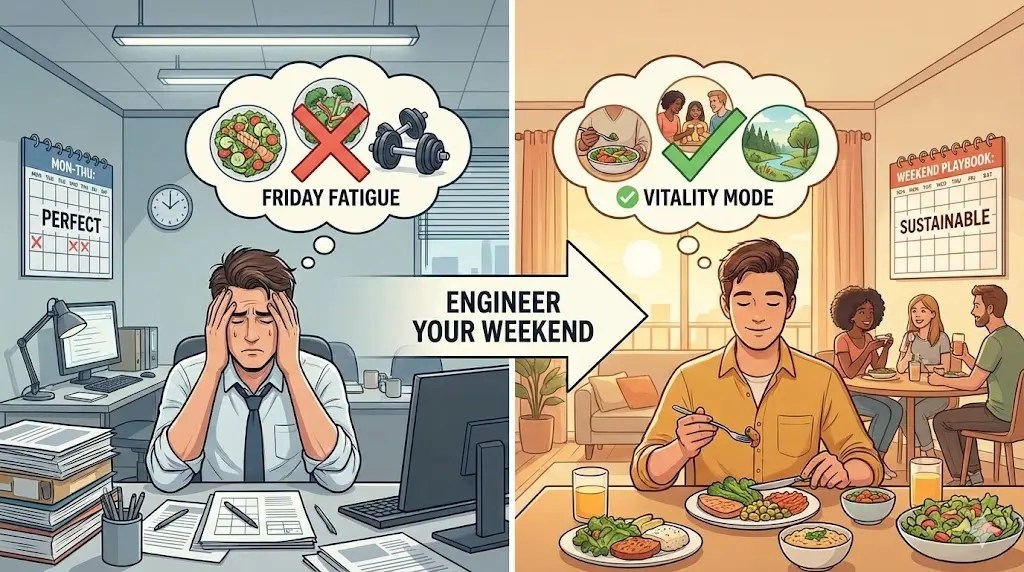
A person in a calm home environment transitioning from a busy work desk to a relaxed weekend setting, illustrating healthy boundary setting.

Weekend Rebound: Why Your ‘Perfect Week’ Breaks on Friday Night (And How to Fix It)

Struggling to maintain your progress once Friday evening hits? Learn the behavioral psychology behind weekend cycles and how to engineer a lifestyle that survives the weekend without restriction.

Go deeper2026-02-12 04:28
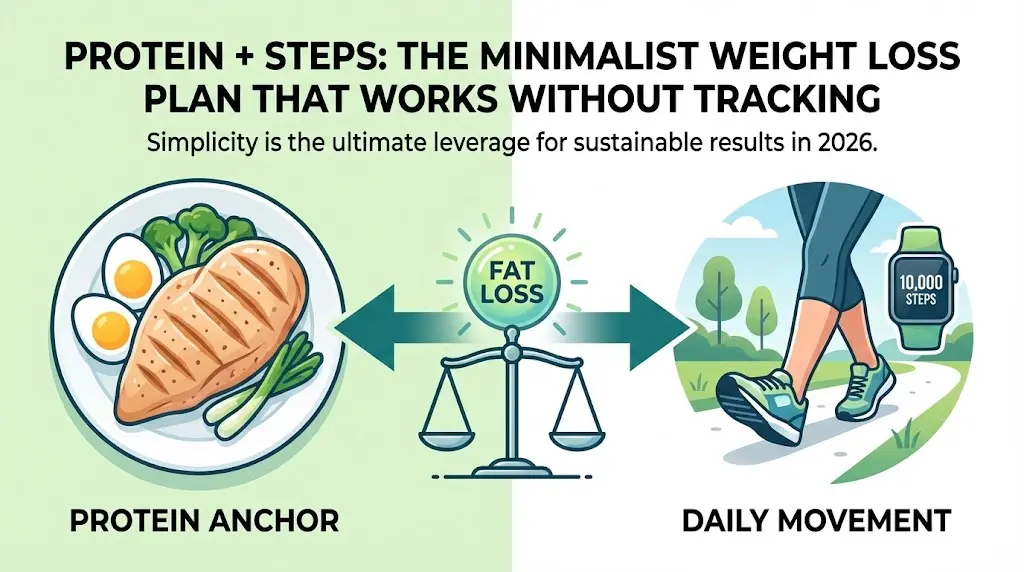
A person walking on a sunlit path in athletic wear, with a clean plate showing grilled chicken and greens in the foreground, representing the synergy of protein and movement.

Protein + Steps: The Minimalist Weight Loss Plan That Works Without Tracking

In a world of bio-tracking and data-fatigue, simplicity is the ultimate leverage. Discover why focusing on just two biological levers—protein and daily movement—is the most sustainable path to fat loss in 2026.

Go deeper2026-02-09 22:01
A stunning digital visualization of a vibrant gut microbiome, looking like a glowing underwater forest of bacteria, with golden sparks representing Short-Chain Fatty Acids and metabolic energy.

Microbiome and Metabolic Health: What’s Real, What’s Hype, and What Helps

Demystifying the gut-metabolism axis. Explore the science behind how your internal microbial ecosystem dictates your weight, insulin sensitivity, and energy levels in 2026.

Go deeper2026-02-08 11:43
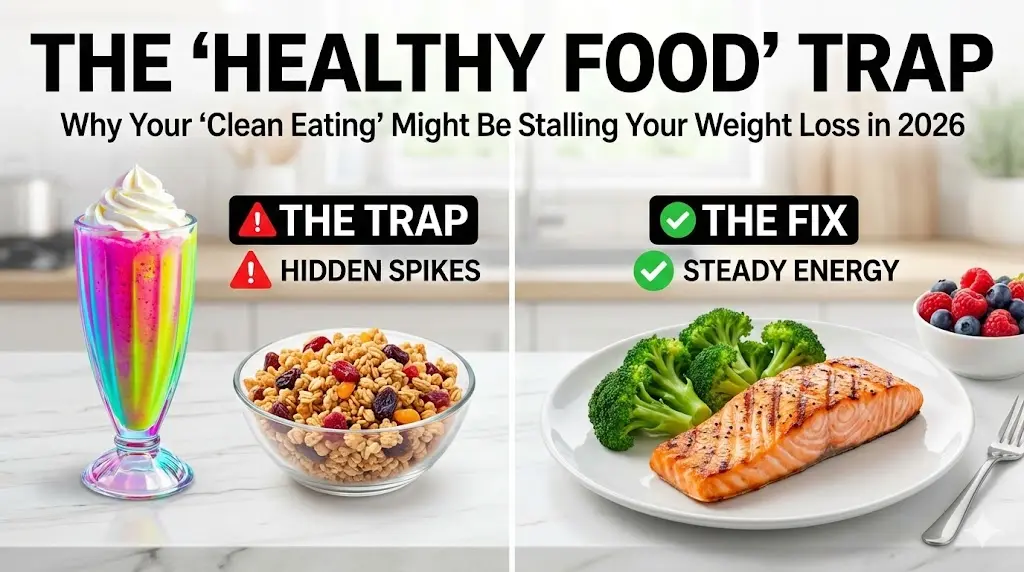
A vibrant split-screen image: on one side, a neon-colored 'healthy' smoothie and a bowl of granola with an 'alert' signal; on the other, a solid plate of grilled salmon and steamed greens with a 'success' signal.

The ‘Healthy Food’ Trap: Smoothies, Granola, Salads — Why They Can Stall Weight Loss

Virtue doesn't always equal vitality. Explore the metabolic science behind why your favorite 'health' foods might be triggering insulin spikes and halting fat loss.

Go deeper2026-02-04 17:17
A macro shot of a sliced Moro blood orange next to a sleek supplement bottle, with digital metabolic data overlays.

Citrus Burn Review: Is the “Metabolic Switch” Real or Just More Marketing Zest?

A deep-dive investigative review into Citrus Burn. We analyze the 2026 clinical data on Moro Oranges, Brown Adipose Tissue (BAT), and whether this 'Metabolic Switch' is a biological reality or high-priced hype.

Go deeper2026-02-03 03:18
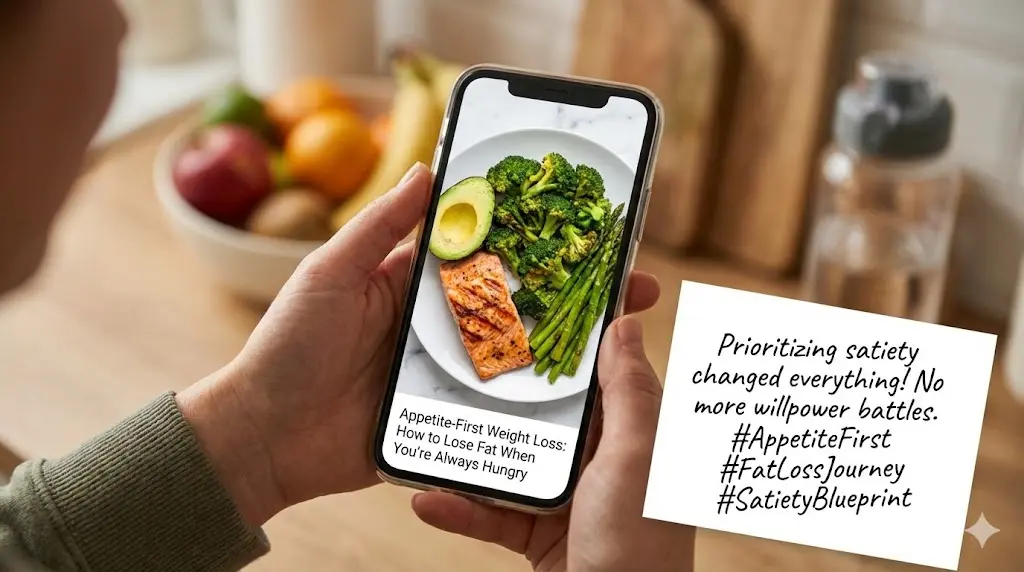
A vibrant, balanced plate featuring salmon, avocado, and a mountain of green vegetables, representing the core principles of the Satiety-First Fat Loss framework.

Appetite-First Weight Loss: How to Lose Fat When You’re Always Hungry

Willpower is a finite resource, but biology is permanent. Discover the framework for losing fat by prioritizing satiety and turning off the hunger signals that sabotage your progress.

Go deeper2026-02-02 14:05
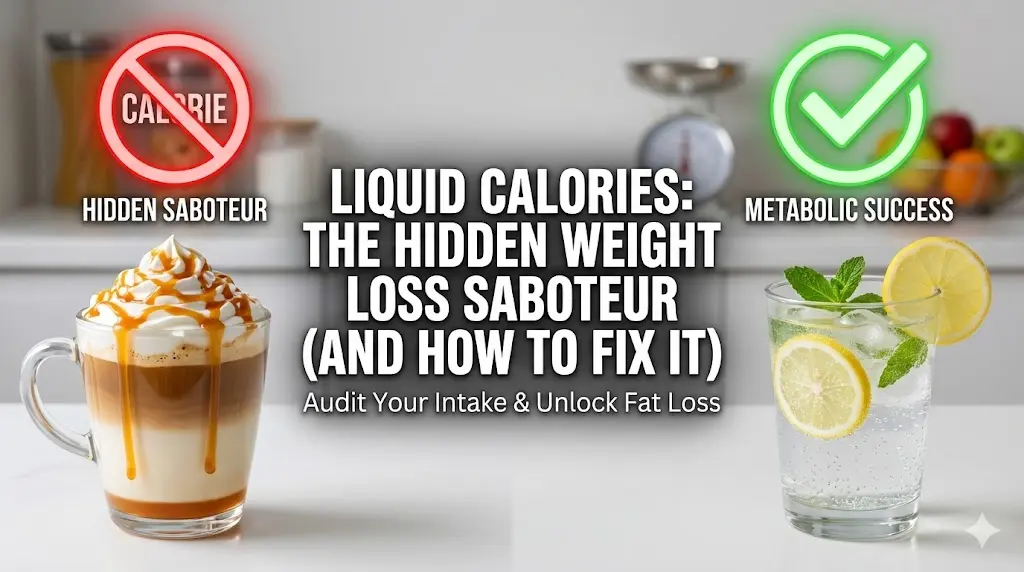
A split visualization showing a vibrant syrupy coffee drink on one side with a red warning signal, and a glass of sparkling water with lemon on the other with a green success signal.

Liquid Calories: The Hidden Weight Loss Saboteur (And How to Fix It)

Discover how the stealthy calories in your coffee, smoothies, and 'healthy' drinks are quietly stalling your fat loss goals, and learn how to audit your intake for metabolic success.

Go deeper2026-01-15 13:17
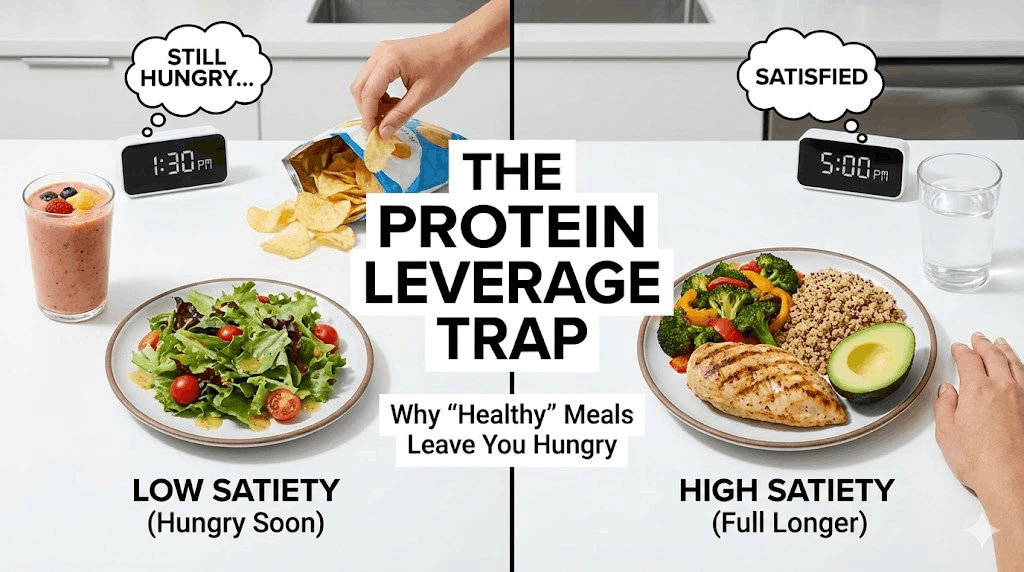
A clean infographic-style illustration showing a plate divided into protein, fiber-rich vegetables, smart carbs, and healthy fats, with appetite and energy stability indicators.

The Protein Leverage Trap: Why You're Hungry Even After a “Healthy” Meal

If you’re constantly hungry while trying to lose weight, it’s rarely a willpower problem. It’s often a protein, fiber, and satiety-signal problem—and you can fix it without obsessive calorie counting.

Go deeper2026-01-13 19:06
A minimalist infographic-style illustration showing an 'off‑ramp' road sign from GLP‑1 medication to maintenance, with icons for protein, strength training, steps, sleep, and a checklist.

The GLP‑1 Off‑Ramp Blueprint: How to Keep the Weight Off When You Stop Ozempic

GLP‑1 medications can change appetite fast—but maintaining results requires a muscle-first plan, a structured taper with your clinician, and an environment that prevents the rebound. Here’s the practical, evidence-aligned off‑ramp blueprint.

Go deeper2026-01-13 09:20
A calm, editorial-style illustration of a woman walking after a meal with a small notebook, with subtle icons for protein, steps, sleep, and strength training.

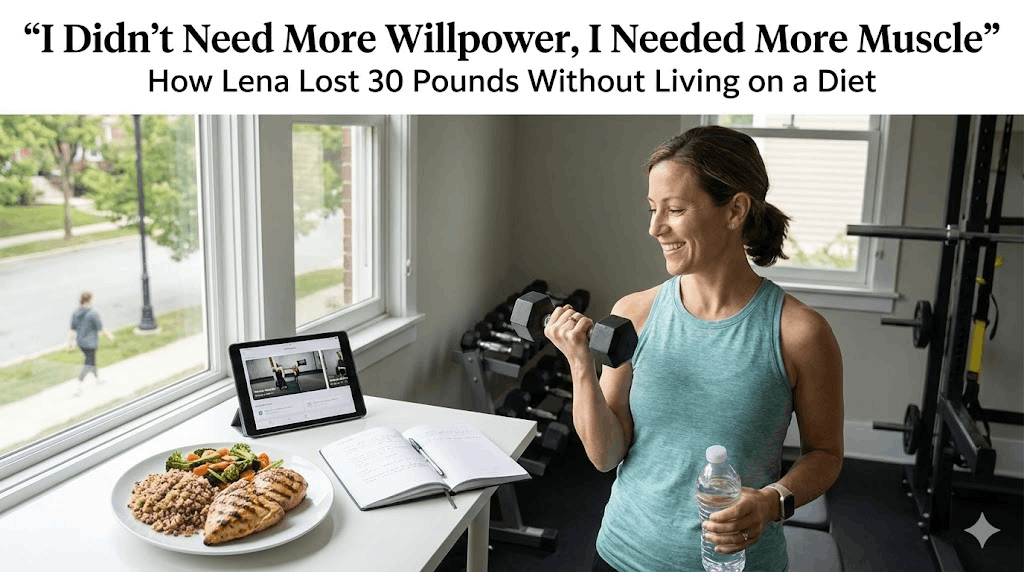
“I Didn’t Need More Willpower, I Needed More Muscle”: How Lena Lost 30 Pounds Without Living on a Diet

After years of “clean eating” and punishing cardio, Lena discovered the real driver of her stubborn weight: low lean mass, unstable blood sugar, and a recovery deficit. Her simple muscle-first protocol helped her lose 30 pounds and keep it off—without obsessive tracking.

Go deeper2026-01-11 19:42
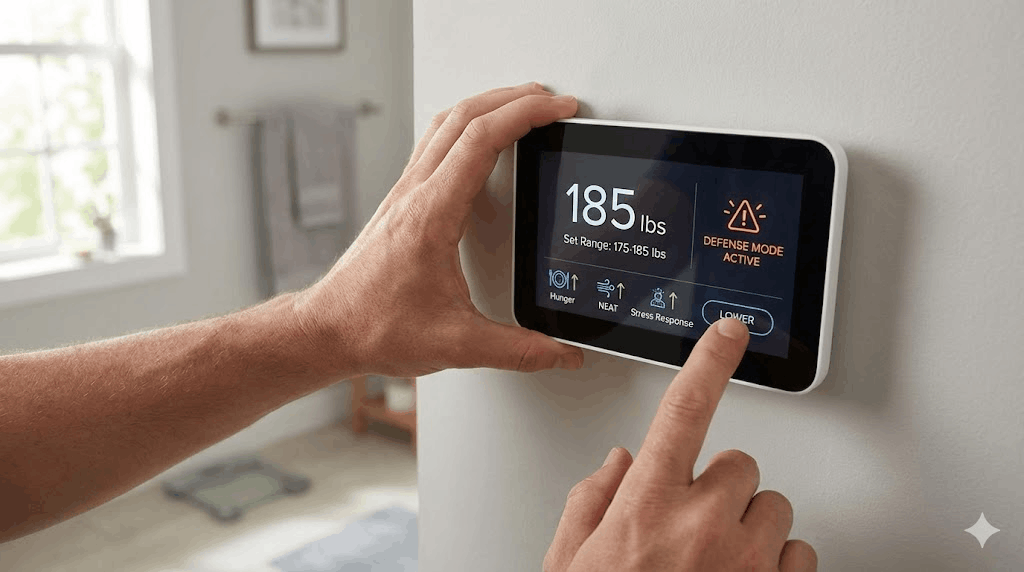
A minimalist thermostat illustration showing a weight “set range” dial with arrows labeled hunger, NEAT, and stress response.

The Weight Set-Point Trap: Why Crash Diets Backfire and How to Lower Your Body’s “Thermostat”

Your body doesn’t treat weight loss like a math problem—it treats it like a threat. Learn the set-point system (leptin, NEAT, hunger) and the practical protocol to lose fat without triggering the rebound.

Go deeper2026-01-11 10:15
A candid, documentary-style photo of a man meal-prepping in a bright kitchen with simple high-protein foods and vegetables on the counter.

"I Didn’t Need More Willpower, I Needed Less Food Noise": How Daniel Lost 18kg Without Living on Salad

After years of yo-yo dieting, Daniel stopped chasing perfect macros and rebuilt his default environment: higher protein, smarter carbs, planned treats, and a routine that made overeating inconvenient. The result was sustainable fat loss without calorie obsession.

Go deeper2026-01-09 08:42
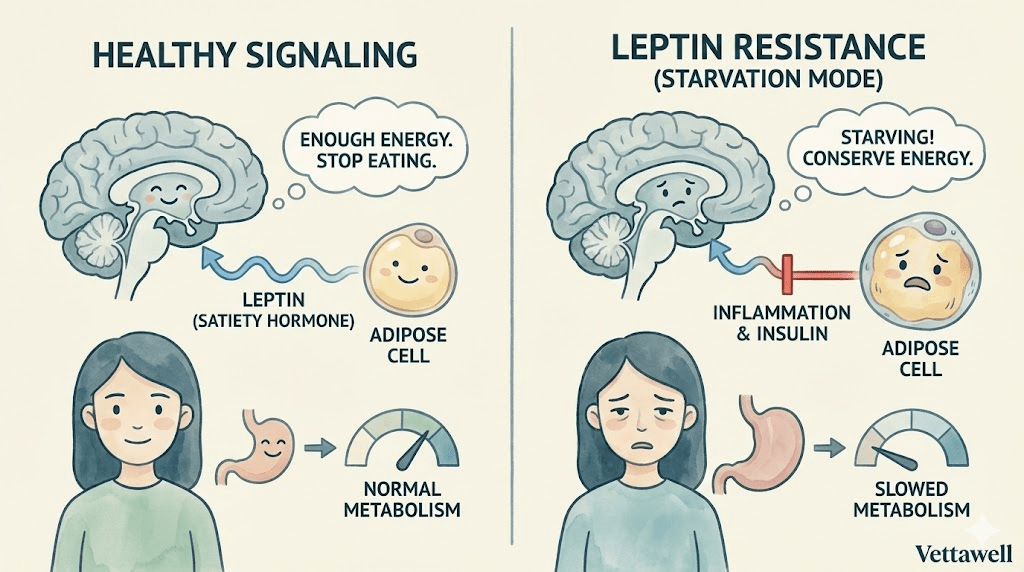
A medical illustration of the human brain highlighting the hypothalamus, with signaling pathways connected to adipose (fat) tissue, representing the gut-brain axis.

The "Starvation" Signal: Why Your Brain Can't See Your Body Fat

You have plenty of stored energy, so why are you always hungry? The answer lies in Leptin Resistance—a hormonal glitch that makes the brain believe a person with obesity is actually starving to death.

Go deeper2025-11-24 10:32
A conceptual medical illustration showing a scale balanced between a strand of DNA and a pill, symbolizing the shift towards personalized and oral metabolic treatments.

The Post-Ozempic Era: 4 Weight Loss Breakthroughs Defining 2025

The "magic shot" was just the beginning. In 2025, the weight loss industry is pivoting from simple starvation to "high-quality" mass reduction. From muscle-preserving drugs to the end of needles, here is the state of the industry.

Go deeper2025-10-29 18:32
A variety of colorful, whole foods including avocados, salmon, and leafy greens arranged on a wooden table, representing a nutrient-dense diet.

Why "Eat Less, Move More" Fails: The New Science of Sustainable Weight Loss

Research shows that 95% of diets fail long-term. Experts explain why metabolic health, not just calorie counting, is the key to shedding pounds and keeping them off.

Go deeper2025-10-10 22:12
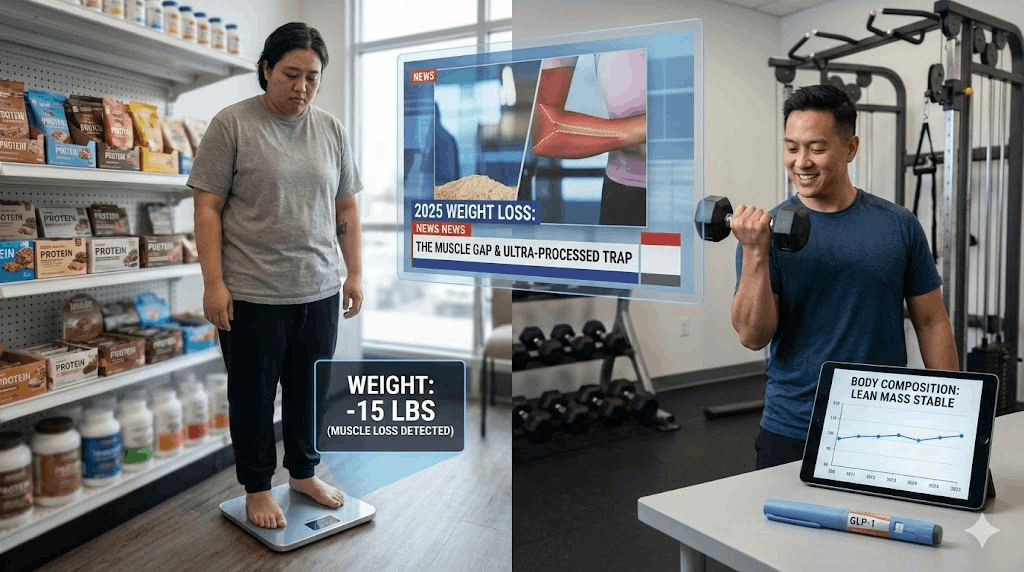
A modern infographic-style illustration showing a scale balanced by a dumbbell and a brain icon, representing fat loss, muscle retention, and appetite regulation in 2025.

The 2025 Weight Loss Reality Check: The Muscle Gap, Ultra‑Processed Hunger, and the GLP‑1 Aftermath

2025 made weight loss faster—but also riskier. Here’s what changed: the rise of muscle loss as the #1 hidden problem, the ultra‑processed food environment that defeats willpower, and the new protocols that actually hold results.

Go deeper2025-10-03 11:40
A 3D medical illustration showing a GLP-1 hormone molecule docking into a receptor in the brain, symbolizing the blocking of hunger signals.

The End of the "Willpower" Era: How GLP-1 Agonists Work and Why They Change Everything

Ozempic and Mounjaro are more than a Hollywood trend; they represent a scientific paradigm shift. We explore how these hormones silence "food noise," slow digestion, and why preserving muscle mass is the new challenge.

Go deeper2025-09-11 13:53

Stay informed

Subscribe to receive the latest health insights from VettaWell

I consent to receive emails from VettaWell. Frequency varies. You can unsubscribe any time. Terms & Privacy

SMS is currently available in the United States. By entering your phone number, clicking on the authorization checkboxes, and clicking the sign-up button, you agree to receive periodic text messages, including marketing and promotional text messages, from VettaWell (ROLAND PARTNER Sp.z.o.o.) at the phone number you submitted, including texts that may be sent using an automatic telephone dialing system. Message and data rates may apply. Message frequency varies. Messages may include account and subscription notifications, appointment and reminder messages (if applicable), support and service updates, important platform notices, and occasional wellness-related updates or offers. Consent is not a condition of the purchase of any goods or services. Text HELP for help/customer support. Unsubscribe at any time by replying "STOP" to any text message that you receive from VettaWell. Read our full terms of service and privacy policy.

Back to Feed