

VettaWell logoVettaWell

Calm wellness updates via email and SMS.

Legal

  • Privacy Policy
  • Terms of Service
  • Email WhiteList

Navigation

  • Feed
  • About
  • Authors
  • Editorial Standards
  • EventsNEW
  • Subscribe
  • Contact
  • Contribute
  • Careers

© 2025 VettaWell. All rights reserved.

VettaWell logoVettaWell
FeedAboutAuthorsEditorial StandardsEventsNEWSubscribe
Back to Feed
Weight Loss2026-01-13 09:20
Portrait placeholder for Dr. Elise Hartwell in a minimalist studio setting
Dr. Elise Hartwell• Behavioral Science Writer & Mindset Coach

The GLP‑1 Off‑Ramp Blueprint: How to Keep the Weight Off When You Stop Ozempic

A minimalist infographic-style illustration showing an 'off‑ramp' road sign from GLP‑1 medication to maintenance, with icons for protein, strength training, steps, sleep, and a checklist.

GLP‑1 medications (like semaglutide and tirzepatide) were the first weight-loss tools in decades that felt like turning off the food noise instead of fighting it with willpower. For many people, the scale finally moved, cravings finally quieted, and “portion control” stopped being a daily war.

Then comes the hard question: what happens when you stop? The uncomfortable truth is that many people don’t regain weight because they’re weak—they regain because biology rebounds. Hunger signals return, energy expenditure drops, and the habits you didn’t need on the medication suddenly become non‑negotiable.

GLP‑1s are a powerful lever. But the long-term outcome depends on what you build while the lever is working.

Key takeaways

  • The most common driver of post‑GLP‑1 regain is not “bad discipline,” it’s the appetite + muscle equation (higher hunger + lower lean mass).
  • If you lose weight quickly, you risk losing lean mass; losing muscle lowers resting energy needs and makes regain easier.
  • Your goal on GLP‑1 is not just “smaller.” It’s metabolically safer: protect muscle, stabilize habits, and repair your food environment.
  • The best off‑ramp is typically gradual and clinician‑guided (dose spacing or step‑downs), paired with a structured lifestyle transition.
  • Maintenance is a system: protein floor + strength training + daily movement + sleep + a relapse plan.

First: what GLP‑1s actually do (and what they don’t)

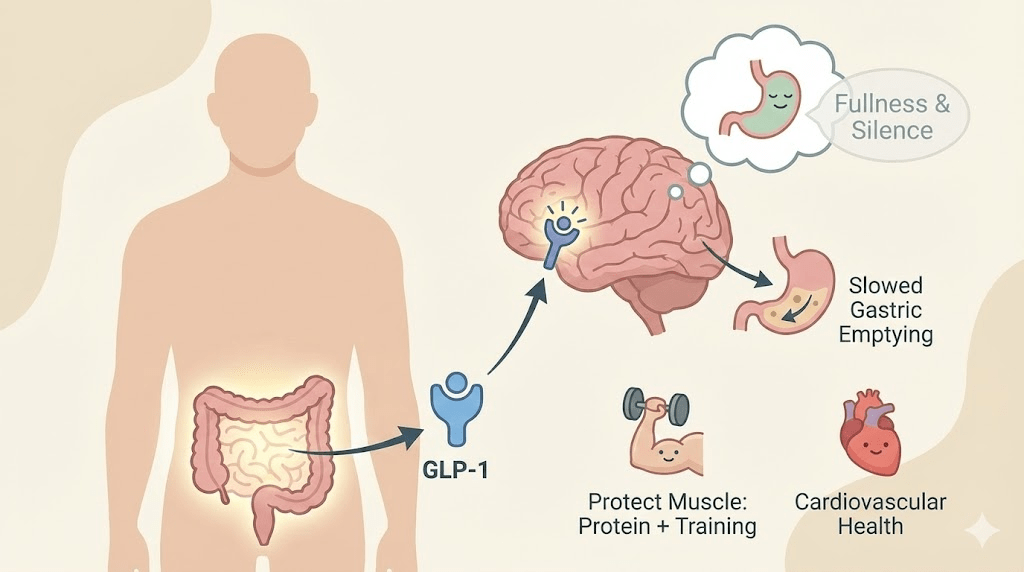
GLP‑1 receptor agonists and related incretin therapies work through multiple pathways: they enhance satiety signaling, reduce appetite, slow gastric emptying in many users (especially early), and improve glycemic regulation. The lived experience is usually simple: you feel full sooner and think about food less.

But GLP‑1s do not automatically build muscle, fix sleep debt, correct stress eating triggers, or redesign the home food environment. Those are the pieces that determine what happens when the medication is reduced or stopped.

Sleep Lean: Better Sleep, Smarter Weight Loss Support

Sleep Lean supplement banner promoting healthy weight loss support and better sleep with an “Order now” call-to-action

Why regain happens after stopping (the three predictable rebounds)

On the medication, many people unintentionally under-train the skills that matter most for maintenance: meal structure, protein planning, “boring” food prep, and hunger management. When the appetite signal returns, it can feel like a sudden personality change—when it’s really a medication effect disappearing.

Rapid weight loss commonly reduces non‑exercise activity (NEAT): fewer steps, less fidgeting, less spontaneous movement. Add lower body mass and often lower calorie intake, and total energy expenditure tends to decline. If you don’t deliberately rebuild movement, maintenance becomes mathematically harder.

When appetite is suppressed, it’s easy to miss protein targets and hard to lift heavy consistently. That combination increases the risk of losing lean mass. Muscle is not just for aesthetics—it’s the tissue that buffers glucose, supports strength, and raises your energy budget. Less muscle means you can maintain less food without regaining.

If your body becomes a smaller engine, it requires less fuel. If your appetite returns to the old level, the math flips fast.

The Off‑Ramp Blueprint: 4 pillars that prevent rebound

If you do nothing else, do this: establish a minimum daily protein target that you can hit even when appetite is low. This protects muscle and increases satiety per calorie.

  • Rule of thumb: 1.6 g/kg/day of goal body weight is a strong target for many active adults (adjust with a clinician if you have kidney disease or other constraints).
  • If that number feels too high: set a minimum “protein floor” (for example: 25–40 g per meal, 2–3 times/day).
  • Make it frictionless: keep 2–3 default proteins available (Greek yogurt, eggs, chicken, tofu, fish, protein shakes).
  • Don’t wait for hunger: when you’re on GLP‑1, protein is a scheduled medicine, not an intuitive craving.

The off‑ramp period is when strength training pays the highest dividend. You’re trying to preserve (or rebuild) lean mass so that maintenance calories don’t crash.

  • Frequency: 2–4 sessions/week.
  • Focus: compound patterns (squat/hinge/push/pull/carry).
  • Progression: add reps or load slowly; don’t chase soreness.
  • If energy is low: keep the session short but keep the habit (20–35 minutes still works).

If you’re new to lifting, the best plan is the one you’ll actually do: machines are fine. The goal is stimulus, not perfection.

When medication support decreases, you want meals that are physically large, slower to digest, and stable for blood sugar. This reduces the sensation that you’re “white‑knuckling” hunger.

  • Volume foods: vegetables, broth-based soups, berries, potatoes (especially cooled/reheated), legumes.
  • Fiber anchors: beans/lentils, chia/flax, oats (if tolerated), psyllium, cruciferous vegetables.
  • Protein first: start the meal with protein + fiber before starches and sweets.
  • Liquid calories audit: alcohol, sugary coffee drinks, juices—these bypass satiety fast.
Maintenance is less about eating less and more about eating in a way that your brain accepts as “enough.”

The off‑ramp is where many people fail because they treat early regain as a moral crisis instead of a feedback signal. You need a plan you execute automatically.

  1. Trigger: scale trend up for 2–3 weeks or appetite feels unmanageable for 10+ days.
  2. Reset: return to baseline structure for 14 days (protein floor, strength x2–3/week, 8–10k steps/day, fiber anchor at lunch/dinner).
  3. Escalate: if still worsening, discuss options with your prescribing clinician (dose adjustment, spacing strategy, or other medical evaluation).

The taper conversation: what “off‑ramp” can look like

Medication changes must be clinician‑guided. In general practice, “off‑ramp” approaches can include dose step‑downs, dose spacing (e.g., extending the interval), or maintenance at the lowest effective dose—depending on risk profile, prior weight history, and side effects.

Your job is to arrive at that taper with the right foundations already built. If you wait until the medication stops to build the system, it’s like trying to install seatbelts after the crash.

A practical 12‑week transition plan (built for real life)

  • Hit the protein floor daily (track for accuracy—app or checklist).
  • Strength train 2–3x/week (full body).
  • Set a step baseline (start where you are; add 1,000 steps/week until you reach a sustainable target).
  • Solve the predictable GLP‑1 friction points: hydration, constipation prevention, and meal scheduling.
  • Choose 2 default breakfasts and 3 default lunches you can repeat.
  • Add a fiber anchor to lunch and dinner (legumes or a large salad + protein).
  • Practice “planned flexibility”: one restaurant meal/week, but decide your protein and vegetables first.
  • Audit liquid calories and alcohol; treat them as optional, not routine.
  • Introduce one higher‑calorie day/week (still protein‑anchored) to practice real‑world maintenance.
  • Strength train 3–4x/week if feasible; otherwise keep 2–3 and add light conditioning.
  • Create your relapse protocol document (what you do if weight trends up).
  • Discuss taper/spacing with your clinician only after your routine feels stable.

Side effects and safety signals to take seriously

GLP‑1 medications can cause side effects and complications in some users. If you’re using them, safety is part of the protocol—not an afterthought.

  • Persistent vomiting, severe abdominal pain, or dehydration: seek medical care promptly.
  • Constipation: common—support with fluids, fiber, and clinician‑approved strategies.
  • Rapid weight loss without resistance training: higher risk of lean-mass loss; adjust your plan early.
  • Mental health changes: appetite suppression can sometimes interact with mood, anxiety, or disordered eating patterns—flag this early with a professional.
If your plan relies on enduring side effects, it is not a sustainable plan.

Common pitfalls (why “I did everything right” still fails)

  • Treating GLP‑1 as the plan instead of the tool—no strength training, no protein system, no environment changes.
  • Losing weight fast, then trying to “maintain” on the same low intake with a now‑smaller energy budget.
  • Stopping abruptly without a transition structure (food noise returns; the old environment wins).
  • Skipping breakfast and protein early, then overeating at night once appetite rebounds.
  • Confusing scale fluctuations (salt, glycogen, constipation) with true fat regain—then making drastic, chaotic changes.

Practical next steps

  • Define your protein floor and set default meals that hit it reliably.
  • Schedule strength training like a prescription: 2–4 sessions/week for the next 12 weeks.
  • Set a daily movement baseline (steps) and increase gradually; don’t rely on “big workouts” alone.
  • Create a written relapse protocol and share it with your clinician or coach.
  • If you are considering tapering, plan the taper around your routine—not the other way around.

Quick checklist

  • I hit my protein floor most days (or I know exactly why I didn’t).
  • I strength train at least 2x/week (minimum effective dose).
  • I have a default meal structure for busy days.
  • My steps/movement baseline is stable week to week.
  • I have an off‑ramp plan with a clinician, and a relapse plan for myself.

Important note: This article is educational and not medical advice. GLP‑1 medications require individualized clinical supervision. If you have severe side effects, rapid unintended weight loss, or significant mood changes, seek professional care.
More "Weight Loss" Articles

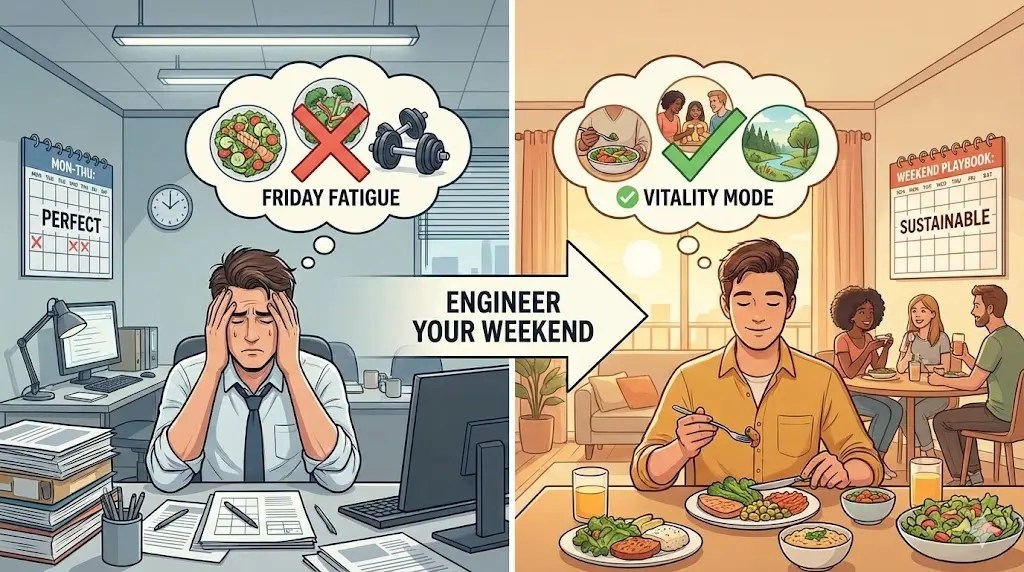
A person in a calm home environment transitioning from a busy work desk to a relaxed weekend setting, illustrating healthy boundary setting.

Weekend Rebound: Why Your ‘Perfect Week’ Breaks on Friday Night (And How to Fix It)

Struggling to maintain your progress once Friday evening hits? Learn the behavioral psychology behind weekend cycles and how to engineer a lifestyle that survives the weekend without restriction.

Go deeper2026-02-12 04:28
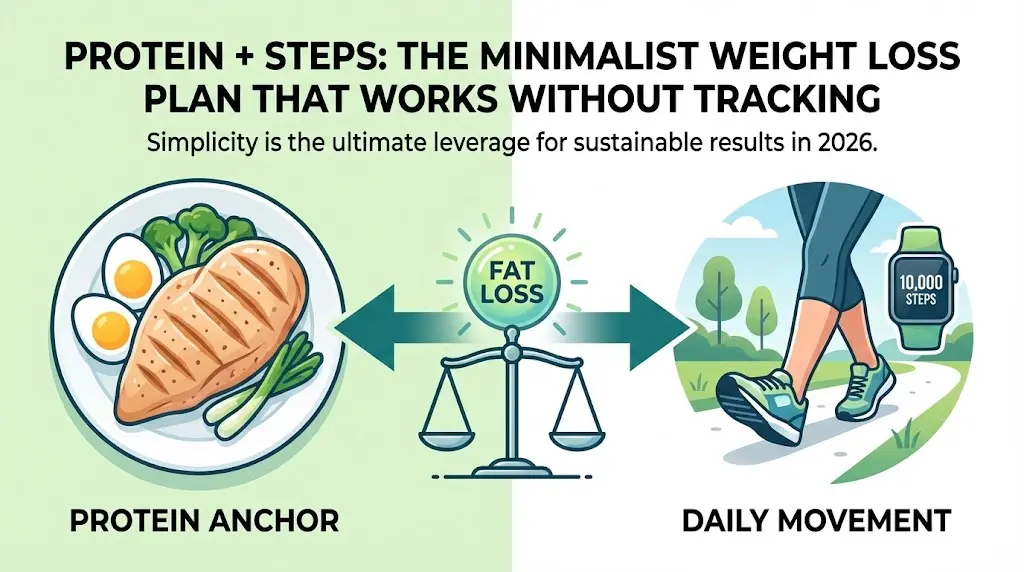
A person walking on a sunlit path in athletic wear, with a clean plate showing grilled chicken and greens in the foreground, representing the synergy of protein and movement.

Protein + Steps: The Minimalist Weight Loss Plan That Works Without Tracking

In a world of bio-tracking and data-fatigue, simplicity is the ultimate leverage. Discover why focusing on just two biological levers—protein and daily movement—is the most sustainable path to fat loss in 2026.

Go deeper2026-02-09 22:01
A stunning digital visualization of a vibrant gut microbiome, looking like a glowing underwater forest of bacteria, with golden sparks representing Short-Chain Fatty Acids and metabolic energy.

Microbiome and Metabolic Health: What’s Real, What’s Hype, and What Helps

Demystifying the gut-metabolism axis. Explore the science behind how your internal microbial ecosystem dictates your weight, insulin sensitivity, and energy levels in 2026.

Go deeper2026-02-08 11:43
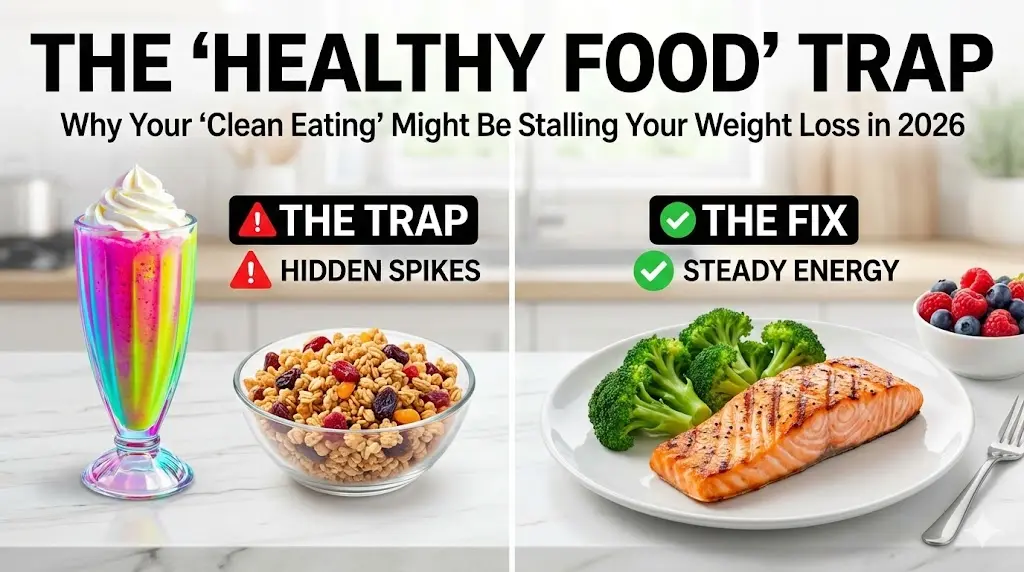
A vibrant split-screen image: on one side, a neon-colored 'healthy' smoothie and a bowl of granola with an 'alert' signal; on the other, a solid plate of grilled salmon and steamed greens with a 'success' signal.

The ‘Healthy Food’ Trap: Smoothies, Granola, Salads — Why They Can Stall Weight Loss

Virtue doesn't always equal vitality. Explore the metabolic science behind why your favorite 'health' foods might be triggering insulin spikes and halting fat loss.

Go deeper2026-02-04 17:17
A macro shot of a sliced Moro blood orange next to a sleek supplement bottle, with digital metabolic data overlays.

Citrus Burn Review: Is the “Metabolic Switch” Real or Just More Marketing Zest?

A deep-dive investigative review into Citrus Burn. We analyze the 2026 clinical data on Moro Oranges, Brown Adipose Tissue (BAT), and whether this 'Metabolic Switch' is a biological reality or high-priced hype.

Go deeper2026-02-03 03:18
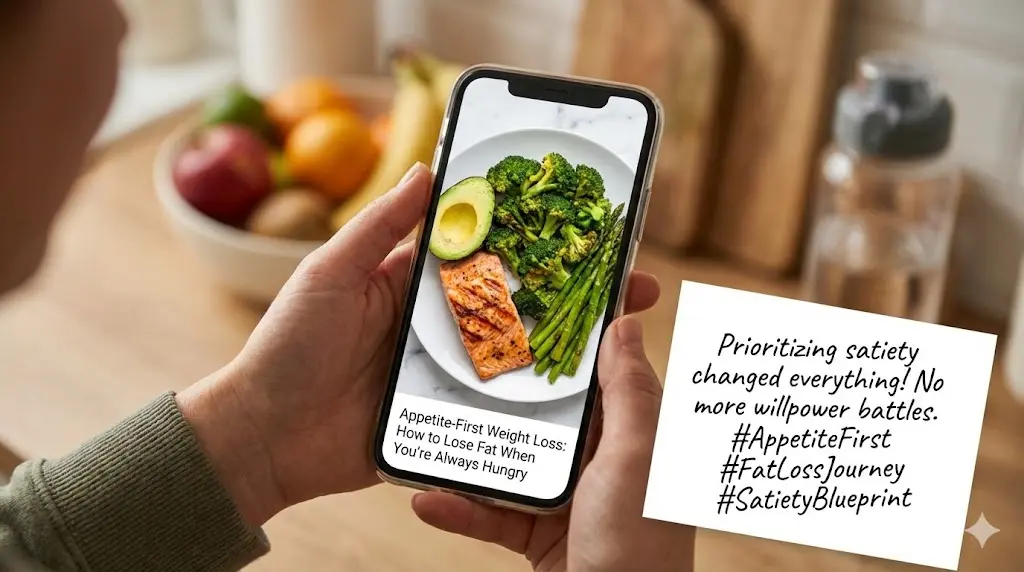
A vibrant, balanced plate featuring salmon, avocado, and a mountain of green vegetables, representing the core principles of the Satiety-First Fat Loss framework.

Appetite-First Weight Loss: How to Lose Fat When You’re Always Hungry

Willpower is a finite resource, but biology is permanent. Discover the framework for losing fat by prioritizing satiety and turning off the hunger signals that sabotage your progress.

Go deeper2026-02-02 14:05
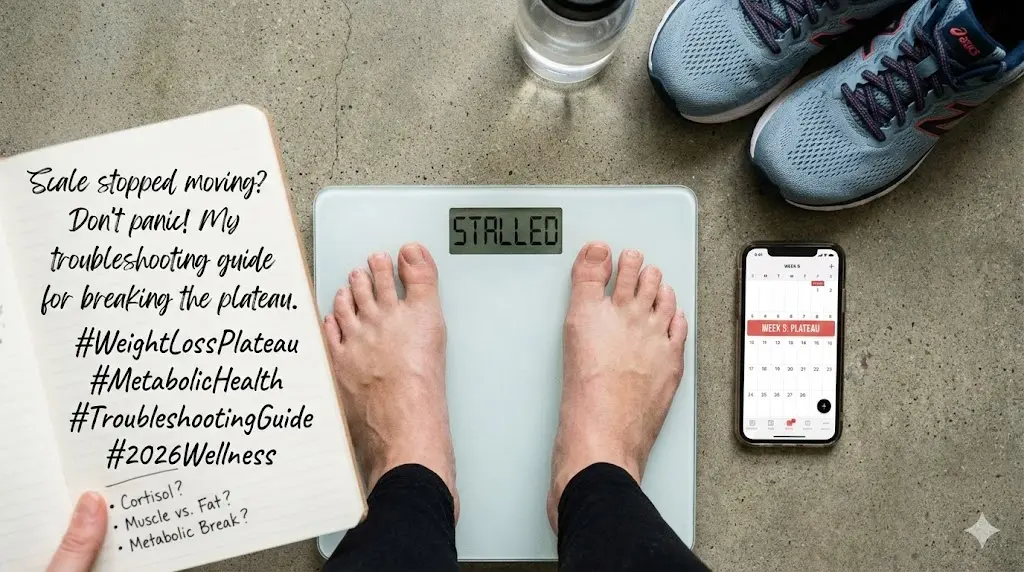
A person standing on a sunlit mountain path looking at a compass, representing the strategic navigation required to break through a weight loss plateau.

Weight Loss Plateau: A Troubleshooting Guide When the Scale Stops Moving

Stalling is not a failure; it is a biological negotiation. Learn the metabolic, hormonal, and psychological reasons your progress has paused and how to restart your engine in 2026.

Go deeper2026-01-27 23:51
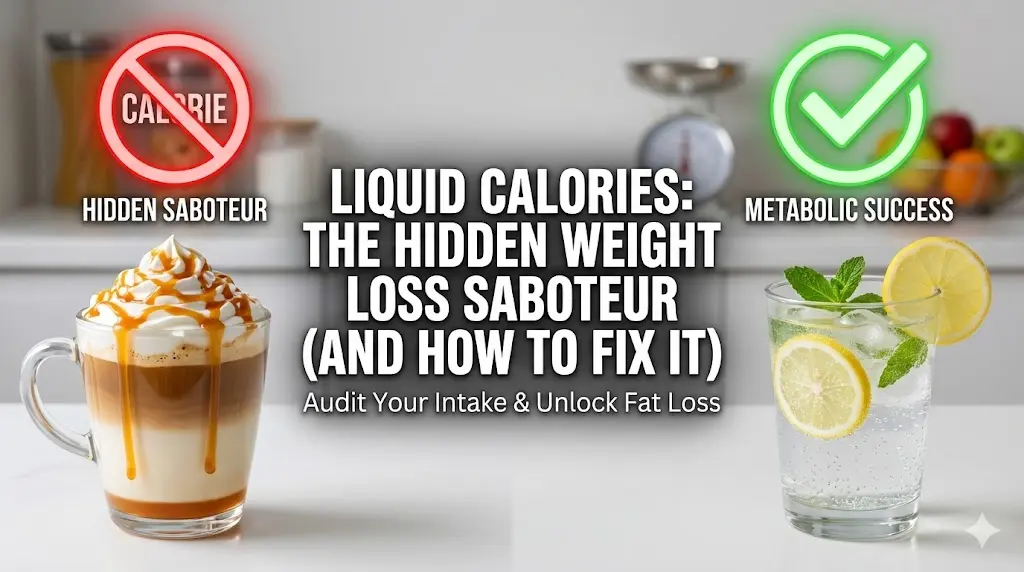
A split visualization showing a vibrant syrupy coffee drink on one side with a red warning signal, and a glass of sparkling water with lemon on the other with a green success signal.

Liquid Calories: The Hidden Weight Loss Saboteur (And How to Fix It)

Discover how the stealthy calories in your coffee, smoothies, and 'healthy' drinks are quietly stalling your fat loss goals, and learn how to audit your intake for metabolic success.

Go deeper2026-01-15 13:17
A clean infographic-style illustration showing a plate divided into protein, fiber-rich vegetables, smart carbs, and healthy fats, with appetite and energy stability indicators.

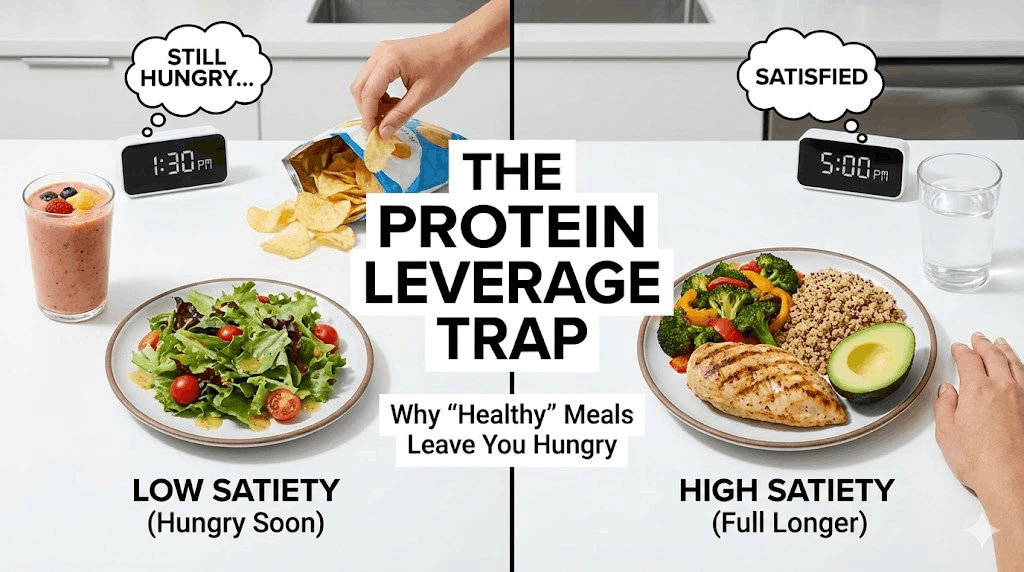
The Protein Leverage Trap: Why You're Hungry Even After a “Healthy” Meal

If you’re constantly hungry while trying to lose weight, it’s rarely a willpower problem. It’s often a protein, fiber, and satiety-signal problem—and you can fix it without obsessive calorie counting.

Go deeper2026-01-13 19:06
A calm, editorial-style illustration of a woman walking after a meal with a small notebook, with subtle icons for protein, steps, sleep, and strength training.

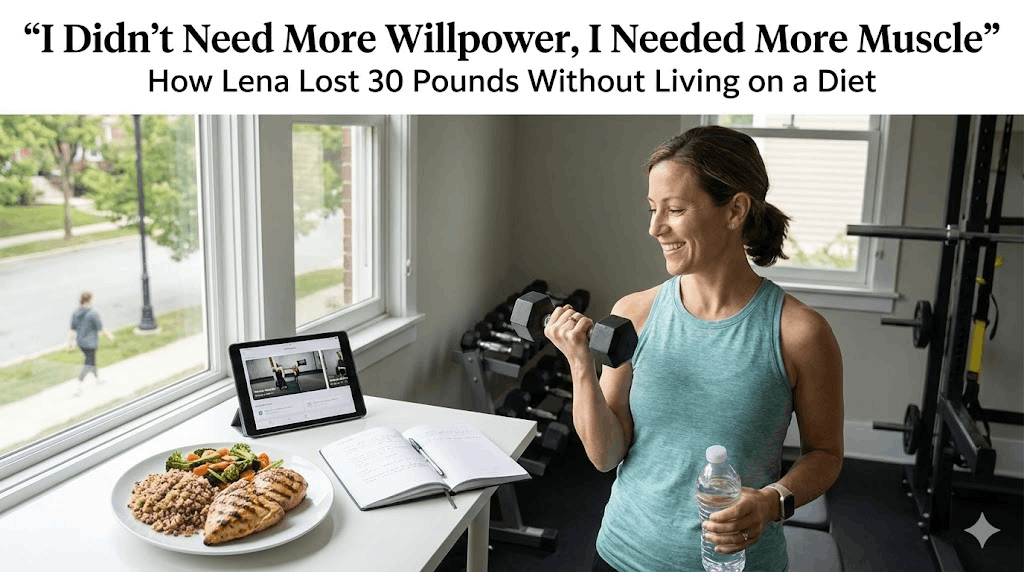
“I Didn’t Need More Willpower, I Needed More Muscle”: How Lena Lost 30 Pounds Without Living on a Diet

After years of “clean eating” and punishing cardio, Lena discovered the real driver of her stubborn weight: low lean mass, unstable blood sugar, and a recovery deficit. Her simple muscle-first protocol helped her lose 30 pounds and keep it off—without obsessive tracking.

Go deeper2026-01-11 19:42
A minimalist thermostat illustration showing a weight “set range” dial with arrows labeled hunger, NEAT, and stress response.

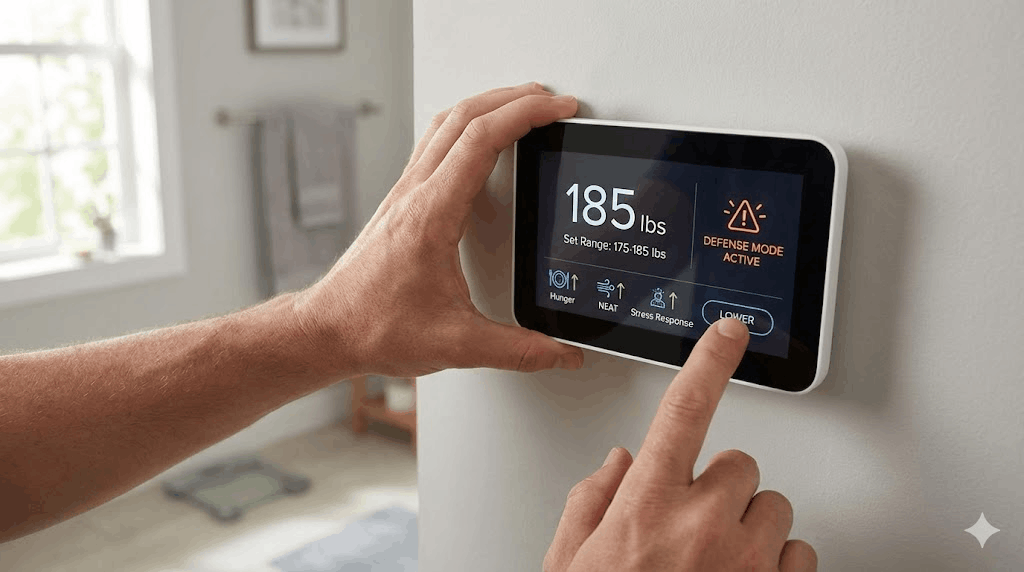
The Weight Set-Point Trap: Why Crash Diets Backfire and How to Lower Your Body’s “Thermostat”

Your body doesn’t treat weight loss like a math problem—it treats it like a threat. Learn the set-point system (leptin, NEAT, hunger) and the practical protocol to lose fat without triggering the rebound.

Go deeper2026-01-11 10:15
A candid, documentary-style photo of a man meal-prepping in a bright kitchen with simple high-protein foods and vegetables on the counter.

"I Didn’t Need More Willpower, I Needed Less Food Noise": How Daniel Lost 18kg Without Living on Salad

After years of yo-yo dieting, Daniel stopped chasing perfect macros and rebuilt his default environment: higher protein, smarter carbs, planned treats, and a routine that made overeating inconvenient. The result was sustainable fat loss without calorie obsession.

Go deeper2026-01-09 08:42
A medical illustration of the human brain highlighting the hypothalamus, with signaling pathways connected to adipose (fat) tissue, representing the gut-brain axis.

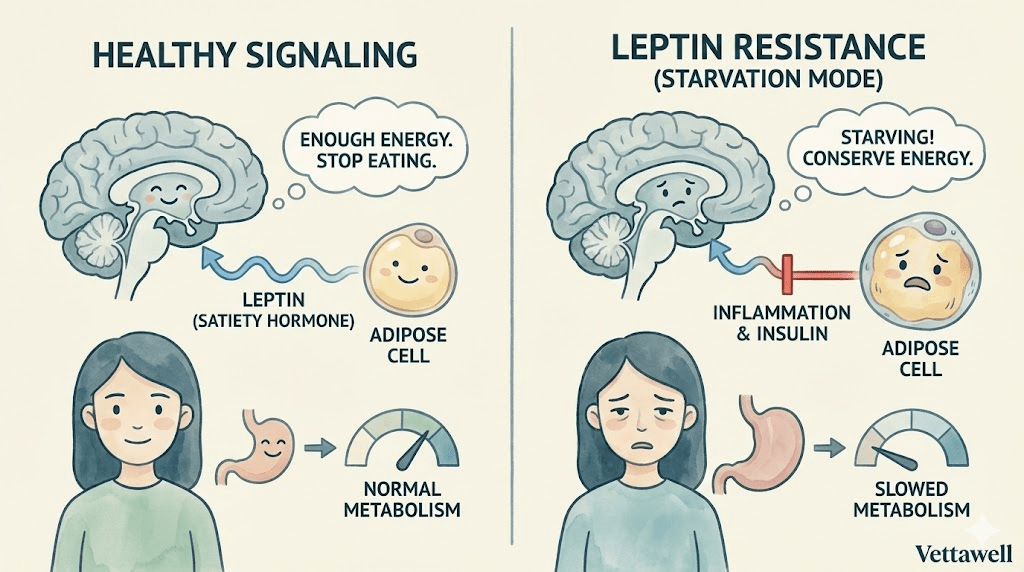
The "Starvation" Signal: Why Your Brain Can't See Your Body Fat

You have plenty of stored energy, so why are you always hungry? The answer lies in Leptin Resistance—a hormonal glitch that makes the brain believe a person with obesity is actually starving to death.

Go deeper2025-11-24 10:32
A conceptual medical illustration showing a scale balanced between a strand of DNA and a pill, symbolizing the shift towards personalized and oral metabolic treatments.

The Post-Ozempic Era: 4 Weight Loss Breakthroughs Defining 2025

The "magic shot" was just the beginning. In 2025, the weight loss industry is pivoting from simple starvation to "high-quality" mass reduction. From muscle-preserving drugs to the end of needles, here is the state of the industry.

Go deeper2025-10-29 18:32
A variety of colorful, whole foods including avocados, salmon, and leafy greens arranged on a wooden table, representing a nutrient-dense diet.

Why "Eat Less, Move More" Fails: The New Science of Sustainable Weight Loss

Research shows that 95% of diets fail long-term. Experts explain why metabolic health, not just calorie counting, is the key to shedding pounds and keeping them off.

Go deeper2025-10-10 22:12
A modern infographic-style illustration showing a scale balanced by a dumbbell and a brain icon, representing fat loss, muscle retention, and appetite regulation in 2025.

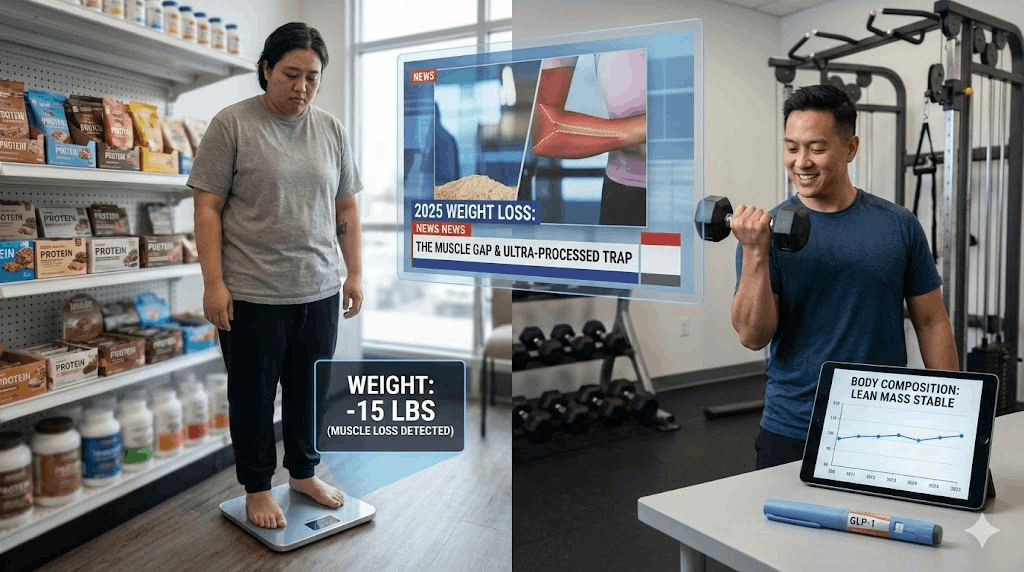
The 2025 Weight Loss Reality Check: The Muscle Gap, Ultra‑Processed Hunger, and the GLP‑1 Aftermath

2025 made weight loss faster—but also riskier. Here’s what changed: the rise of muscle loss as the #1 hidden problem, the ultra‑processed food environment that defeats willpower, and the new protocols that actually hold results.

Go deeper2025-10-03 11:40
A 3D medical illustration showing a GLP-1 hormone molecule docking into a receptor in the brain, symbolizing the blocking of hunger signals.

The End of the "Willpower" Era: How GLP-1 Agonists Work and Why They Change Everything

Ozempic and Mounjaro are more than a Hollywood trend; they represent a scientific paradigm shift. We explore how these hormones silence "food noise," slow digestion, and why preserving muscle mass is the new challenge.

Go deeper2025-09-11 13:53

Stay informed

Subscribe to receive the latest health insights from VettaWell

I consent to receive emails from VettaWell. Frequency varies. You can unsubscribe any time. Terms & Privacy

SMS is currently available in the United States. By entering your phone number, clicking on the authorization checkboxes, and clicking the sign-up button, you agree to receive periodic text messages, including marketing and promotional text messages, from VettaWell (ROLAND PARTNER Sp.z.o.o.) at the phone number you submitted, including texts that may be sent using an automatic telephone dialing system. Message and data rates may apply. Message frequency varies. Messages may include account and subscription notifications, appointment and reminder messages (if applicable), support and service updates, important platform notices, and occasional wellness-related updates or offers. Consent is not a condition of the purchase of any goods or services. Text HELP for help/customer support. Unsubscribe at any time by replying "STOP" to any text message that you receive from VettaWell. Read our full terms of service and privacy policy.

Back to Feed