
Most weight-loss plans collapse for the same reason: you can’t out-discipline biology. You can track calories perfectly, hit your step goal, and still feel like your stomach is an open pit. Then the late-night snacking starts. Then the “cheat day” becomes the reset day. Then the plan dies.
If this pattern feels familiar, consider a different diagnosis. In many cases, the problem isn’t that you’re eating too much. It’s that you’re eating the wrong composition of food for appetite control. Your brain has a target for key nutrients—especially protein. If you miss that target, it pushes you to keep eating until it’s satisfied, even if calories climb.
Hunger is not a character flaw. Hunger is a signal. Your job isn’t to ignore it—it’s to understand what it’s asking for.

Key takeaways
- Many people overeat not because of low discipline, but because meals are low in protein + fiber and fail to trigger satiety hormones.
- “Healthy” foods (granola, smoothies, salads without protein) can be high-calorie but low-satiety, driving rebound hunger.
- Protein has the highest satiety per calorie and the highest thermic effect—your body burns more energy digesting it than it does digesting carbs or fat.
- A weight-loss plan becomes sustainable when you build meals around protein targets, then add fiber, volume, and taste—rather than building meals around calories and hoping hunger behaves.
- You don’t need perfect tracking. You need a repeatable structure that keeps you full for 3–5 hours at a time.
What the “protein leverage” idea actually means
Imagine your appetite as a navigation system. You can take different roads, but the system is trying to reach a destination: adequate nutrients to run your body. If your meals are low in protein, your appetite can keep “re-routing” you toward more food until protein needs are met.
Ultra-processed diets are particularly good at exploiting this. They often combine high calories with low protein density, which means you can eat a lot of energy without hitting the nutrient target that tells your brain “we’re done.”
The satiety stack: why some meals feel “bottomless”
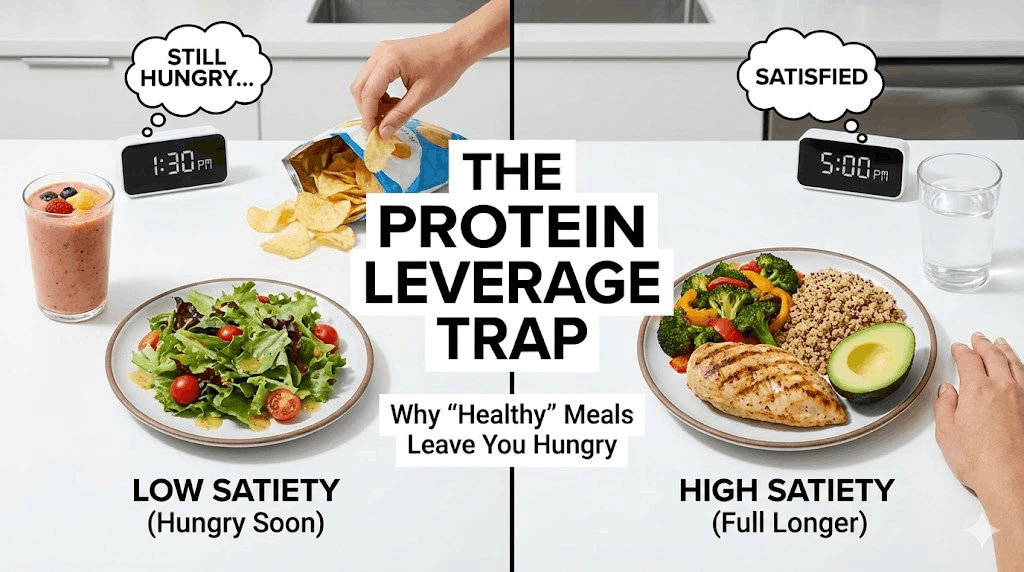
Satiety is not one knob. It’s a stack of signals. When meals lack multiple satiety inputs, your hunger will return quickly—sometimes within 60–90 minutes.
- Protein: triggers satiety hormones (and reduces reward-driven snacking).
- Fiber + volume: adds stretch in the stomach and slows absorption.
- Low energy density: large portions for fewer calories (soups, vegetables, lean proteins).
- Stable glucose curve: fewer spikes and crashes means fewer “emergency cravings.”
- Palatability control: hyper-reward foods hijack appetite even when you’re physiologically full.
If your meal has calories but lacks satiety signals, your brain files it under: “not real food—keep looking.”
The “healthy meal” trap: salads, smoothies, and snack plates
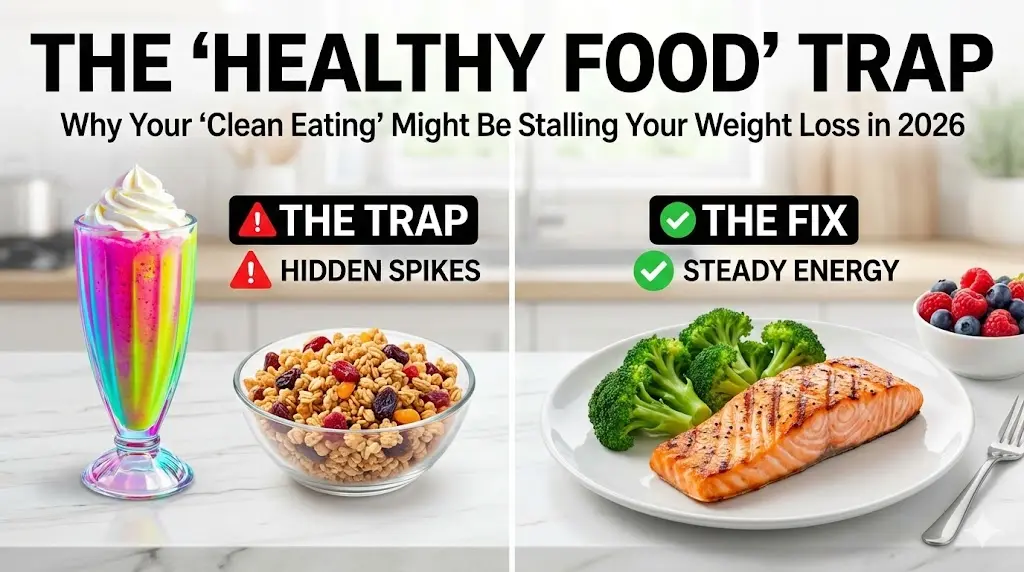
A classic weight-loss failure meal looks like this: a salad with a light dressing, a smoothie with fruit, or a snack plate of nuts and dried fruit. It feels virtuous. But if it’s missing protein and structured carbs, you often get the worst combo: high calories + low fullness.
- Smoothie breakfast: fruit + yogurt + honey + oats can become a fast-digesting glucose bomb if protein is low or diluted by sugar.
- Salad lunch: greens + vegetables + dressing, but only 10–15g protein (hunger returns at 3 PM).
- “Just nuts” snack: calorie-dense and easy to overeat, while not necessarily solving the protein target.
A better frame: stop “dieting” and start designing hunger-proof meals
Instead of asking “How do I eat less?”, ask: “How do I build meals that keep me full?” When satiety is solved, calories often correct themselves without constant restraint.
Build each main meal around a clear protein anchor, then add fiber and flavor.
The Plate Protocol: a practical template you can repeat
Use this as a default. You can customize cuisine, ingredients, and calories, but keep the structure consistent.
- Protein first: aim for 25–40g per meal (most people under-eat this).
- Fiber + volume: at least 2 cups of vegetables or a high-fiber base (beans, lentils, berries).
- Smart carbs (optional): add carbs based on activity level (potatoes, rice, oats) rather than “fear” or “permission.”
- Fat for satisfaction: include a measured fat source (olive oil, avocado, nuts) instead of “accidental” fats from ultra-processed foods.
- Flavor and salt: if the meal tastes miserable, compliance dies. Use spices, citrus, herbs, and adequate seasoning.
- 150g chicken breast or turkey
- 1 can tuna or salmon (drained) + Greek yogurt dressing
- 200g Greek yogurt + whey scoop
- 3 eggs + 200g cottage cheese
- 150–200g tofu/tempeh (depending on brand) + edamame side
Why protein makes weight loss easier (without magic)
Protein helps in three ways that matter when you’re trying to lean out:
- Satiety: you naturally eat less because you’re full longer.
- Thermic effect: digesting protein costs more energy than digesting carbs or fat, which slightly raises daily energy expenditure.
- Muscle preservation: during weight loss, protein plus resistance training helps protect lean mass, keeping metabolism healthier.
The goal is not “eat less.” The goal is “eat in a way that makes eating less automatic.”
The craving loop: how glucose volatility sabotages “clean eating”
When a meal is high in fast carbs and low in protein/fiber, blood glucose can rise quickly and fall quickly. That drop is interpreted by the body as urgency—often experienced as anxiety, irritability, and a sudden fixation on snacks.
- You feel fine after eating, then suddenly panic-hungry 90–150 minutes later.
- Your cravings are specific (sweet + salty) rather than general hunger.
- You snack while standing and don’t feel satisfied afterwards.
- Caffeine “fixes” hunger temporarily, then cravings rebound harder.
The anti-hunger add-ons that make the protocol work
Once protein is anchored, these upgrades make weight loss feel less like punishment.
Light movement after a meal helps muscles pull glucose from the bloodstream and can reduce the size of glucose spikes—especially after larger meals.
- Vegetable soup or broth-based soup before dinner
- A big salad with protein (not just leaves)
- Fruit + yogurt instead of fruit alone (protein stabilizes)
If you snack, snack like it’s a mini-meal: protein + fiber. A protein bar with 6g protein isn’t a snack; it’s candy with marketing.
- Greek yogurt + berries
- Cottage cheese + cucumber + salt
- Protein shake + apple
- Edamame + carrots
A one-week reset you can actually follow
If you want to test whether hunger—not calories—is your bottleneck, run this as an experiment for 7 days.
- Hit 25–40g protein at breakfast, lunch, and dinner.
- Include 2 cups of vegetables at lunch and dinner.
- Walk 10 minutes after your largest meal.
- Keep desserts, but only after dinner (not as “rescue snacks” at 3 PM).
- Keep caffeine earlier; avoid turning coffee into a hunger suppressor.
Don’t change ten things. Change the signal your brain cares about most: protein + satiety.
Common pitfalls
- Trying to run a fat-loss deficit while under-eating protein (hunger becomes inevitable).
- Choosing “light” meals that are basically carbs + sauce, then blaming willpower when cravings hit.
- Cutting carbs to zero, then rebounding into binge cycles because meals stop being satisfying.
- Relying on snacks instead of structured meals (you end up grazing all day).
- Ignoring sleep: poor sleep increases hunger signals and reward-seeking behavior.
Practical next steps
- Pick one meal (breakfast or lunch) and upgrade it to 30g protein for the next 7 days.
- Create a “default plate” you can repeat: protein + vegetables + measured carbs + measured fat.
- Replace one snack with a protein + fiber snack and notice whether cravings reduce.
- Add a 10-minute walk after the largest meal at least 4 days this week.
- If weight loss has stalled for months despite consistent habits, consider professional support to check sleep, thyroid, medications, and metabolic markers.
Quick checklist
- Each main meal has a clear protein anchor (25–40g).
- Vegetables show up at least twice daily.
- Snacks are purposeful (protein + fiber) or not used.
- Post-meal movement happens often.
- Sleep is treated as part of the plan, not an afterthought.
Important note: This article is educational and not medical advice. If you have disordered eating history, diabetes medication, pregnancy, or significant medical concerns, consult a qualified clinician before making major dietary changes.