
Daniel didn’t look like a “before-and-after” story. He looked like a normal guy who had slowly drifted into a heavier body: a little belly, a little tighter jeans, a little more breathless on stairs. The problem wasn’t a single bad month—it was five years of small defaults: delivery dinners, late-night snacks, “just one beer” turning into three.
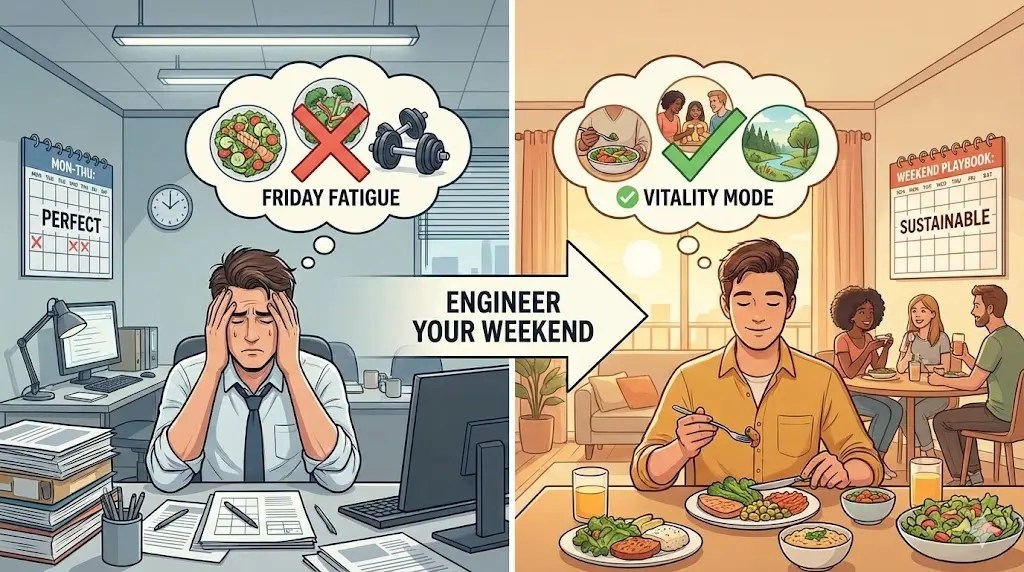
At 33, he had a stable job, a stable relationship, and an unstable appetite. He could “be good” Monday to Thursday, then unravel on weekends. He tried the classic fixes—cut carbs, cut breakfast, do more cardio—until his life became a rotating cycle of restriction and rebound.
The issue wasn’t that Daniel loved food too much. The issue was that his day was designed to make overeating effortless.
Key takeaways
- Sustainable weight loss is often an environment problem before it is a motivation problem.
- Protein and fiber reduce “food noise” by improving satiety and stabilizing appetite signals.
- You can keep carbs—just choose carbs with boundaries (timed, portioned, paired with protein).
- Strength training preserves the engine (lean mass) while you lose fat, preventing the “smaller but softer” outcome.
- The most effective plan is the one that becomes your default on busy days, not your fantasy on perfect days.
Who Daniel was (so you can map this to your own life)
- Age: 33
- Work: remote product manager (long sitting days, frequent deadlines).
- Starting point: “active on paper” but inconsistent—gym bursts followed by long gaps.
- Main struggle: evening overeating and weekend blowouts, not constant bingeing.
- Goal: lose fat without turning food into a full-time job.
He didn’t want to be a different person. He wanted the same lifestyle to produce a different outcome. That meant fixing the levers that control appetite: satiety, stress, and convenience.

The moment he finally believed the scale
The wake-up call wasn’t a dramatic medical emergency. It was a photo. A friend tagged Daniel at a summer barbecue. He saw himself from the side: belly pushing against a t-shirt, shoulders rounded, face slightly swollen. He stared at it for a full minute and felt something different from shame—clarity.
He stepped on the scale the next morning and saw a number he hadn’t seen before. It wasn’t just weight. It was the realization that his “normal” had quietly shifted. His body wasn’t broken—it was adapting to the signals he gave it every day.
What wasn’t working (and why it kept backfiring)
Daniel’s first instinct was to do what most people do: go extreme. He tried strict low-carb. He tried skipping meals. He tried punishing workouts. Each time, it worked for two weeks—then life happened. A stressful deadline. A birthday dinner. A poor night of sleep. His hunger went feral and the plan collapsed.
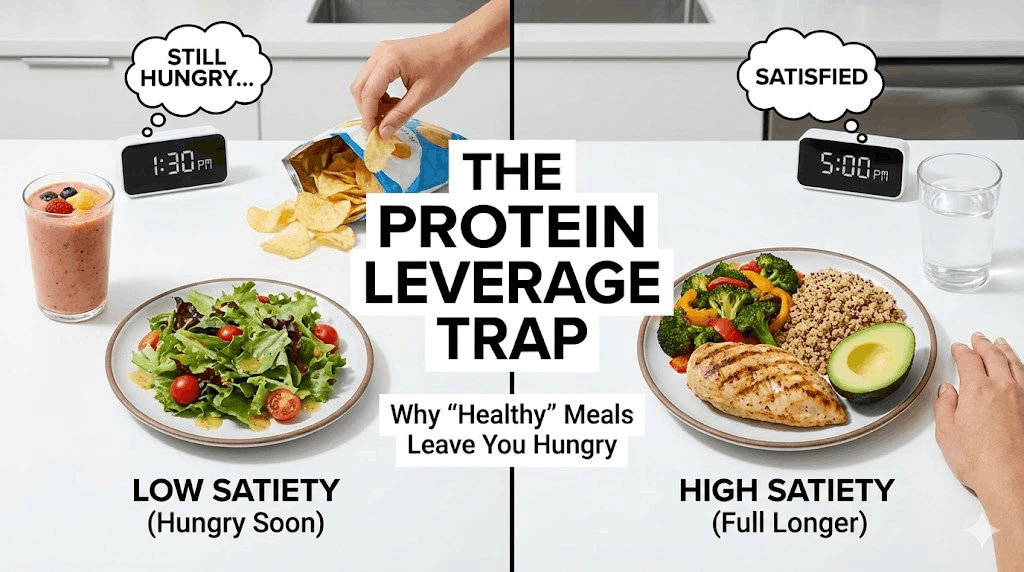
- Under-eating protein: He was eating “healthy” but not satisfying (salads with little chicken, yogurt with honey, oatmeal with fruit).
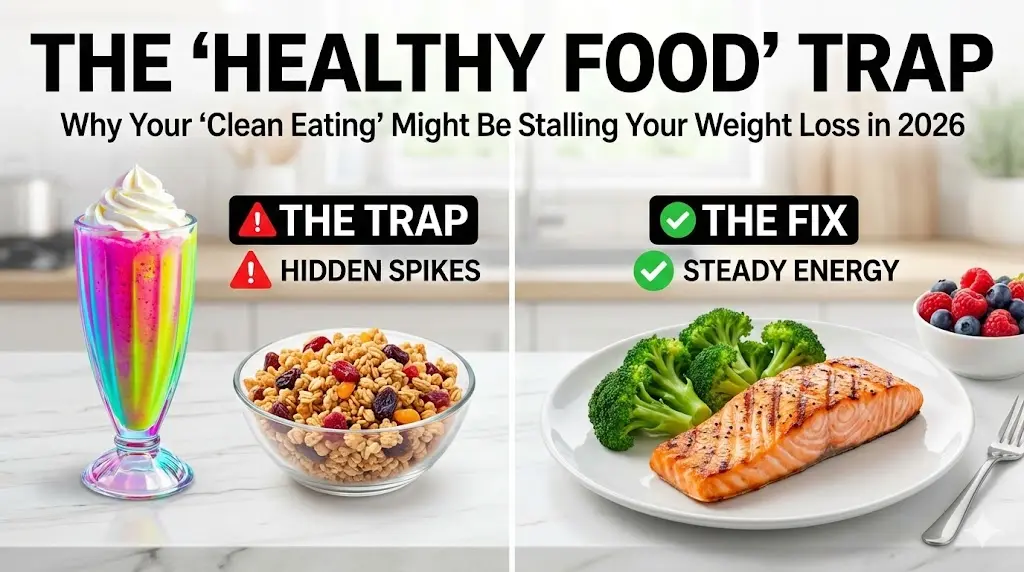
- Liquid calories: Lattes, juices, “healthy smoothies” that didn’t register as a meal.
- Weekend compensation: He tried to erase indulgence with restriction, which created cravings and rebound eating.
- Exercise as punishment: Cardio became a tax, not a tool, so consistency died quickly.
The missing concept: “food noise”
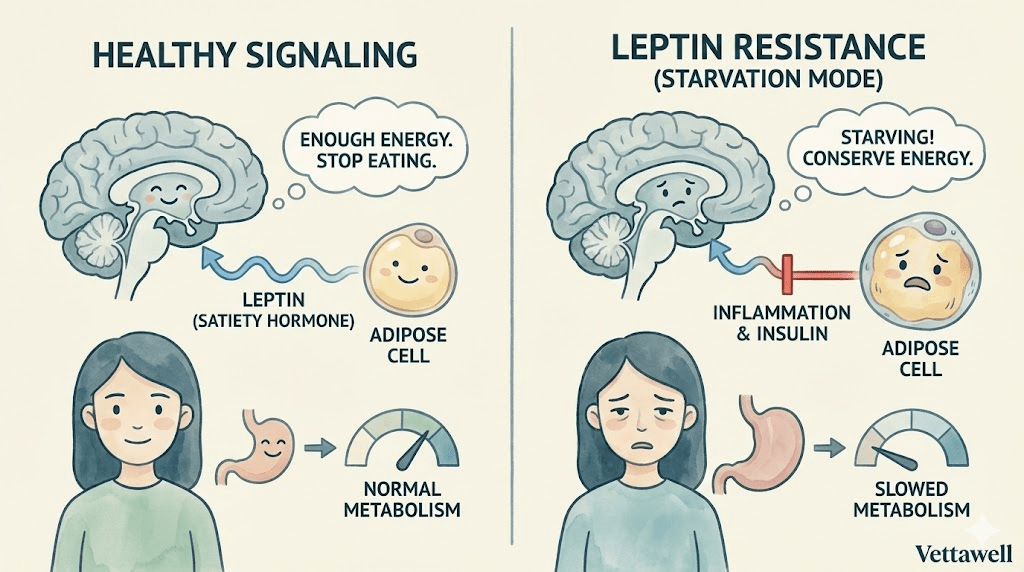
Daniel’s biggest surprise was learning that constant cravings aren’t a moral failure. Many people live with persistent “food noise”—background thoughts about what to eat next, what snack is available, what treat is “deserved.” Food noise increases when meals are low in protein, when sleep is poor, and when ultra-processed foods are the default.
When Daniel improved the quality of his first meal and tightened his evening environment, the noise dropped. He described it as “getting brain space back.”
When hunger is biological, you can’t out-motivate it. You have to out-design it.
If your plan requires a perfect week to work, it’s not a plan. It’s a temporary performance.
The pivot: he stopped “dieting” and started designing defaults
Daniel didn’t need a new identity. He needed a new system. He booked one session with a nutrition coach who gave him a blunt framework: keep eating foods you like, but change the order, the portions, and the frequency.
Instead of a list of forbidden foods, he got three rules that would run his day even when he was busy, stressed, or traveling.
Rule #1: Build “anchor meals” (protein first, always)
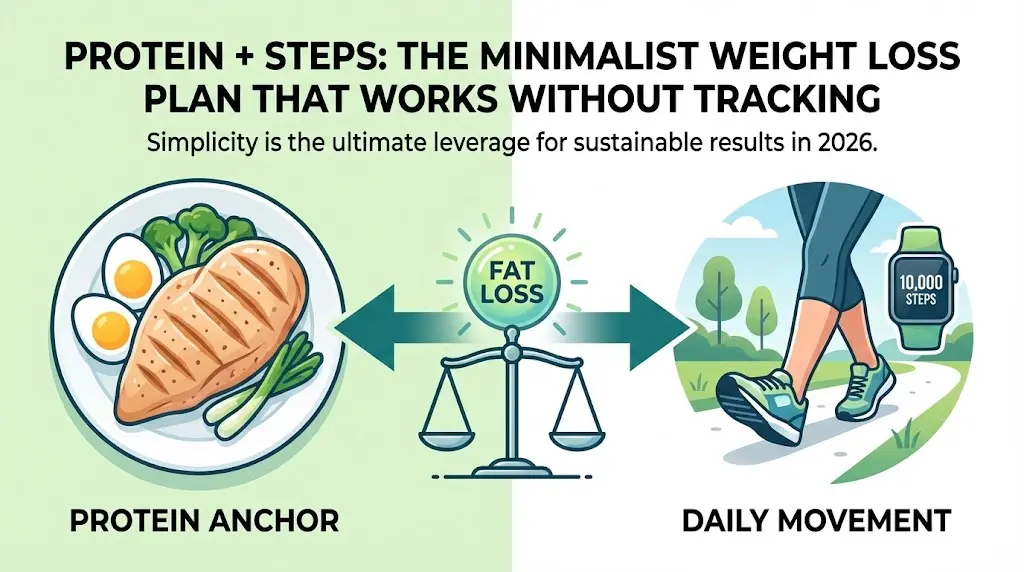
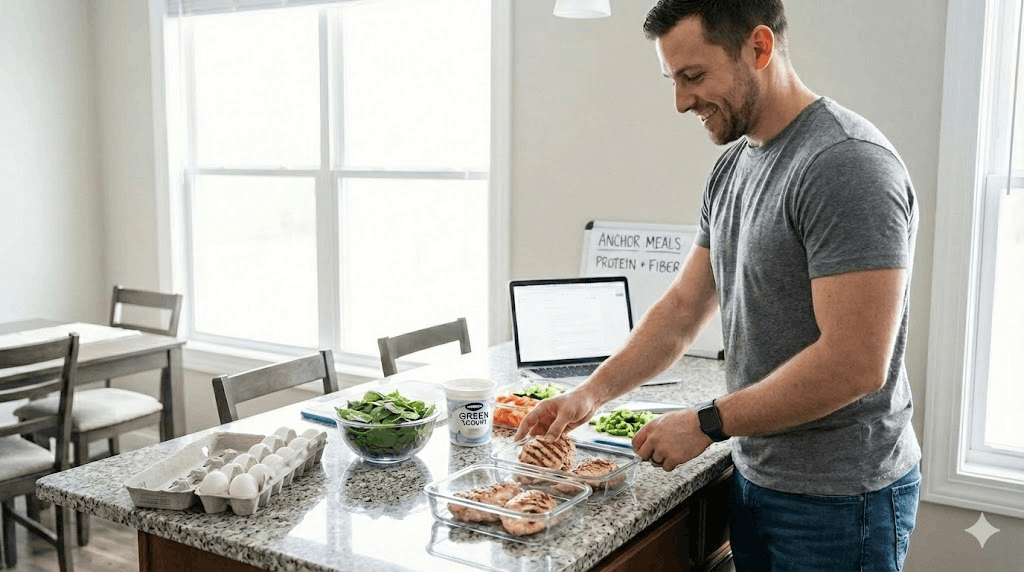
An anchor meal is a meal that reliably shuts down hunger. Daniel’s rule was simple: each meal must start with a protein anchor, then add plants, then add carbs if needed. This didn’t require counting calories; it required choosing a structure.
- Breakfast: 3 eggs + spinach, or Greek yogurt + nuts + berries (no honey).
- Lunch: chicken/lean beef/tofu bowl with vegetables + a measured carb (rice/potatoes) if training day.
- Dinner: protein + big salad/veg + a carb only if he actually wanted it (not automatic).
Daniel didn’t track calories daily, but he did track one thing for the first month: whether each meal had a real protein anchor. If he hit that, the rest became easier.
- Aim for 25–40g protein per main meal (most adults do well in this range).
- If you’re hungry at night, your earlier meals probably lacked protein or fiber.
- Protein “counts” when it’s a primary ingredient, not a garnish.
- A palm-and-a-half portion of chicken or lean beef.
- A can of tuna or salmon with a side salad.
- A large bowl of Greek yogurt (plain) with nuts and berries.
- Tofu/tempeh serving plus edamame.
The psychological trick was crucial: he didn’t remove foods—he removed the feeling of scarcity. He could still have pasta. But pasta could no longer be the whole meal.
Rule #2: Make carbs “wear a seatbelt”
Daniel’s coach told him something that stuck: carbs are not the enemy; unbounded carbs are. When carbs show up alone (bagel, cereal, pastries), they spike appetite and create a quick return of hunger. When they show up with protein and fiber, they behave differently.
- Carbs are paired with protein (meat, fish, eggs, tofu, yogurt).
- Carbs are paired with fiber (vegetables, beans, berries, whole grains).
- Carbs are portioned intentionally (one plate, not the bag).
- Carbs are timed: larger portions around activity; smaller on sedentary days.
Daniel didn’t quit carbs. He quit eating carbs like they were free.
Rule #3: Replace “snacking” with planned mini-meals
Daniel’s biggest calorie leak wasn’t dinner—it was the invisible food between meals: a cookie at the office, a handful of chips while cooking, “just” a few bites off his partner’s plate. It wasn’t bingeing. It was grazing.
The “volume” upgrade: eat bigger, but lower-calorie
Daniel’s old diet strategy was “eat less.” His new strategy was “eat more volume with fewer easy calories.” He built plates that looked generous: big vegetables, soups, salads, lean proteins—so his brain felt fed even in a deficit.
- Start dinner with a bowl of vegetable soup or a big salad before the main plate.
- Swap half the pasta for zucchini noodles or extra vegetables.
- Use potatoes or rice, but pair with a huge vegetable portion and protein (not a carb-only bowl).
- Keep sauces, oils, and nuts—just measure them once so they don’t silently double.
The plate should look satisfying. A diet that looks sad becomes a diet you quit.
So he created a rule: if he was hungry between meals, he could eat—but it had to be a mini-meal with protein, not a snack food that made him hungrier.
- Protein shake + banana (simple, portable).
- Cottage cheese + berries.
- Turkey slices + pickles + a piece of fruit.
- Edamame or a small bowl of lentil soup.
The training shift: from “burn calories” to “protect muscle”
Daniel used to do cardio as a penance. Now he trained for a different reason: to keep muscle while losing fat. That one reframing changed everything. When he started lifting, his hunger became more predictable, his posture improved, and his body composition changed even before the scale moved dramatically.
- Two strength sessions per week (full body): squat/hinge/push/pull/core.
- Two “low-cost” movement days: brisk walking or easy cycling (30–45 min).
- Daily step floor: he aimed for a consistent baseline, not a heroic peak.
He didn’t try to become an athlete. He tried to become reliably active. The plan was built for consistency, not intensity.
The diet details that made it work in real life
Most plans fail in two places: restaurants and stress. Daniel didn’t avoid either—he built guardrails.
The stress-to-craving loop (and how he broke it)
Daniel noticed a pattern: his worst eating wasn’t driven by hunger—it was driven by stress. On deadline days, he would “save calories” and then raid the kitchen at 10 PM. It felt like lack of control, but it was predictable physiology: under-fueling + high cortisol = cravings.
- A planned afternoon meal: protein + fiber at 4–5 PM so dinner wasn’t a rescue mission.
- A hard kitchen close: a specific time when eating ends (tea, brushing teeth, lights down).
This wasn’t about discipline. It was about removing the “decision moment” when he was tired and depleted.
- Order protein-first dishes (steak, chicken, fish, tofu) and add a vegetable side.
- If he wanted fries or dessert, he chose one and shared it—never both by default.
- He stopped drinking calories casually: alcohol became an intentional choice, not a reflex.
Daniel created a repeating “base list” so healthy eating didn’t require daily creativity.
- Proteins: eggs, Greek yogurt, chicken breast/thighs, canned tuna/salmon, lean ground beef, tofu/tempeh.
- Fiber foods: frozen vegetables, salad kits, berries, lentils/beans, oats (used sparingly).
- Carbs with boundaries: rice packets, potatoes, whole-grain wraps (portion-controlled).
- Satiety helpers: nuts (pre-portioned), olive oil, avocado, pickles, sparkling water.
If you remove decision fatigue, you remove most “bad choices.”
The plateau (and the mistake that almost derailed him)
Daniel used to chase big workouts and ignore the other 23 hours of the day. Instead, he picked a consistent daily movement baseline. It wasn’t glamorous, but it stabilized his energy and appetite.
- He scheduled two 10-minute walks: after lunch and after dinner.
- He took calls while walking when possible.
- He treated “no movement days” as exceptions, not a normal week.
You don’t need extreme workouts. You need a body that moves often enough to stay metabolically awake.
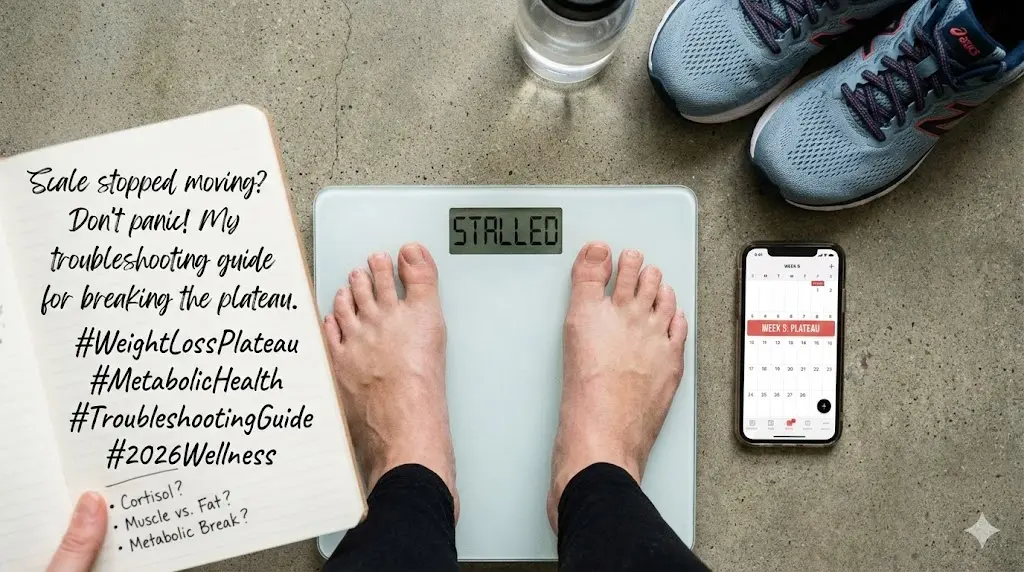
At Week 6, the scale stalled. Daniel panicked and almost went back to extremes. Instead, he did something smarter: he audited his week like a business process.
- His “healthy” weekend brunch was two meals’ worth of calories.
- He was under-sleeping Friday and Saturday, then eating more Sunday.
- His evening “taste testing” while cooking was bigger than he thought.
He didn’t punish himself. He adjusted: smaller brunch portion, a protein mini-meal mid-afternoon, and a hard rule: no eating while cooking—he plated a small tasting bowl instead.
The results (and why they finally lasted)
Over 7 months, Daniel lost 18kg. But the real win was the change in his baseline behavior. His appetite became calmer. His cravings became less urgent. He stopped thinking about food all day. He could attend a party, enjoy it, and return to normal eating the next day without a “reset diet.”
His blood pressure improved. His resting heart rate dropped. His strength went up. And the compliment that meant the most wasn’t “you look great.” It was his own thought when he walked past a mirror: this looks like me again.
A sample “normal” day (no special dieting food)
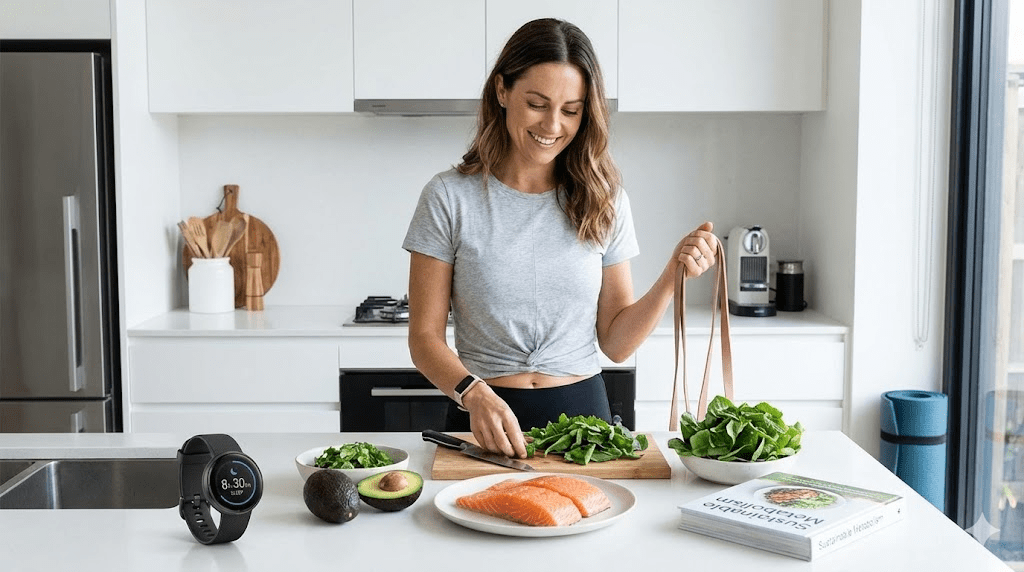
Daniel’s meals looked boring, repeatable, and satisfying—which is exactly why they worked.
- Breakfast: eggs + spinach + avocado, coffee (no sugary syrups).
- Lunch: chicken bowl with vegetables + rice (training day) or extra vegetables (rest day).
- Afternoon: cottage cheese + berries or a protein shake.
- Dinner: salmon or lean beef + roasted vegetables + a portioned carb if desired.
- Treat (planned): 2–3 times per week, one portion of a favorite food—no “cheat day.”
Daniel didn’t do cheat days. Cheat days taught his brain that eating well was punishment and weekends were freedom. Instead he used planned treats: small, intentional, and never followed by restriction.
- Treats were eaten seated, plated, and enjoyed—not standing at the fridge.
- He paired treats with real meals (dessert after dinner), not as a standalone binge trigger.
- If he had a bigger night out, the next day was normal eating, not fasting.
He didn’t “try harder.” He made the easier choice happen more often.
Common pitfalls (Daniel hit most of them once)
- Going too low on calories and triggering rebound hunger.
- Treating exercise as punishment instead of muscle protection.
- Keeping trigger foods in the house “for moderation” before habits are stable.
- Relying on liquid calories (smoothies, fancy coffee) and calling it “healthy.”
- Thinking a plateau means failure instead of feedback (sleep, steps, portions, weekends).
Practical next steps
- Pick two anchor meals you can repeat 4–5 days per week (high protein + fiber).
- Apply the “carb seatbelt”: carbs only when paired with protein and fiber, and portioned on a plate.
- Replace snacks with mini-meals for 14 days and observe hunger and cravings.
- Do 2 strength sessions weekly and set a consistent daily step baseline.
- Run a weekly audit: weekends, alcohol, sleep, and “invisible bites” are usually the real problem.
Quick checklist for you
What Daniel would do differently (if he started today)
- He would start strength training earlier to protect muscle and confidence.
- He would stop “earning” food with workouts and start feeding training with meals.
- He would prioritize sleep on weekends instead of using them to recover from the workweek.
- He would track patterns, not perfection: hunger, sleep, steps, and weekend structure.
Most importantly, he would stop searching for the one perfect diet and start building the one reliable system.
- Most meals have a protein anchor.
- Vegetables or fiber show up at least twice daily.
- Carbs are portioned intentionally (not eaten from bags/boxes).
- Strength training is scheduled (not optional).
- My plan works on busy days, not only on perfect days.
Important note: This article is educational and not medical advice. If you have diabetes, eating disorders, or are taking weight-loss medications, consult a qualified clinician before making major dietary changes. Sustainable change should improve your life, not shrink it.