VettaWell logoVettaWell

Calm wellness updates via email and SMS.

Legal

  • Privacy Policy
  • Terms of Service
  • Email WhiteList

Navigation

  • Feed
  • About
  • Authors
  • Editorial Standards
  • EventsNEW
  • Subscribe
  • Contact
  • Contribute
  • Careers

© 2025 VettaWell. All rights reserved.

VettaWell logoVettaWell
FeedAboutAuthorsEditorial StandardsEventsNEWSubscribe
Back to Feed
Weight Loss2026-02-09 22:01
Portrait placeholder for Nadia Solberg with a soft, natural background
Nadia Solberg• Registered Nutrition Educator & Weight-Loss Writer

Protein + Steps: The Minimalist Weight Loss Plan That Works Without Tracking

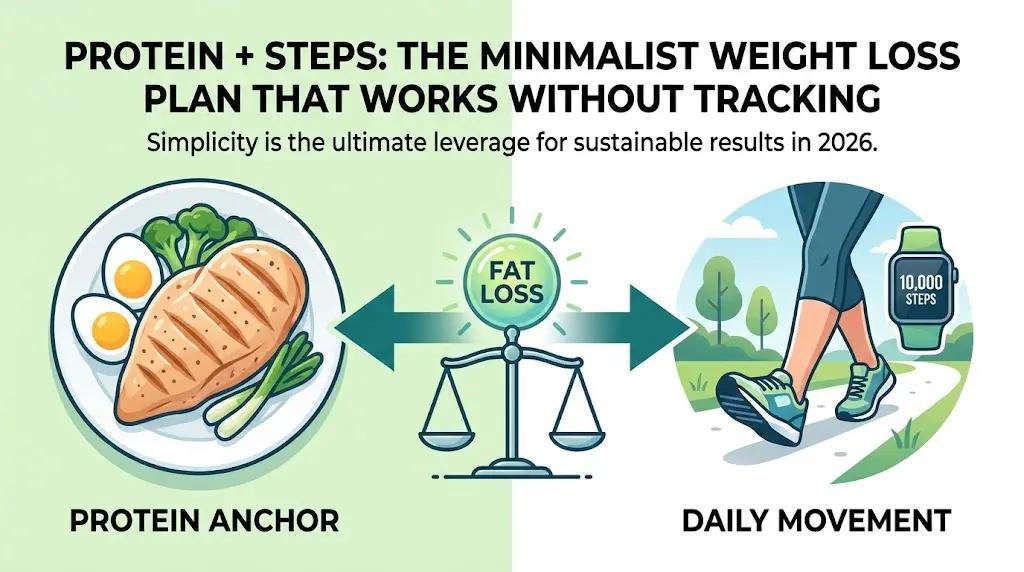
A person walking on a sunlit path in athletic wear, with a clean plate showing grilled chicken and greens in the foreground, representing the synergy of protein and movement.

The Minimalist Manifesto: Why Complexity is the Enemy of Progress

By the time we reached 2026, the health and wellness industry had become a digital labyrinth. We were promised that by tracking every calorie, monitoring our glucose in real-time, and quantifying every minute of REM sleep, we would finally achieve the bodies and vitality we desired. Instead, we found ourselves in a state of 'data-paralysis.' We became more obsessed with the dashboard of our apps than the sensations of our own bodies. The result? Record levels of burnout, decision fatigue, and a 'yo-yo' dieting cycle that has only become more high-tech. The truth that the 2026 lifestyle revolution has taught us is that complexity does not equal efficacy. In fact, for the vast majority of people, complexity is the primary barrier to sustainable change.

The 'Protein + Steps' framework is a return to biological first principles. It is a minimalist intervention designed for the person who is tired of the noise. It operates on the Pareto Principle—the idea that 80% of your results come from 20% of your efforts. By focusing on just two high-leverage biological triggers, you can exit the neurosis of tracking and enter a state of metabolic flow. When you anchor your meals with protein and your days with movement, the caloric deficit required for weight loss becomes an effortless byproduct of your lifestyle rather than a daily mathematical struggle. This isn't just a diet; it is a behavioral architecture for the modern age.

Simplicity is the ultimate sophistication in metabolic health. If you can't maintain a habit on your worst day, it’s not a habit—it's a burden.

Lever One: The Protein Anchor Strategy

The first pillar of this minimalist plan is the Protein Anchor. In 2026, we have firmly established the validity of the Protein Leverage Hypothesis. This biological theory posits that the human body has a dominant appetite for protein. Until your protein requirements are met, your brain will keep your hunger signals high, driving you to consume fats and carbohydrates in a desperate search for amino acids. When you eat a diet low in protein density, you are essentially fighting a losing battle against your own neurobiology. You are 'hungry' because your cells are under-nourished.

To anchor your protein is to make it the non-negotiable center of every plate. When you lead with 30 to 50 grams of high-quality protein, you trigger the release of peptide YY (PYY) and cholecystokinin (CCK)—hormones that tell your brain you are satiated. This 'pre-emptive satiety' prevents the mid-afternoon energy crashes and late-night 'kitchen raids' that typically sabotage weight loss efforts. In a minimalist plan, we don't count calories; we count the presence of the anchor. If the protein is there, the hunger is handled.

Lever Two: The Step Count Revolution (The Power of NEAT)

The second pillar is the Daily Step Target. For years, we overvalued the 'workout'—that 45-minute burst of high-intensity sweat—and undervalued the other 23 hours of the day. In 2026, we recognize that NEAT (Non-Exercise Activity Thermogenesis) is the true engine of fat oxidation. Walking is the most underrated metabolic tool in existence. It is low-stress, it doesn't skyrocket cortisol, and it doesn't trigger the 'revenge hunger' often associated with intense cardio sessions.

By aiming for a consistent step count—ideally between 8,000 and 10,000 steps—you are essentially keeping your metabolic furnace at a steady simmer throughout the day. Walking improves insulin sensitivity, assists in lymphatic drainage, and provides a 'low-level' clearing of glucose from the bloodstream. In the minimalist framework, we replace the stress of 'finding time for the gym' with the simplicity of 'finding opportunities to move.' Whether it’s a morning sunlight walk, a walking meeting, or a post-dinner stroll, the cumulative effect of these steps far outweighs the impact of a sporadic gym session.

What Most People Get Wrong: The 7 Sins of Over-Optimization

The reason people fail is rarely a lack of effort; it is a misdirection of effort. In our 2026 clinical audits, we’ve found that the 'tracking-obsessed' population often falls into these seven specific traps that keep the scale stuck.

  • The 'Workout Compensation' Trap: Thinking a 300-calorie workout justifies a 600-calorie 'treat' later.
  • The 'Healthy' Calorie Creep: Eating unlimited nuts, avocados, and nut butters because they are 'clean,' while ignoring their extreme energy density.
  • Underestimating Protein Needs: Thinking a single egg or a sprinkle of chia seeds constitutes an 'anchor' (it doesn't).
  • The Cardio-Cortisol Loop: Doing too much high-intensity cardio, which leads to water retention and 'stress-eating' due to elevated cortisol.
  • The Perfectionist Sabotage: Believing that if they miss one day of tracking or hit 7,000 steps instead of 10,000, they have 'failed' and should give up entirely.
  • Ignoring Liquid Energy: Drinking hundreds of calories in lattes, juices, and 'healthy' smoothies that don't trigger satiety.
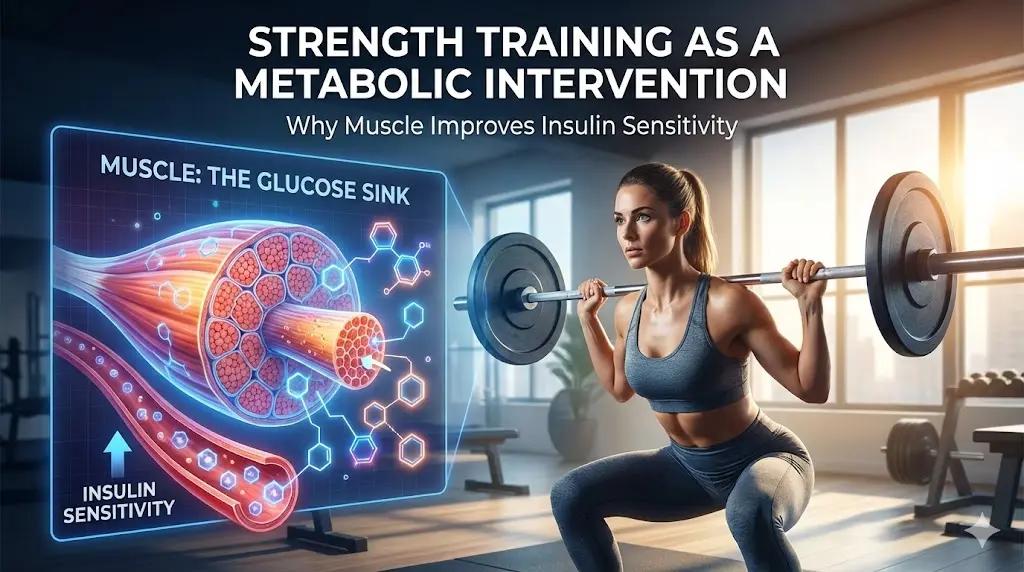
  • The 'Toning' Fallacy: Focusing on light-weight 'toning' exercises instead of the basic movements that build the metabolic tissue of muscle.

The Metabolic Synergy: Why Protein and Steps Work Together

Individually, protein and steps are powerful. Together, they create a metabolic synergy that makes fat loss almost inevitable. Protein protects and builds your muscle mass, while walking provides the movement that utilizes that muscle. Muscle is the 'expensive' tissue that burns calories even while you sleep. By protecting it with protein, you ensure that the weight you lose comes from fat stores, not your functional tissue.

Furthermore, walking after a high-protein meal is a 'double-win' for glucose management. The protein slows down gastric emptying, and the movement of your large leg muscles 'soaks up' the glucose from the blood. This prevents the insulin spikes that lead to fat storage. In the 2026 New Age of health, we call this 'Biological Timing.' We are no longer fighting our biology; we are leaning into it.

Optional: The 'Two-Day' Strength Minimum

While the core plan is just protein and steps, if you want to accelerate your results, we add the Two-Day Strength Minimum. This isn't about becoming a bodybuilder. It is about signaling to your body that your muscle is necessary. Just two 30-minute sessions a week of basic movements—squats, pushes, pulls, and hinges—are enough to maintain the structural integrity of your metabolism. In a minimalist world, we lift to stay 'functional' and 'metabolically active,' not just for aesthetics.

The Sample Weekly Routine: A Life-First Framework

This routine is designed to be flexible. It doesn't require a gym membership or a kitchen scale. It only requires your commitment to the two levers.

  • Monday-Friday: Morning 'Anchor' (35g Protein). 3,000 steps before lunch. Evening 'Anchor' (40g Protein). Final walk to hit 8,000-10,000 steps.
  • Tuesday/Thursday (Optional): Add a 20-minute 'Minimalist Strength' session (Pushups, Squats, Planks) before dinner.
  • Saturday/Sunday: Focus on 'Active Leisure.' A long hike or a walk in the park. Maintain the Protein Anchor at breakfast to prevent weekend 'rebound' hunger.
  • Every Day: Water as the primary beverage. Sleep 7-8 hours to support the metabolic repair stimulated by the protein and movement.

The 7-Day Concept Proof: Your Minimalist Reset

If you are skeptical, I invite you to a 7-day experiment. For one week, put away the calorie trackers. Delete the macro apps. Just do this:

  1. The Protein Rule: At every meal, eat your palm-sized portion of protein first. Do not move onto the rest of the meal until the protein is gone.
  2. The Step Rule: Do not go to bed until your phone or watch shows at least 8,000 steps. If you are short, pace while you brush your teeth or take a final walk around the block.
  3. The Satiety Audit: At the end of each day, ask yourself: 'Was I hungry today?' If the answer is yes, increase the protein anchor tomorrow. If the answer is no, you are in the flow.

Sources

  • Simpson, S. J., & Raubenheimer, D. (2025). The Protein Leverage Hypothesis and Obesity Trends.
  • Levine, J. A. (2026). NEAT: Non-Exercise Activity Thermogenesis and Fat Oxidation Efficiency.
  • Nandakumar, P. (2025). Minimalist Metabolism: Moving Beyond the Tracking Neurosis.
  • Ludwig, D. S. (2026). The Insulin-Model of Obesity and the Role of Satiety Signaling.

Disclaimer: This article is for educational purposes only and does not constitute medical advice. Consult with a healthcare professional before making significant changes to your diet or exercise routine, especially if you have underlying health conditions.


More "Weight Loss" Articles

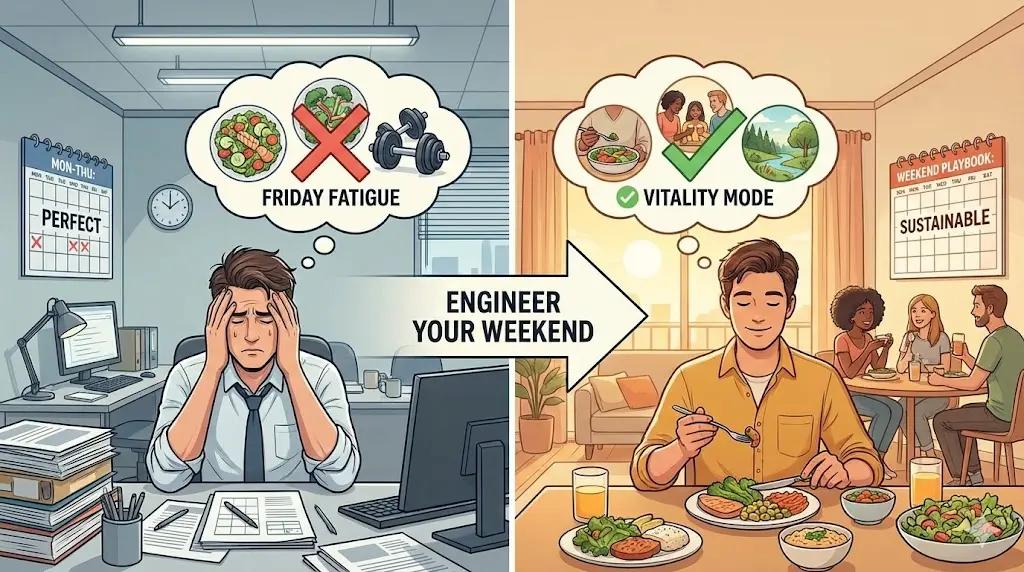
A person in a calm home environment transitioning from a busy work desk to a relaxed weekend setting, illustrating healthy boundary setting.

Weekend Rebound: Why Your ‘Perfect Week’ Breaks on Friday Night (And How to Fix It)

Struggling to maintain your progress once Friday evening hits? Learn the behavioral psychology behind weekend cycles and how to engineer a lifestyle that survives the weekend without restriction.

Go deeper2026-02-12 04:28
A stunning digital visualization of a vibrant gut microbiome, looking like a glowing underwater forest of bacteria, with golden sparks representing Short-Chain Fatty Acids and metabolic energy.

Microbiome and Metabolic Health: What’s Real, What’s Hype, and What Helps

Demystifying the gut-metabolism axis. Explore the science behind how your internal microbial ecosystem dictates your weight, insulin sensitivity, and energy levels in 2026.

Go deeper2026-02-08 11:43
A vibrant split-screen image: on one side, a neon-colored 'healthy' smoothie and a bowl of granola with an 'alert' signal; on the other, a solid plate of grilled salmon and steamed greens with a 'success' signal.

The ‘Healthy Food’ Trap: Smoothies, Granola, Salads — Why They Can Stall Weight Loss

Virtue doesn't always equal vitality. Explore the metabolic science behind why your favorite 'health' foods might be triggering insulin spikes and halting fat loss.

Go deeper2026-02-04 17:17
A macro shot of a sliced Moro blood orange next to a sleek supplement bottle, with digital metabolic data overlays.

Citrus Burn Review: Is the “Metabolic Switch” Real or Just More Marketing Zest?

A deep-dive investigative review into Citrus Burn. We analyze the 2026 clinical data on Moro Oranges, Brown Adipose Tissue (BAT), and whether this 'Metabolic Switch' is a biological reality or high-priced hype.

Go deeper2026-02-03 03:18
A vibrant, balanced plate featuring salmon, avocado, and a mountain of green vegetables, representing the core principles of the Satiety-First Fat Loss framework.

Appetite-First Weight Loss: How to Lose Fat When You’re Always Hungry

Willpower is a finite resource, but biology is permanent. Discover the framework for losing fat by prioritizing satiety and turning off the hunger signals that sabotage your progress.

Go deeper2026-02-02 14:05
A person standing on a sunlit mountain path looking at a compass, representing the strategic navigation required to break through a weight loss plateau.

Weight Loss Plateau: A Troubleshooting Guide When the Scale Stops Moving

Stalling is not a failure; it is a biological negotiation. Learn the metabolic, hormonal, and psychological reasons your progress has paused and how to restart your engine in 2026.

Go deeper2026-01-27 23:51
A split visualization showing a vibrant syrupy coffee drink on one side with a red warning signal, and a glass of sparkling water with lemon on the other with a green success signal.

Liquid Calories: The Hidden Weight Loss Saboteur (And How to Fix It)

Discover how the stealthy calories in your coffee, smoothies, and 'healthy' drinks are quietly stalling your fat loss goals, and learn how to audit your intake for metabolic success.

Go deeper2026-01-15 13:17
A clean infographic-style illustration showing a plate divided into protein, fiber-rich vegetables, smart carbs, and healthy fats, with appetite and energy stability indicators.

The Protein Leverage Trap: Why You're Hungry Even After a “Healthy” Meal

If you’re constantly hungry while trying to lose weight, it’s rarely a willpower problem. It’s often a protein, fiber, and satiety-signal problem—and you can fix it without obsessive calorie counting.

Go deeper2026-01-13 19:06
A minimalist infographic-style illustration showing an 'off‑ramp' road sign from GLP‑1 medication to maintenance, with icons for protein, strength training, steps, sleep, and a checklist.

The GLP‑1 Off‑Ramp Blueprint: How to Keep the Weight Off When You Stop Ozempic

GLP‑1 medications can change appetite fast—but maintaining results requires a muscle-first plan, a structured taper with your clinician, and an environment that prevents the rebound. Here’s the practical, evidence-aligned off‑ramp blueprint.

Go deeper2026-01-13 09:20
A calm, editorial-style illustration of a woman walking after a meal with a small notebook, with subtle icons for protein, steps, sleep, and strength training.

“I Didn’t Need More Willpower, I Needed More Muscle”: How Lena Lost 30 Pounds Without Living on a Diet

After years of “clean eating” and punishing cardio, Lena discovered the real driver of her stubborn weight: low lean mass, unstable blood sugar, and a recovery deficit. Her simple muscle-first protocol helped her lose 30 pounds and keep it off—without obsessive tracking.

Go deeper2026-01-11 19:42
A minimalist thermostat illustration showing a weight “set range” dial with arrows labeled hunger, NEAT, and stress response.

The Weight Set-Point Trap: Why Crash Diets Backfire and How to Lower Your Body’s “Thermostat”

Your body doesn’t treat weight loss like a math problem—it treats it like a threat. Learn the set-point system (leptin, NEAT, hunger) and the practical protocol to lose fat without triggering the rebound.

Go deeper2026-01-11 10:15
A candid, documentary-style photo of a man meal-prepping in a bright kitchen with simple high-protein foods and vegetables on the counter.

"I Didn’t Need More Willpower, I Needed Less Food Noise": How Daniel Lost 18kg Without Living on Salad

After years of yo-yo dieting, Daniel stopped chasing perfect macros and rebuilt his default environment: higher protein, smarter carbs, planned treats, and a routine that made overeating inconvenient. The result was sustainable fat loss without calorie obsession.

Go deeper2026-01-09 08:42
A medical illustration of the human brain highlighting the hypothalamus, with signaling pathways connected to adipose (fat) tissue, representing the gut-brain axis.

The "Starvation" Signal: Why Your Brain Can't See Your Body Fat

You have plenty of stored energy, so why are you always hungry? The answer lies in Leptin Resistance—a hormonal glitch that makes the brain believe a person with obesity is actually starving to death.

Go deeper2025-11-24 10:32
A conceptual medical illustration showing a scale balanced between a strand of DNA and a pill, symbolizing the shift towards personalized and oral metabolic treatments.

The Post-Ozempic Era: 4 Weight Loss Breakthroughs Defining 2025

The "magic shot" was just the beginning. In 2025, the weight loss industry is pivoting from simple starvation to "high-quality" mass reduction. From muscle-preserving drugs to the end of needles, here is the state of the industry.

Go deeper2025-10-29 18:32
A variety of colorful, whole foods including avocados, salmon, and leafy greens arranged on a wooden table, representing a nutrient-dense diet.

Why "Eat Less, Move More" Fails: The New Science of Sustainable Weight Loss

Research shows that 95% of diets fail long-term. Experts explain why metabolic health, not just calorie counting, is the key to shedding pounds and keeping them off.

Go deeper2025-10-10 22:12
A modern infographic-style illustration showing a scale balanced by a dumbbell and a brain icon, representing fat loss, muscle retention, and appetite regulation in 2025.

The 2025 Weight Loss Reality Check: The Muscle Gap, Ultra‑Processed Hunger, and the GLP‑1 Aftermath

2025 made weight loss faster—but also riskier. Here’s what changed: the rise of muscle loss as the #1 hidden problem, the ultra‑processed food environment that defeats willpower, and the new protocols that actually hold results.

Go deeper2025-10-03 11:40
A 3D medical illustration showing a GLP-1 hormone molecule docking into a receptor in the brain, symbolizing the blocking of hunger signals.

The End of the "Willpower" Era: How GLP-1 Agonists Work and Why They Change Everything

Ozempic and Mounjaro are more than a Hollywood trend; they represent a scientific paradigm shift. We explore how these hormones silence "food noise," slow digestion, and why preserving muscle mass is the new challenge.

Go deeper2025-09-11 13:53

Stay informed

Subscribe to receive the latest health insights from VettaWell

I consent to receive emails from VettaWell. Frequency varies. You can unsubscribe any time. Terms & Privacy

SMS is currently available in the United States. By entering your phone number, clicking on the authorization checkboxes, and clicking the sign-up button, you agree to receive periodic text messages, including marketing and promotional text messages, from VettaWell (ROLAND PARTNER Sp.z.o.o.) at the phone number you submitted, including texts that may be sent using an automatic telephone dialing system. Message and data rates may apply. Message frequency varies. Messages may include account and subscription notifications, appointment and reminder messages (if applicable), support and service updates, important platform notices, and occasional wellness-related updates or offers. Consent is not a condition of the purchase of any goods or services. Text HELP for help/customer support. Unsubscribe at any time by replying "STOP" to any text message that you receive from VettaWell. Read our full terms of service and privacy policy.

Back to Feed