
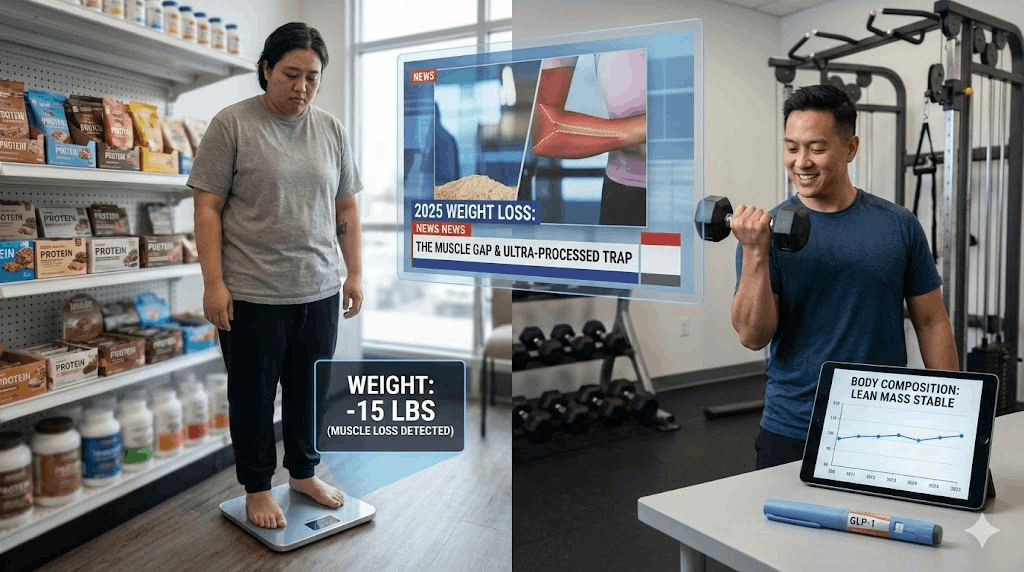
If weight loss used to be framed as a motivation problem, 2025 exposed something else: it’s a systems problem. New drugs reduced appetite, social media scaled “hacks,” and wearable data became mainstream. People lost weight faster than ever—and then discovered the costs: muscle loss, fatigue, gallbladder issues, rebound hunger, and a confusing marketplace of telehealth clinics and supplements.
This article is a field guide to what’s actually happening in 2025: the three biggest problems clinicians keep seeing, the trends shaping real outcomes, and a practical blueprint that doesn’t depend on perfect discipline.
In 2025 the question isn’t “Can you lose weight?” It’s “Can you lose fat without losing the engine that keeps it off?”
Key takeaways
- The biggest hidden failure mode of 2025 is the Muscle Gap: rapid weight loss where lean mass drops too fast, slowing metabolism and worsening long‑term outcomes.
- The ultra‑processed food environment creates engineered hunger. For many people, willpower alone is not a realistic strategy.
- GLP‑1 medications changed the game, but the 2025 skill is exit strategy: how you transition, maintain, and protect lean mass.
- The new scorecard is not BMI—it’s body composition, strength, and protein adequacy.
- The best “trend” is boring: protein + fiber + resistance training + sleep protection, repeated long enough to compound.
What changed in 2025 (and why your old playbook fails)
Weight loss advice used to assume stable appetite and a neutral food environment. In reality, the modern environment is a high‑stimulation, low‑satiety machine. Add stress, sleep loss, and endless snacking cues, and the “eat less, move more” script becomes an accusation—not a plan.
2025 added two accelerants: widespread GLP‑1 use and a surge of app‑based nutrition coaching. The result is a paradox: more tools, more confusion. People can lose 10–20% of body weight, then get stuck with a body that feels weaker and a brain that feels hungrier once the medication changes.

Problem #1: The Muscle Gap (weight loss that makes you metabolically older)
Clinics are seeing a pattern: people celebrate the scale while silently losing the thing that protects their future—lean mass. Muscle is not just aesthetics. It’s glucose disposal capacity, metabolic reserve, injury protection, and the hardware behind energy and confidence.
- Low appetite + low protein: appetite suppression makes it easy to under‑eat protein for months.
- No resistance training: cardio-only plans don’t provide a strong enough signal to keep muscle.
- Aggressive deficits: rapid loss often exceeds the body’s ability to conserve lean tissue.
- Low micronutrients: iron, B12, vitamin D, magnesium deficits amplify fatigue and reduce training tolerance.
If your body can’t justify keeping muscle, it won’t. Muscle is expensive tissue.
- Strength is declining week to week (even if you “feel lighter”).
- You’re colder than usual, lethargic, and your resting heart rate may drop abnormally low for your baseline.
- Your waist shrinks but your posture, performance, and energy collapse (the classic “smaller but worse” outcome).
The 2025 standard is to treat muscle as a protected asset. That means you structure the plan so muscle has a reason to stay.
- Protein floor: hit a minimum daily target before you worry about calorie “ceiling.”
- Strength schedule: 2–4 resistance sessions per week (even short ones) to keep the signal alive.
- Deficit discipline: moderate deficits beat extreme deficits for composition and adherence.
- Recovery budget: sleep and stress management aren’t “wellness”—they’re muscle retention tools.
Problem #2: Ultra‑Processed Hunger (why appetite is not a moral test)
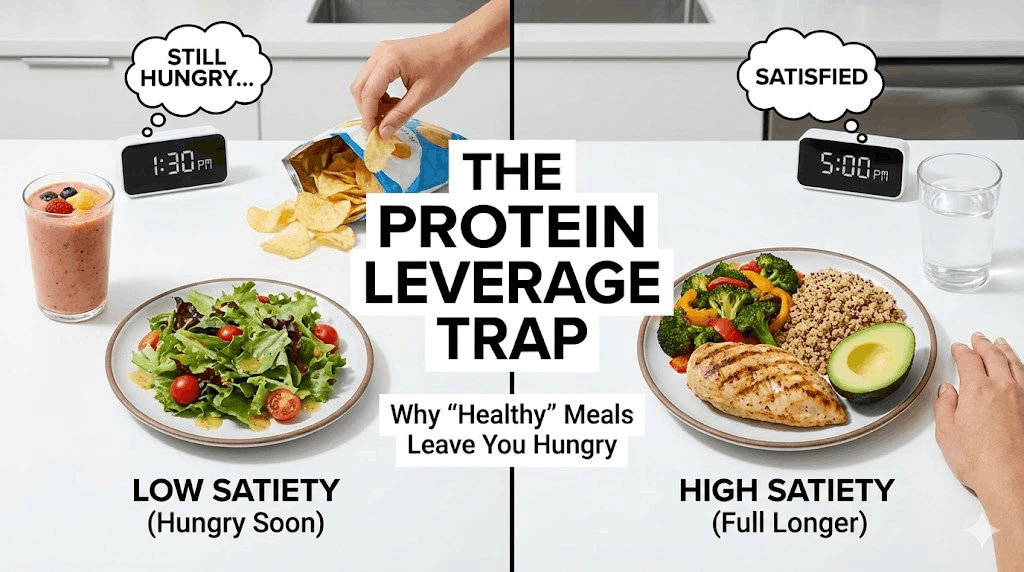
The defining environmental trend is the dominance of ultra‑processed foods engineered for palatability, convenience, and repeat purchase. Many are low in fiber and protein, high in refined starch and fat combinations, and designed to bypass satiety cues.
- Texture + flavor stacking: crunchy, salty, sweet, creamy—multiple reward triggers at once.
- Low chewing: liquid calories and soft foods reduce satiety signaling.
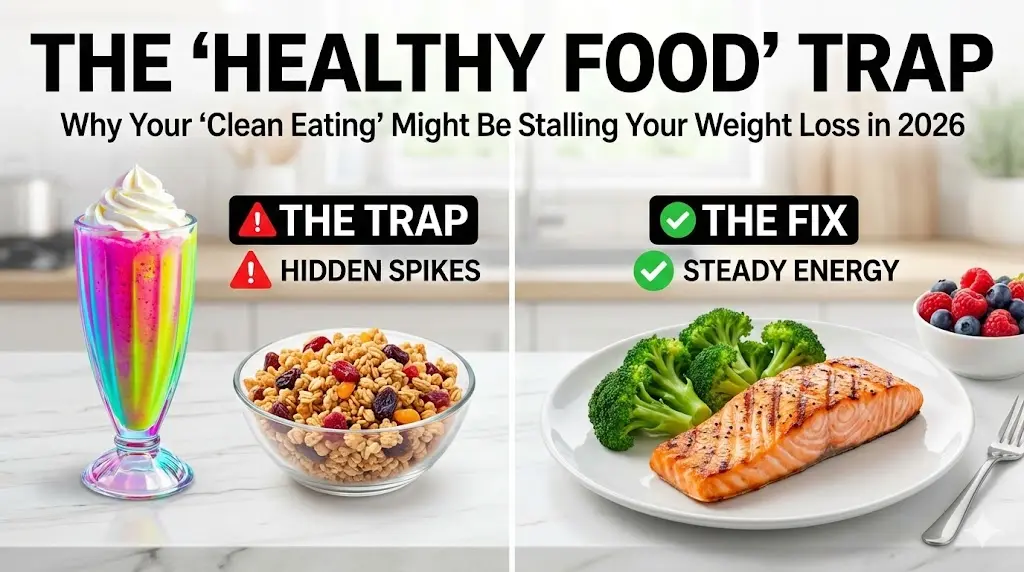
- “Healthy” ultra‑processed: protein bars, cereal, flavored yogurts can still spike appetite cycles.
If your food environment is designed like a casino, your appetite will behave like a gambler.
In 2025, the most reliable weight‑loss tool is friction. Make overeating inconvenient and protein/fiber convenient.
- Default meals: 3–5 repeatable meals you can make on autopilot.
- Food visibility: snacks out of sight; high‑protein options visible and ready.
- Single‑serve boundaries: if a food is a trigger, don’t store family‑size packaging at home.
- Protein anchored snacks: if you snack, anchor it with protein (not just fruit or crackers).
Problem #3: The Appetite Economy (sleep, stress, and dopamine)
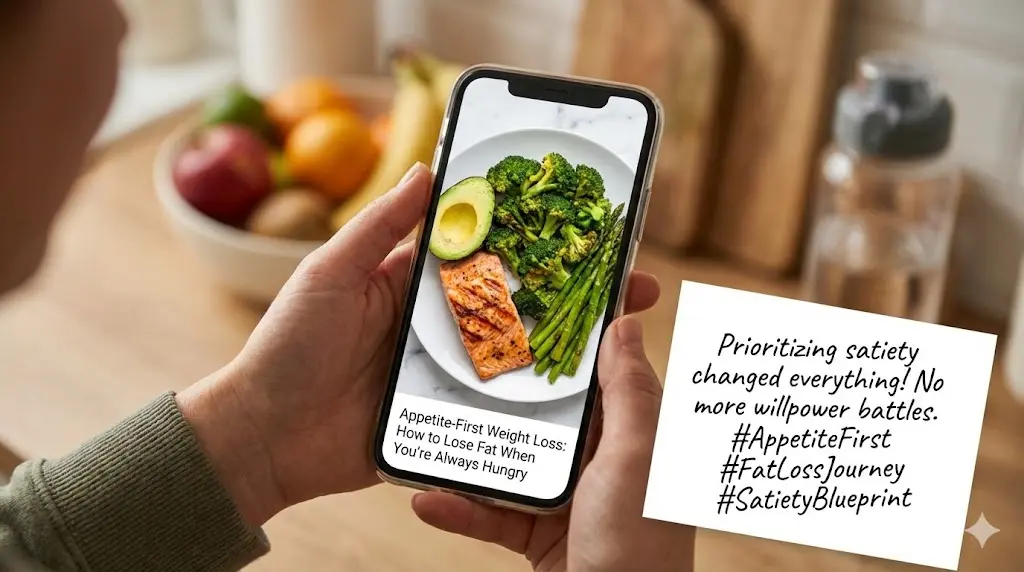
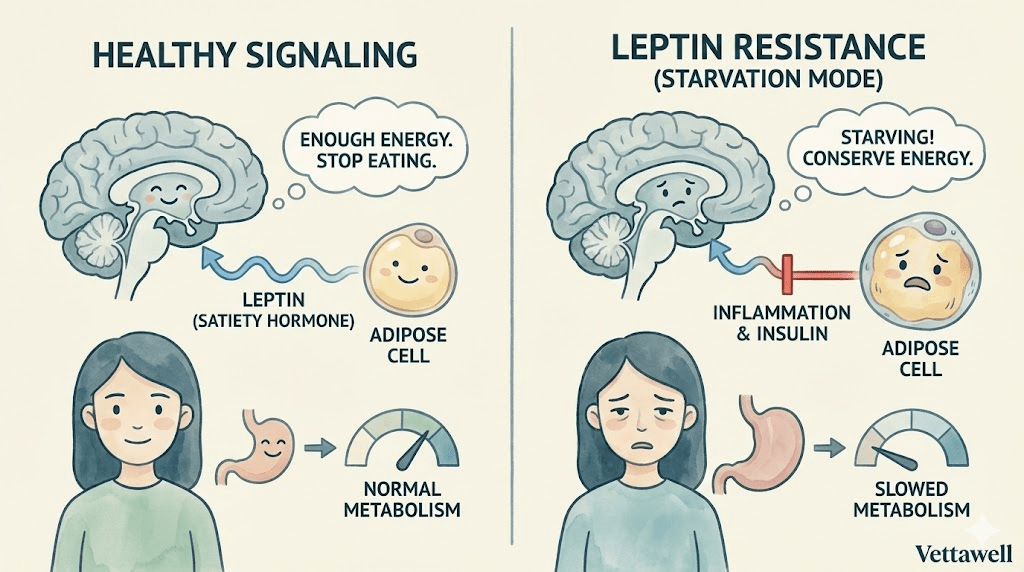
2025 made it clear that appetite is not just biology—it’s attention. Short sleep increases hunger, stress increases cravings, and constant digital stimulation makes it harder to tolerate boredom. Many people aren’t failing a diet—they’re living in a nervous system state that requires relief, and food becomes the fastest relief available.
- Late caffeine: suppresses sleep pressure, delays bedtime, worsens next-day cravings.
- Night scrolling: keeps dopamine high and bedtime later; increases mindless snacking.
- Under-recovery training: hard workouts on poor sleep increase cortisol and hunger.
You can’t out‑discipline a nervous system that is chronically dysregulated.
- Morning light + movement: 5–15 minutes outside early anchors circadian rhythm and improves sleep drive.
- Caffeine cutoff: set a hard cutoff 8–10 hours before bed.
- Downshift ritual: a repeatable 10‑minute wind‑down (shower, stretch, breathwork, reading).
The 2025 trends that actually improve outcomes
Not all trends are noise. A few are genuinely shifting results because they align with physiology and adherence.
BMI can’t distinguish fat loss from muscle loss. In 2025, more programs are tracking waist circumference, strength, and body composition so the plan protects health—not just a number.
- Better scorecard: waist measurement, strength performance, energy, sleep, and hunger stability.
- The goal: lose fat while maintaining (or increasing) training performance over time.
The phrase shows up everywhere because it solves the biggest 2025 failure mode. Clinicians increasingly prescribe weight loss as a composition project: protect lean mass, reduce visceral fat, and keep strength trending up.
- Minimum effective strength dose: 2 full‑body sessions/week can be enough to preserve muscle if done consistently.
- Protein distribution: not just total protein—spreading it across meals improves utilization for many people.
- Creatine normalization: more mainstream use for strength support (where appropriate).
The most useful devices are not the ones that shame you—they’re the ones that reveal patterns. Steps, sleep duration, resting heart rate, and glucose curves can expose the real drivers behind plateaus.
- Steps as an anchor: a stable daily baseline reduces reliance on “workout motivation.”
- Sleep tracking: not perfect, but enough to show you when you’re running a deficit.
- CGM curiosity: for some, post‑meal spikes correlate with hunger, cravings, and fatigue.
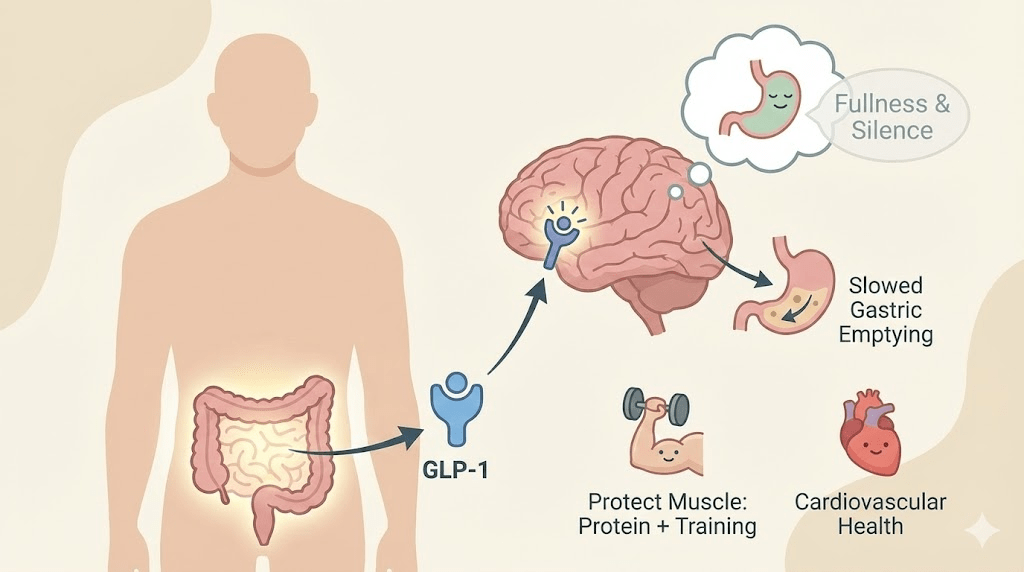
GLP‑1 use forced a new problem into the mainstream: maintenance is a skill. In 2025, better programs treat medication as one component of a system that must include protein adequacy, strength training, and habit scaffolding.
- Maintenance calories are trained: people practice eating at maintenance with structure, not chaos.
- Dose changes require plan changes: when appetite returns, systems must already be in place.
- Food noise needs replacements: routines, social support, and stress tools fill the gap medication used to cover.
The 2025 scam landscape (what to ignore)
The more attention weight loss gets, the more aggressively the market exploits it. 2025 has a clear set of recurring traps.
- “GLP‑1 mimetic” supplements: usually marketing language with weak evidence.
- Detox teas and “fat burners”: often stimulants that worsen sleep and appetite rebound.
- All‑liquid plans: rapid loss with high relapse risk unless medically indicated and supervised.
- Influencer micro‑protocols: extreme hacks presented as universal solutions.
If a product promises fat loss without mentioning protein, strength, sleep, or relapse risk, it’s not a plan—it’s an ad.
A practical 30‑day blueprint (fat loss, muscle protected)
This is a conservative blueprint designed for real life. It’s not the fastest possible. It’s the one most likely to still work in month three.
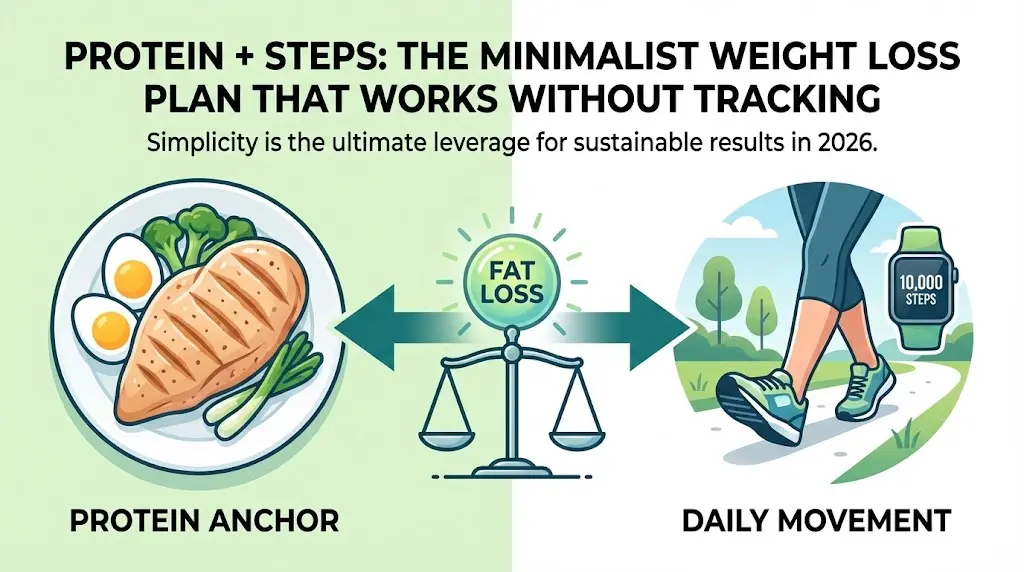
- Protein floor: choose a daily minimum and build meals around it.
- Step baseline: set a realistic daily step target you can hit even on bad days.
- Two strength sessions: schedule them like meetings—non‑optional.
- Stop liquid calories (sweet coffee drinks, juice, “healthy” smoothies).
- Add fiber to lunch and dinner (vegetables, legumes, whole grains where tolerated).
- Create a “safe snack list” that is protein‑anchored.
- Morning light + short walk 5 days/week.
- Caffeine cutoff and consistent bedtime window.
- One downshift tool daily (breathing, stretching, hot shower, reading).
Only after the foundations are stable do you adjust the dial. The goal is a deficit you can repeat.
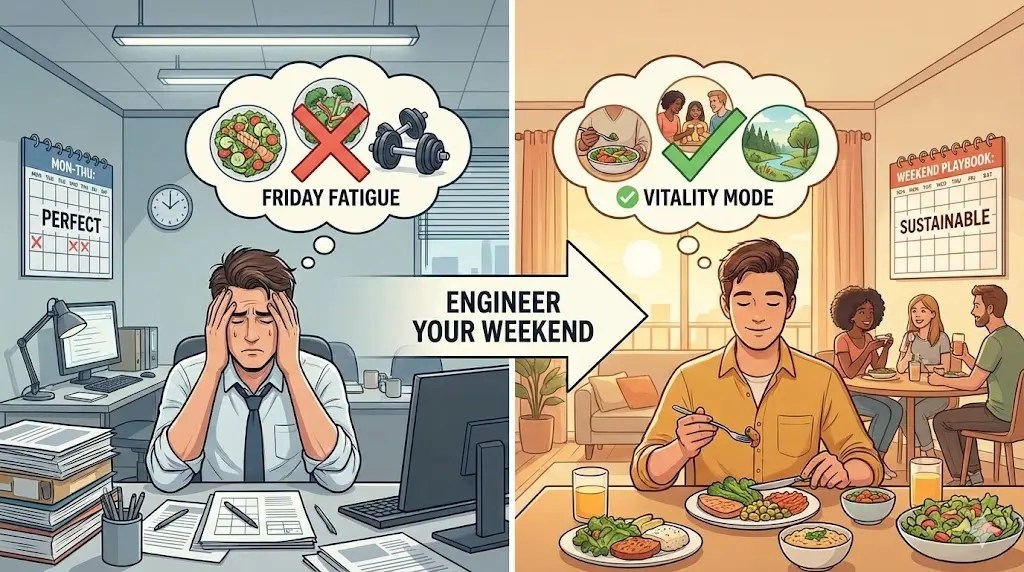
- Keep meals mostly whole-food based on weekdays; allow a structured flex meal on weekends.
- Prioritize protein and fiber before starch at meals (food sequencing).
- Add a 10-minute walk after your largest meal to reduce post-meal fatigue and cravings.
Common pitfalls in 2025
- Chasing the scale while ignoring strength and protein (the Muscle Gap).
- Over-correcting with extreme restriction, then rebound eating when appetite returns.
- Using stimulants (pre-workout, energy drinks) to compensate for sleep debt.
- Switching strategies weekly instead of letting a plan compound for 8–12 weeks.
- Treating maintenance as “done” instead of a phase that needs structure.
Practical next steps
- Pick one metric beyond weight: waist measurement or a simple strength benchmark (e.g., squat pattern, pushups, carry).
- Build meals around a protein floor and add fiber at lunch/dinner for 14 days.
- Schedule 2 strength sessions next week and define the minimum viable workout (30–45 minutes).
- Set a caffeine cutoff and protect sleep for 10 days to measure appetite change.
- If using GLP‑1s, treat nutrition and training as non‑optional support pillars—especially protein and resistance training.
Quick checklist
- Protein floor is met most days (not perfect, but consistent).
- At least 2 resistance sessions happen weekly.
- Daily steps have a stable baseline.
- Sleep is protected (consistent bedtime window and caffeine cutoff).
- Ultra‑processed trigger foods are limited by design (not by willpower).
Important note: This article is educational and not medical advice. GLP‑1 medications, rapid weight loss, and metabolic conditions require individualized care. If you have severe side effects, disordered eating history, pregnancy/postpartum concerns, or complex medical conditions, consult a qualified clinician.