VettaWell logoVettaWell

Calm wellness updates via email and SMS.

Legal

  • Privacy Policy
  • Terms of Service
  • Email WhiteList

Navigation

  • Feed
  • About
  • Authors
  • Editorial Standards
  • EventsNEW
  • Subscribe
  • Contact
  • Contribute
  • Careers

© 2025 VettaWell. All rights reserved.

VettaWell logoVettaWell
FeedAboutAuthorsEditorial StandardsEventsNEWSubscribe
Back to Feed
Weight Loss2026-02-08 11:43
Portrait placeholder for Nadia Solberg with a soft, natural background
Nadia Solberg• Registered Nutrition Educator & Weight-Loss Writer

Microbiome and Metabolic Health: What’s Real, What’s Hype, and What Helps

A stunning digital visualization of a vibrant gut microbiome, looking like a glowing underwater forest of bacteria, with golden sparks representing Short-Chain Fatty Acids and metabolic energy.

In the health and wellness landscape of 2026, we have transitioned from viewing the body as a single, isolated organism to seeing it as a complex, teeming ecosystem. At the heart of this internal world lies the gut microbiome—a collection of trillions of bacteria, fungi, and viruses that outnumber our own human cells. For decades, we thought these microbes were merely passive passengers in our digestive tract. However, groundbreaking research in the last five years has confirmed that they are actually the master orchestrators of our metabolic health. From our blood sugar levels to our appetite signals, our 'gut bugs' are calling the shots.

The excitement surrounding the microbiome has led to a gold rush in the 'New Age' economy. Everywhere you look, there are 'gut-healing' tonics, personalized probiotic subscriptions, and claims that a specific strain of bacteria can magically melt away belly fat. But as the market grows, so does the confusion. In this deep dive, we are stripping away the marketing fluff to examine what is scientifically real, what is overblown hype, and most importantly, what tangible actions you can take to align your microbiome with your metabolic goals.

The Gut-Metabolism Axis: How Bacteria Control Your Energy

To understand the link between the microbiome and metabolic health, we have to look at how these microbes process the 'leftovers' of our meals. When we eat fiber-rich whole foods, our human enzymes can't break down the complex carbohydrates. These fibers reach the large intestine intact, where they become a feast for our beneficial bacteria. As they ferment this fiber, they produce metabolites called Short-Chain Fatty Acids (SCFAs), primarily acetate, propionate, and butyrate.

In 2026, SCFAs are recognized as the primary language of the gut-metabolism axis. Butyrate, in particular, acts as a signaling molecule that improves insulin sensitivity, lowers systemic inflammation, and stimulates the release of GLP-1 (the 'satiety hormone' that many weight-loss drugs try to mimic). A microbiome that produces high levels of SCFAs is like a well-tuned engine; it processes energy efficiently and keeps hunger in check. Conversely, a 'dysbiotic' or imbalanced microbiome produces toxic byproducts like Lipopolysaccharides (LPS), which leak into the bloodstream and trigger chronic inflammation—the root cause of insulin resistance and metabolic syndrome.

What’s Real: The Science-Backed Links

While the field is still evolving, several connections between gut health and metabolism are firmly established in the scientific literature. Understanding these can help you focus your efforts on what actually works.

One species has stood out in the 2026 research: Akkermansia muciniphila. This bacterium lives in the mucus lining of the gut and is consistently found in higher concentrations in individuals with lean physiques and high insulin sensitivity. It acts as a gatekeeper, strengthening the gut barrier and preventing the 'leaky gut' that leads to metabolic inflammation. While you can't just 'eat' Akkermansia (it's anaerobic and difficult to keep alive in supplements), you can nourish it through specific polyphenols found in pomegranates, cranberries, and green tea.

It is now a scientific consensus that diversity is the ultimate metric of gut health. A diverse microbiome is more resilient and better at extracting nutrients without over-extracting calories. Studies comparing the gut microbes of identical twins have shown that the leaner twin almost always has a more diverse 'microbial rainforest,' while the twin struggling with weight gain has a 'monoculture' of bacteria that are highly efficient at harvest energy from starch and sugar, effectively 'making' their host gain weight on fewer calories.

Your microbes can actually influence your brain through the vagus nerve. Certain bacteria thrive on sugar and can release chemicals that make you crave sweet foods. It is not just your 'willpower' failing; it is a microbial manipulation of your reward system. By shifting your microbiome, you can literally change the flavors you find attractive.

What’s Hype: The Marketing Traps to Avoid

In the 'New Age' space, it's easy to get swept up in claims that sound scientific but lack substance. Here is where the hype outpaces the reality in 2026.

  • The 'Magic' Probiotic Pill: Most store-bought probiotics contain generic strains that may or may not survive the stomach acid or colonize your gut. Taking a random probiotic without changing your diet is like throwing seeds onto a concrete parking lot—nothing will grow.
  • One-Time Microbiome Tests: While testing has improved, your microbiome is a dynamic, living thing that changes with every meal. A single snapshot can be useful, but it is not a permanent 'blueprint' for your health. Avoid companies that promise to solve all your problems based on one stool sample.
  • Gut-Healing 'Cleanses': Many 'detoxes' or juice cleanses actually starve your beneficial bacteria of the fiber they need, potentially making your dysbiosis worse in the long run. Real gut healing is a slow, cumulative process of nourishment, not a 3-day blast of sugar-water.
  • Personalized Diet Algorithms: While some companies use AI to predict your glycemic response based on your gut, these models are still in their infancy. They are helpful tools, but they should not override common sense and whole-food principles.

What Helps: Practical Strategies for 2026

So, how do we actually move the needle on our metabolic health through the microbiome? The answer is simpler and more powerful than any expensive supplement: Cultivation over Replacement.

The most effective way to increase microbial diversity is to eat at least 30 different types of plants per week. This sounds daunting, but it includes herbs, spices, nuts, seeds, grains, fruits, and vegetables. Each plant contains different fibers and polyphenols that act as 'prebiotics,' feeding different families of bacteria. Variety on your plate equals variety in your gut.

Instead of relying on pills, use the 'New Age' ancient wisdom of fermented foods. Sauerkraut, kimchi, kefir, and kombucha contain live cultures and unique metabolites that serve as 'transient' visitors, teaching your immune system to be less inflammatory. Aim for 2-3 small servings a day.

In 2026, we have a clear list of what kills a healthy microbiome. Chronic stress, artificial sweeteners (which can actually induce glucose intolerance through microbial changes), and the over-use of emulsifiers in ultra-processed foods all degrade the gut lining. Protecting your gut is as much about what you don't eat as what you do.

Your gut microbes have a circadian rhythm, too. By giving your digestive system a 12-14 hour break overnight, you allow a specific 'clean-up' crew of bacteria (like Christensenellaceae) to thrive. These bacteria are associated with lean phenotypes and healthy metabolic rates.

Your microbiome is not a fixed asset; it is a garden. If you want a beautiful garden, you don't just throw in more plants; you have to improve the soil and remove the weeds.

The New Age Perspective: Microbiome as Identity

In the spiritual and philosophical side of the 2026 wellness movement, we view the microbiome as a bridge between the 'Self' and the 'Other.' It reminds us that we are never truly alone and that our health is a collaborative effort with trillions of tiny allies. When you nourish your gut, you are signaling to your body that it is in an environment of safety and abundance. This 'vibrational' shift—from fighting your hunger to nourishing your ecosystem—is the ultimate metabolic hack.

When your gut is in balance, your mind is clear, your energy is steady, and your weight naturally finds its equilibrium. This isn't just about 'digestion'; it's about the fundamental way you interact with the energy of the world. As we move forward, the most successful metabolic interventions won't be drugs, but lifestyle shifts that honor the requirements of our microbial partners.

Conclusion: Reclaiming Your Metabolic Ecosystem

The link between the microbiome and metabolic health is real, powerful, and deeply empowering. While the industry will always try to sell you a 'shortcut' in a bottle, the real path to a resilient metabolism lies in the diversity of your diet and the consistency of your habits. Stop looking for the one 'magic' strain and start building a thriving 'internal rainforest.'

In 2026, we know that your health is not determined by your DNA alone, but by how you manage the 'second genome' in your gut. Feed your allies, protect your barrier, and let your microbiome do the heavy lifting of metabolic regulation. Your bugs are waiting for their next feast—make sure it’s a good one.


More "Weight Loss" Articles

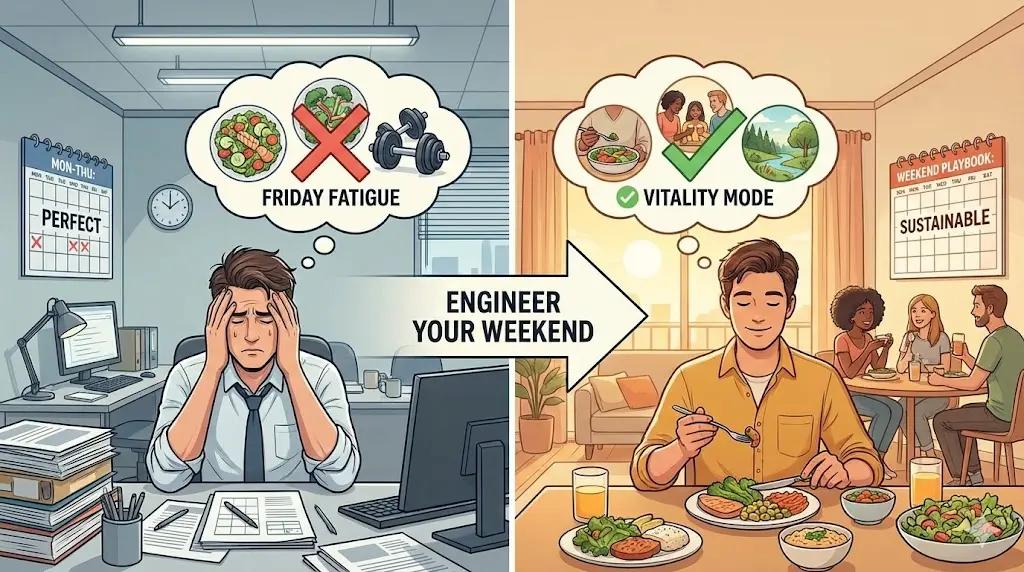
A person in a calm home environment transitioning from a busy work desk to a relaxed weekend setting, illustrating healthy boundary setting.

Weekend Rebound: Why Your ‘Perfect Week’ Breaks on Friday Night (And How to Fix It)

Struggling to maintain your progress once Friday evening hits? Learn the behavioral psychology behind weekend cycles and how to engineer a lifestyle that survives the weekend without restriction.

Go deeper2026-02-12 04:28
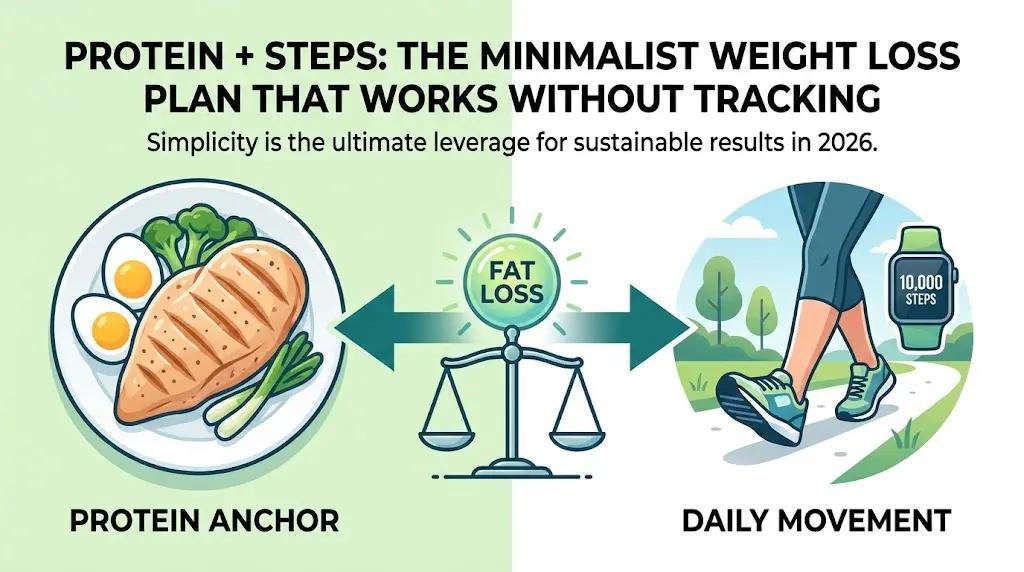
A person walking on a sunlit path in athletic wear, with a clean plate showing grilled chicken and greens in the foreground, representing the synergy of protein and movement.

Protein + Steps: The Minimalist Weight Loss Plan That Works Without Tracking

In a world of bio-tracking and data-fatigue, simplicity is the ultimate leverage. Discover why focusing on just two biological levers—protein and daily movement—is the most sustainable path to fat loss in 2026.

Go deeper2026-02-09 22:01
A vibrant split-screen image: on one side, a neon-colored 'healthy' smoothie and a bowl of granola with an 'alert' signal; on the other, a solid plate of grilled salmon and steamed greens with a 'success' signal.

The ‘Healthy Food’ Trap: Smoothies, Granola, Salads — Why They Can Stall Weight Loss

Virtue doesn't always equal vitality. Explore the metabolic science behind why your favorite 'health' foods might be triggering insulin spikes and halting fat loss.

Go deeper2026-02-04 17:17
A macro shot of a sliced Moro blood orange next to a sleek supplement bottle, with digital metabolic data overlays.

Citrus Burn Review: Is the “Metabolic Switch” Real or Just More Marketing Zest?

A deep-dive investigative review into Citrus Burn. We analyze the 2026 clinical data on Moro Oranges, Brown Adipose Tissue (BAT), and whether this 'Metabolic Switch' is a biological reality or high-priced hype.

Go deeper2026-02-03 03:18
A vibrant, balanced plate featuring salmon, avocado, and a mountain of green vegetables, representing the core principles of the Satiety-First Fat Loss framework.

Appetite-First Weight Loss: How to Lose Fat When You’re Always Hungry

Willpower is a finite resource, but biology is permanent. Discover the framework for losing fat by prioritizing satiety and turning off the hunger signals that sabotage your progress.

Go deeper2026-02-02 14:05
A person standing on a sunlit mountain path looking at a compass, representing the strategic navigation required to break through a weight loss plateau.

Weight Loss Plateau: A Troubleshooting Guide When the Scale Stops Moving

Stalling is not a failure; it is a biological negotiation. Learn the metabolic, hormonal, and psychological reasons your progress has paused and how to restart your engine in 2026.

Go deeper2026-01-27 23:51
A split visualization showing a vibrant syrupy coffee drink on one side with a red warning signal, and a glass of sparkling water with lemon on the other with a green success signal.

Liquid Calories: The Hidden Weight Loss Saboteur (And How to Fix It)

Discover how the stealthy calories in your coffee, smoothies, and 'healthy' drinks are quietly stalling your fat loss goals, and learn how to audit your intake for metabolic success.

Go deeper2026-01-15 13:17
A clean infographic-style illustration showing a plate divided into protein, fiber-rich vegetables, smart carbs, and healthy fats, with appetite and energy stability indicators.

The Protein Leverage Trap: Why You're Hungry Even After a “Healthy” Meal

If you’re constantly hungry while trying to lose weight, it’s rarely a willpower problem. It’s often a protein, fiber, and satiety-signal problem—and you can fix it without obsessive calorie counting.

Go deeper2026-01-13 19:06
A minimalist infographic-style illustration showing an 'off‑ramp' road sign from GLP‑1 medication to maintenance, with icons for protein, strength training, steps, sleep, and a checklist.

The GLP‑1 Off‑Ramp Blueprint: How to Keep the Weight Off When You Stop Ozempic

GLP‑1 medications can change appetite fast—but maintaining results requires a muscle-first plan, a structured taper with your clinician, and an environment that prevents the rebound. Here’s the practical, evidence-aligned off‑ramp blueprint.

Go deeper2026-01-13 09:20
A calm, editorial-style illustration of a woman walking after a meal with a small notebook, with subtle icons for protein, steps, sleep, and strength training.

“I Didn’t Need More Willpower, I Needed More Muscle”: How Lena Lost 30 Pounds Without Living on a Diet

After years of “clean eating” and punishing cardio, Lena discovered the real driver of her stubborn weight: low lean mass, unstable blood sugar, and a recovery deficit. Her simple muscle-first protocol helped her lose 30 pounds and keep it off—without obsessive tracking.

Go deeper2026-01-11 19:42
A minimalist thermostat illustration showing a weight “set range” dial with arrows labeled hunger, NEAT, and stress response.

The Weight Set-Point Trap: Why Crash Diets Backfire and How to Lower Your Body’s “Thermostat”

Your body doesn’t treat weight loss like a math problem—it treats it like a threat. Learn the set-point system (leptin, NEAT, hunger) and the practical protocol to lose fat without triggering the rebound.

Go deeper2026-01-11 10:15
A candid, documentary-style photo of a man meal-prepping in a bright kitchen with simple high-protein foods and vegetables on the counter.

"I Didn’t Need More Willpower, I Needed Less Food Noise": How Daniel Lost 18kg Without Living on Salad

After years of yo-yo dieting, Daniel stopped chasing perfect macros and rebuilt his default environment: higher protein, smarter carbs, planned treats, and a routine that made overeating inconvenient. The result was sustainable fat loss without calorie obsession.

Go deeper2026-01-09 08:42
A medical illustration of the human brain highlighting the hypothalamus, with signaling pathways connected to adipose (fat) tissue, representing the gut-brain axis.

The "Starvation" Signal: Why Your Brain Can't See Your Body Fat

You have plenty of stored energy, so why are you always hungry? The answer lies in Leptin Resistance—a hormonal glitch that makes the brain believe a person with obesity is actually starving to death.

Go deeper2025-11-24 10:32
A conceptual medical illustration showing a scale balanced between a strand of DNA and a pill, symbolizing the shift towards personalized and oral metabolic treatments.

The Post-Ozempic Era: 4 Weight Loss Breakthroughs Defining 2025

The "magic shot" was just the beginning. In 2025, the weight loss industry is pivoting from simple starvation to "high-quality" mass reduction. From muscle-preserving drugs to the end of needles, here is the state of the industry.

Go deeper2025-10-29 18:32
A variety of colorful, whole foods including avocados, salmon, and leafy greens arranged on a wooden table, representing a nutrient-dense diet.

Why "Eat Less, Move More" Fails: The New Science of Sustainable Weight Loss

Research shows that 95% of diets fail long-term. Experts explain why metabolic health, not just calorie counting, is the key to shedding pounds and keeping them off.

Go deeper2025-10-10 22:12
A modern infographic-style illustration showing a scale balanced by a dumbbell and a brain icon, representing fat loss, muscle retention, and appetite regulation in 2025.

The 2025 Weight Loss Reality Check: The Muscle Gap, Ultra‑Processed Hunger, and the GLP‑1 Aftermath

2025 made weight loss faster—but also riskier. Here’s what changed: the rise of muscle loss as the #1 hidden problem, the ultra‑processed food environment that defeats willpower, and the new protocols that actually hold results.

Go deeper2025-10-03 11:40
A 3D medical illustration showing a GLP-1 hormone molecule docking into a receptor in the brain, symbolizing the blocking of hunger signals.

The End of the "Willpower" Era: How GLP-1 Agonists Work and Why They Change Everything

Ozempic and Mounjaro are more than a Hollywood trend; they represent a scientific paradigm shift. We explore how these hormones silence "food noise," slow digestion, and why preserving muscle mass is the new challenge.

Go deeper2025-09-11 13:53

Stay informed

Subscribe to receive the latest health insights from VettaWell

I consent to receive emails from VettaWell. Frequency varies. You can unsubscribe any time. Terms & Privacy

SMS is currently available in the United States. By entering your phone number, clicking on the authorization checkboxes, and clicking the sign-up button, you agree to receive periodic text messages, including marketing and promotional text messages, from VettaWell (ROLAND PARTNER Sp.z.o.o.) at the phone number you submitted, including texts that may be sent using an automatic telephone dialing system. Message and data rates may apply. Message frequency varies. Messages may include account and subscription notifications, appointment and reminder messages (if applicable), support and service updates, important platform notices, and occasional wellness-related updates or offers. Consent is not a condition of the purchase of any goods or services. Text HELP for help/customer support. Unsubscribe at any time by replying "STOP" to any text message that you receive from VettaWell. Read our full terms of service and privacy policy.

Back to Feed