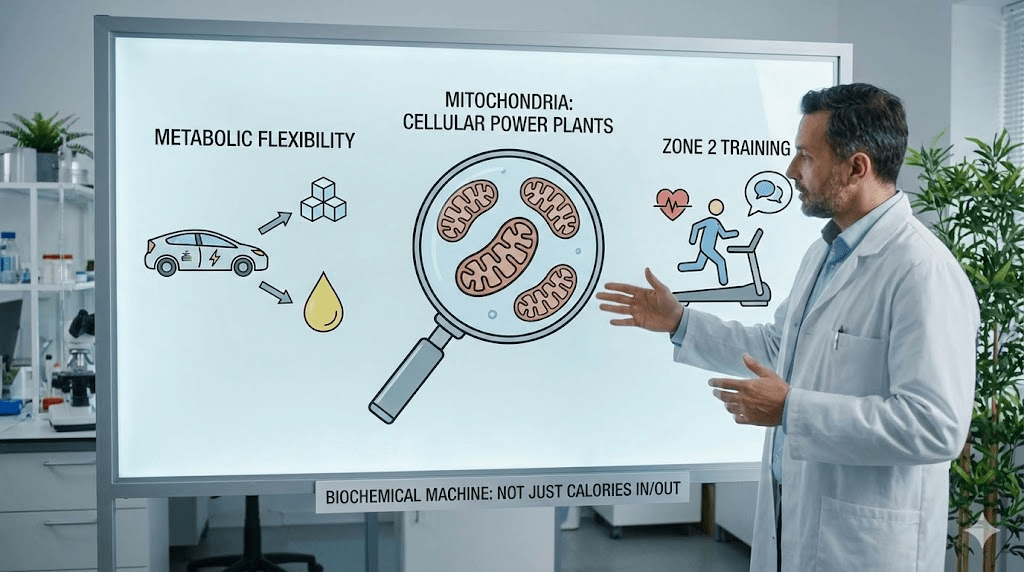

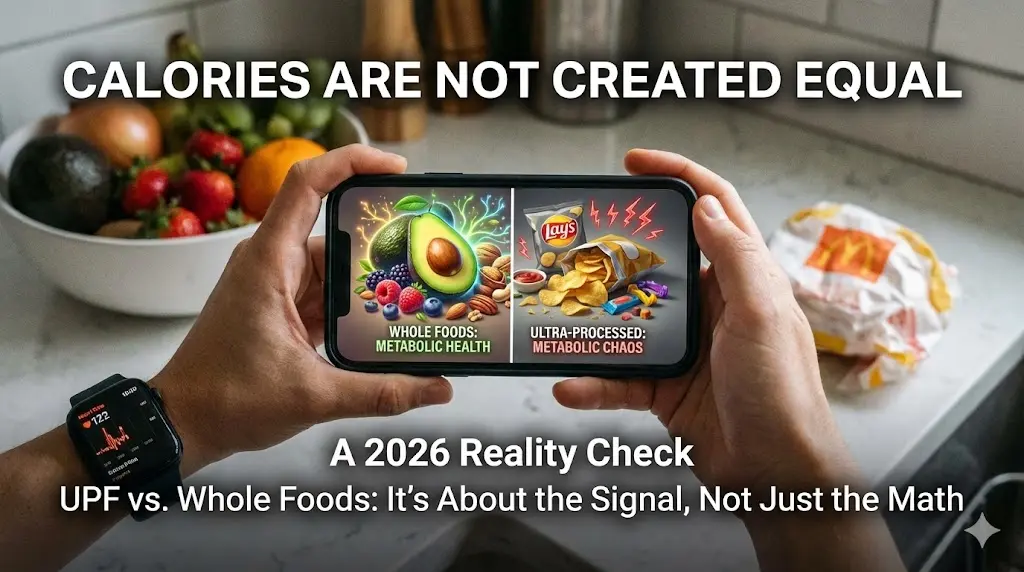
In the health and wellness landscape of 2026, a fierce debate continues to rage between two schools of thought. On one side, we have the traditional 'Energy Balance' advocates who maintain that a calorie is simply a unit of energy, and as long as you manage the intake versus the expenditure, your health and weight are under control. On the other side stands a growing movement of metabolic health experts, neuroscientists, and endocrinologists who argue that the quality and structure of our food—specifically the rise of Ultra-Processed Foods (UPF)—change the very way our bodies function. This isn't just a debate about math; it is a metabolic health reality check that explores how the industrial food matrix is hijacking our biology.
The phrase 'a calorie is a calorie' is technically true in a laboratory setting where food is burned in a bomb calorimeter to measure heat. However, the human body is not a furnace; it is a complex, hormonal, and highly adaptive biological system. How your body processes 500 calories of wild-caught salmon and broccoli is fundamentally different from how it processes 500 calories of a hyper-palatable, industrially manufactured breakfast cereal. In the New Age of nutrition, we are moving beyond the 'calculator' model of the 20th century and into a 'signaling' model, where every bite of food acts as a chemical instruction to your cells, your hormones, and your brain.
Defining the Enemy: What is Ultra-Processed Food?
To navigate this debate, we must use the NOVA classification system, which categorizes food based on the extent of processing. Group 1 consists of unprocessed or minimally processed foods (think an apple or a piece of steak). Group 4 consists of Ultra-Processed Foods. These are not just 'processed' in the sense of being cooked or frozen; they are 'formulations' of ingredients, mostly of exclusive industrial use, typically created by a series of industrial techniques and processes.
UPFs often contain little to no whole food. Instead, they are made of fractionated components—high-fructose corn syrup, seed oils, protein isolates, and modified starches—re-assembled with emulsifiers, flavor enhancers, and colors to be 'hyper-palatable.' In 2026, we recognize that these substances aren't just food; they are 'industrially produced edible substances' designed to bypass our natural satiety signals. When we compare these to whole foods on a calorie-for-calorie basis, we see a profound difference in metabolic outcome.
The Hormonal Response: Insulin and the 'Fat Storage' Signal
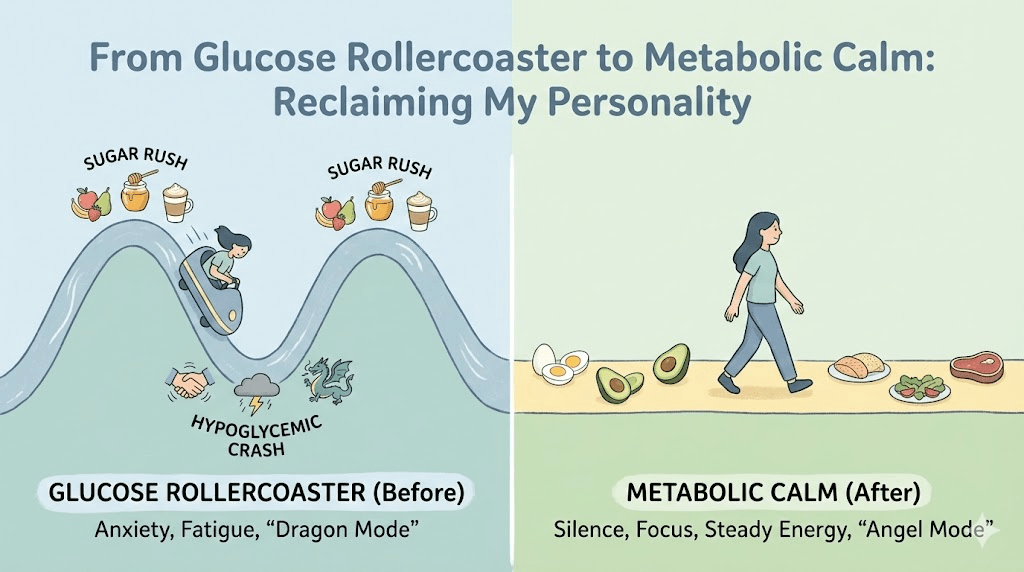
The primary reason the 'calories are calories' model fails in reality is the role of insulin. When you eat whole foods, the fiber, protein, and complex structures slow down the release of sugar into the bloodstream. This results in a gentle rise in blood sugar and a modest release of insulin. However, ultra-processed foods are designed for rapid absorption. They are often 'pre-digested' by industrial machinery, meaning your body doesn't have to work to break them down.
This leads to a massive blood sugar spike, which triggers an equally massive insulin surge. As we have discussed in previous articles, insulin is the primary anabolic hormone—it tells your body to stop burning fat and start storing energy. If you eat 2,000 calories of UPF, you spend the majority of your day in a high-insulin, 'fat-storage' state. Even if those 2,000 calories match your 'burn,' your body is biologically locked out of its own fat stores. You feel tired and hungry even though you've had enough energy, leading to the metabolic phenomenon of 'starving in the midst of plenty.'
The Gut Microbiome: The Forgotten Metabolic Partner
In 2026, we cannot talk about metabolism without talking about the gut. Whole foods come with a complex matrix of fiber and polyphenols that aren't actually for us—they are for our gut bacteria. These bacteria ferment the fiber into Short-Chain Fatty Acids (SCFAs) like butyrate, which improve insulin sensitivity, lower inflammation, and signal the brain to turn off hunger.
Ultra-processed foods, conversely, are almost entirely absorbed in the upper small intestine. They never reach the lower gut where the majority of our beneficial bacteria live. We are effectively starving our metabolic partners. Furthermore, the emulsifiers and additives found in UPF act like 'detergents' in the gut, breaking down the protective mucus lining and leading to intestinal permeability (leaky gut). This triggers low-grade systemic inflammation, which is a primary driver of insulin resistance and metabolic dysfunction. Calorie for calorie, UPF creates an inflammatory environment that whole food does not.
The Thermic Effect of Food: Why Math is Misleading
Another flaw in the 'calories are calories' model is the neglect of the Thermic Effect of Food (TEF). It takes energy to digest food. Whole, protein-rich, and fibrous foods require significantly more metabolic work to break down than ultra-processed ones. A landmark study showed that people burning 500 calories of a 'whole food' sandwich (multi-grain bread and cheddar) burned twice as much energy during digestion as those eating 500 calories of a 'processed' sandwich (white bread and American cheese).
This means that 'net' calories—the energy actually available to the body—are lower in whole foods. When you eat UPF, the math is stacked against you. You are essentially eating 'pre-digested' energy that requires zero metabolic effort to process, leaving more energy to be stored. Over years and decades, this small delta in TEF adds up to significant changes in body composition, regardless of what the 'gross' calorie count says on the label.
We are not just what we eat; we are what we absorb and how we signal. A calorie's worth of information is more important than its worth of energy.
Neurobiology: The Hijacking of the Dopamine Reward System
Perhaps the most sinister aspect of the UPF vs. Whole Food reality check is the impact on the brain. Modern food scientists use 'sensory-specific satiety' and the 'bliss point'—a precise combination of sugar, salt, and fat—to create foods that are literally addictive. These formulations trigger a dopamine response in the brain similar to that of drugs of abuse.
When you eat an orange, your body recognizes the fiber and water, and your brain receives a signal to stop eating. When you drink an ultra-processed orange-flavored beverage, that signal is never sent. You can consume 500 calories of liquid sugar in minutes without your brain ever acknowledging that you've been fed. The 'Calories are Calories' model assumes we have perfect, logical control over our intake, but it fails to account for the fact that UPF is designed to disable our natural brakes.
Practical 2026 Advice: Navigating the Food Matrix
So, how do we apply this metabolic reality check in our daily lives without becoming overwhelmed by the complexity of modern food? In 2026, we use a 'Signal-Based' approach to eating. The goal isn't just to stay under a certain calorie number, but to provide the body with the right biological instructions.
- The 80/20 Whole Food Rule: Prioritize foods that look like they did in nature. If you can't imagine where the ingredients came from, your metabolism probably won't know what to do with them either.
- Prioritize the Matrix: Choose foods with their natural structure intact. An intact grain or a whole fruit provides a different metabolic signal than its powdered or juiced counterpart.
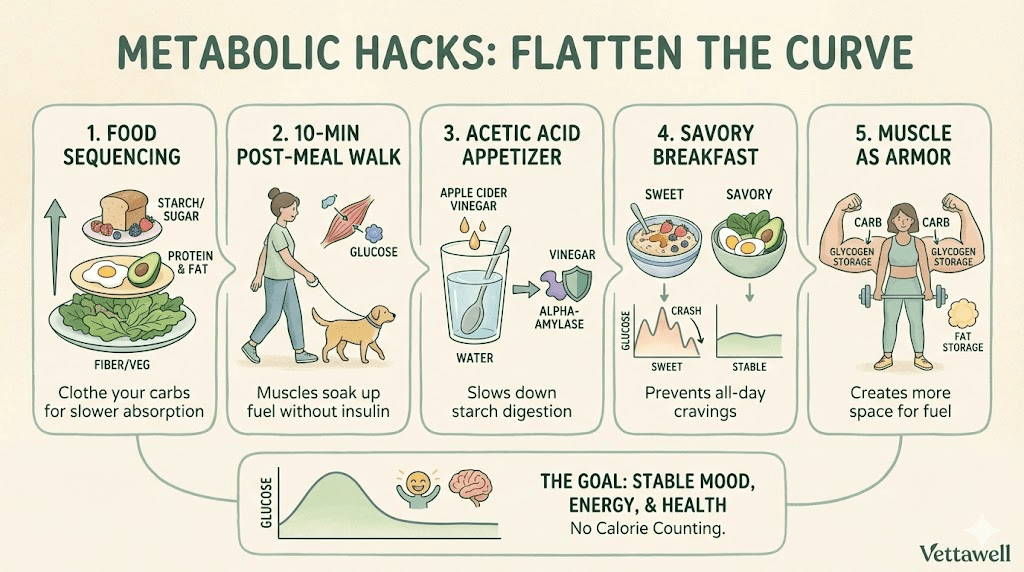
- Eat the 'Buffers' First: Always start your meal with fiber (greens/veggies) and protein. This creates a 'gel' in the gut that slows down the absorption of any starch or sugar that follows, flattening the glucose and insulin spike.
- Ignore the Front of the Label: Marketing terms like 'low-fat,' 'keto-friendly,' or 'high-protein' are often used to mask ultra-processed formulations. Flip the package over—if there are more than 5 ingredients or names you can't pronounce, it's likely a UPF.
- Focus on Satiety over Restriction: Instead of asking 'What can I take away?' ask 'What can I add to feel full?' Adding high-quality protein and healthy fats naturally crowds out the desire for hyper-palatable processed snacks.
The New Age Perspective: Food as Information
In the New Age of health, we view food as information. Every meal is a conversation with your DNA and your hormones. When you choose whole, unprocessed foods, you are telling your body that it is in an environment of safety and abundance. You are providing the building blocks for repair and the signals for energy burning.
When you rely on ultra-processed foods, you are sending a signal of 'scarcity and chaos.' Your body reacts by storing fat, increasing inflammation, and heightening hunger to find the nutrients that are missing from the empty calories. The 'Calories are Calories' model is an oversimplification that has left millions frustrated and metabolically damaged. By recognizing the difference in how these foods affect our internal chemistry, we can finally break free from the treadmill of restriction and move toward a life of intuitive, metabolic vitality.
Conclusion: The Reality Check
The reality check for 2026 is clear: the source of your energy matters as much as the amount. While you cannot ignore energy balance entirely, it is the hormonal environment that determines what your body does with that energy. Stop fighting the math and start winning with the biology.
Choose the orange over the juice. Choose the steak over the protein bar. Choose the vibration of whole, living food over the static of industrial formulations. Your metabolism is waiting for the right instructions—give it the ones that lead to life.