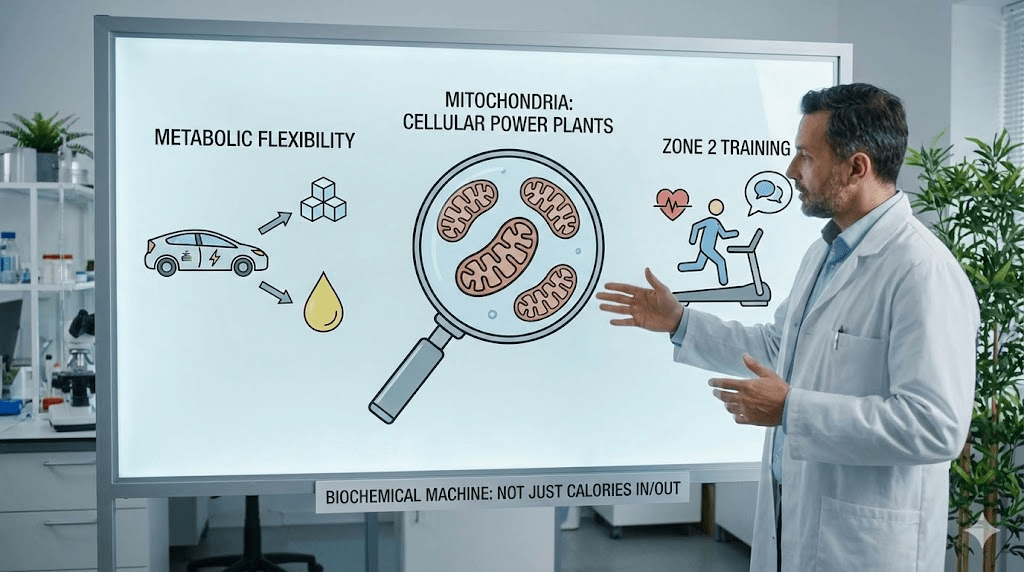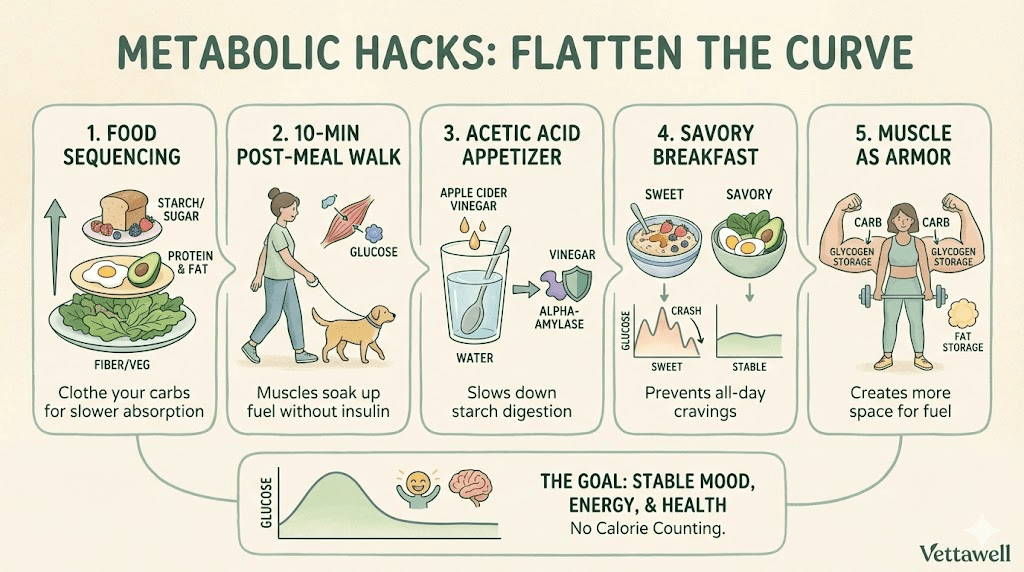

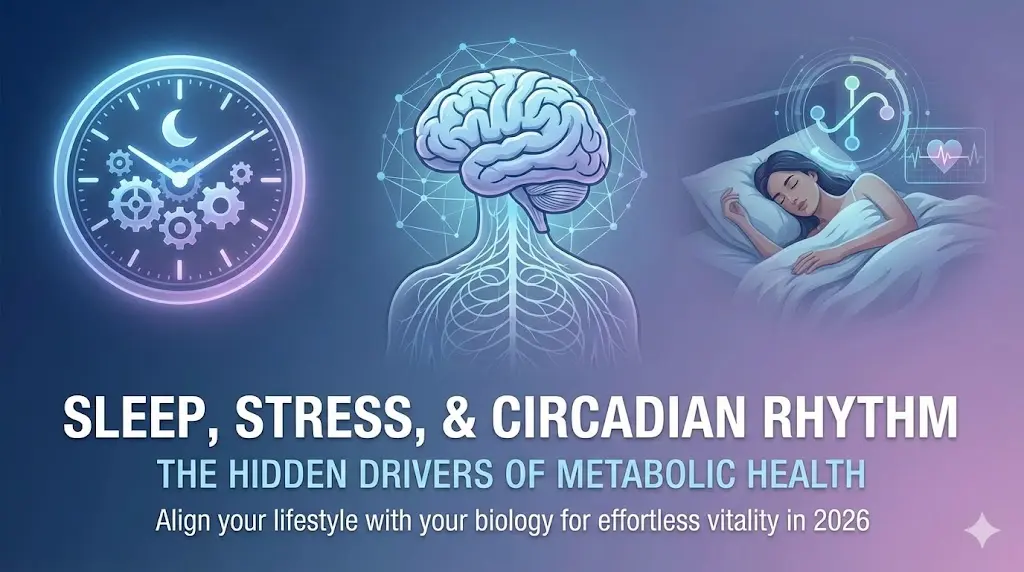
In the health and wellness landscape of 2026, we have finally moved past the reductionist view that metabolic health is solely a product of 'calories in vs. calories out.' While nutrition and physical movement are undeniable pillars of vitality, a new understanding has emerged in the New Age of medicine: your metabolism is not a static furnace, but a rhythmic, highly sensitive biological system. It is governed by a trio of invisible drivers—sleep quality, stress management, and circadian alignment. Without addressing these hidden levers, even the most perfect diet and exercise regimen will fail to yield long-term results.
We live in an era of artificial light, chronic digital stimulation, and 'always-on' work cultures. These modern pressures have created a profound mismatch between our ancient biology and our current environment. This mismatch manifests as metabolic dysfunction, manifesting as stubborn weight gain, insulin resistance, and hormonal imbalances. To reclaim our health in 2026, we must stop looking only at our plates and start looking at our clocks and our nervous systems. This article explores how the synchronization of your internal rhythms and the regulation of your stress response are the ultimate 'secret' to metabolic mastery.
The Master Clock: Understanding Your Circadian Biology
Every cell in your body has a clock. From your liver to your adipose tissue, these peripheral oscillators coordinate thousands of metabolic processes every second. However, they all take their cues from the 'Master Clock' located in the Suprachiasmatic Nucleus (SCN) of the brain. This central conductor uses light and dark signals to synchronize your internal state with the external world.
When your circadian rhythm is aligned, your body knows exactly when to produce insulin to process glucose, when to secrete growth hormone for tissue repair, and when to activate autophagy to clean up cellular debris. However, when we expose ourselves to bright blue light at 11:00 PM or eat a large meal in the middle of the night, we send conflicting signals to our biology. The brain thinks it’s day, but the gut is trying to rest. This 'circadian disruption' causes the metabolic engine to misfire, leading to elevated blood sugar and increased fat storage even if the total calories consumed remain low.
Sleep: The Metabolic Repair Shop
Sleep is often the first thing we sacrifice in the pursuit of productivity, yet it is arguably the most important metabolic input we have. In 2026, we view sleep not as a period of inactivity, but as an active, energy-intensive phase of metabolic maintenance. During deep sleep, the body performs a 'neurological car wash' via the glymphatic system and optimizes our hormonal profile for the day ahead.
A single night of sleep deprivation can induce a state of temporary insulin resistance equivalent to that of a Type 2 diabetic. When you are under-slept, your cells become less responsive to insulin, meaning your blood sugar stays higher for longer after a meal. Furthermore, lack of sleep disrupts the delicate balance of hunger hormones: Leptin (the satiety signal) drops, while Ghrelin (the hunger signal) skyrockets. You don't just feel tired; you feel biologically driven to seek out high-calorie, ultra-processed carbohydrates to provide a quick—but fleeting—energy boost.
- Insulin Sensitivity: Deep sleep is when the body resets the 'locks' on your cells, ensuring they are ready to soak up glucose efficiently the next day.
- Growth Hormone Release: The majority of this fat-burning, muscle-building hormone is released during the first half of the night.
- Cortisol Regulation: Quality sleep helps keep your morning cortisol spike sharp and efficient, rather than blunted and prolonged.
- Cravings Management: Better sleep strengthens the prefrontal cortex, the part of the brain responsible for executive function and impulse control.
Stress: The Metabolism Killer
In the New Age of health, we finally understand that stress is not just a 'feeling'—it is a chemical reality that dictates how you store and burn energy. When the brain perceives a threat (whether it’s a tiger or a passive-aggressive email), it activates the HPA axis (Hypothalamic-Pituitary-Adrenal), leading to a surge of cortisol and adrenaline.
Cortisol's primary job is to mobilize energy for a 'fight or flight' response. It signals the liver to dump stored glucose into the bloodstream so your muscles can use it to escape danger. However, in our sedentary 2026 lives, we rarely 'use' that glucose. Instead, that sugar sits in the blood, insulin rises to meet it, and because the body is still in a high-stress state, that energy is preferentially stored as visceral fat—the dangerous fat around the organs. Chronic stress is, quite literally, a recipe for metabolic gridlock.
You cannot 'diet' your way out of a high-cortisol environment. If your nervous system feels unsafe, your body will refuse to let go of stored energy.
The Vicious Cycle: How Sleep, Stress, and Rhythm Interact
The true danger lies in the synergy between these three factors. Poor sleep increases cortisol. High cortisol disrupts your circadian rhythm, making it harder to fall asleep the next night. A disrupted rhythm leads to late-night eating, which further spikes insulin and prevents deep sleep. It is a self-reinforcing loop that traps millions in a state of 'metabolic winter,' where the body is stuck in survival mode, conserving fat and slowing down the thyroid.
To break this cycle, we must address all three drivers simultaneously. We have to signal 'Safety' to our nervous system and 'Alignment' to our internal clocks. In 2026, we call this Bio-Syncing. It is the process of intentional lifestyle design that honors our biological heritage while navigating modern life.
Practical Strategies for Circadian and Metabolic Alignment
Optimizing these hidden drivers doesn't require a total life overhaul. It requires 'Micro-Interventions' that provide the right signals at the right time. Here is the 2026 framework for metabolic Bio-Syncing:
- Morning Sunlight Exposure: Within 30 minutes of waking, get direct sunlight in your eyes (without sunglasses). This pins your Master Clock, triggering a healthy cortisol spike and setting a timer for melatonin production 14-16 hours later.
- The 'Darkness Ritual': Two hours before bed, dim the lights and use blue-light blocking technology. This tells your SCN that the sun has set, allowing melatonin to rise and metabolic repair to begin.
- Time-Restricted Feeding: Aim to eat all your meals within an 8-10 hour window during daylight. This aligns your gut oscillators with your brain clock, significantly improving insulin sensitivity.
- Somatic Stress Release: Throughout the day, use short 'circuit breakers'—such as box breathing or physiological sighs—to tell your nervous system that you are safe. This prevents the chronic cortisol drip that drives visceral fat storage.
- Temperature Regulation: A cool room (around 18°C/65°F) is essential for deep sleep. The body must drop its core temperature to enter the restorative phases of sleep where metabolic maintenance occurs.
Identity and the Nervous System
In the New Age perspective, we also recognize the role of our 'Mental Identity' in our metabolic health. If you identify as a 'stressed-out, busy person,' your nervous system will embody that identity. By shifting your narrative to one of 'aligned vitality,' you begin to make choices that support your rhythms naturally. This isn't just 'woo-woo'; it's the top-down regulation of the brain over the body's chemistry.
When you view a 9:00 PM email not as an emergency, but as a low-priority notification, you protect your cortisol levels. When you choose a consistent bedtime not as a chore, but as an act of self-nourishment, you protect your mitochondria. Your metabolic health is a reflection of how well you protect your biological peace.
Conclusion: The Future of Metabolism is Aligned
As we move further into 2026, the 'Hidden Drivers' will become the primary focus of metabolic health. We are realizing that the body is not a machine to be forced, but an ecosystem to be nurtured. By honoring your circadian rhythm, prioritizing high-quality sleep, and actively managing your stress response, you create an internal environment where metabolic health is the default state, not a constant struggle.
Stop fighting your biology and start flowing with it. Turn off the lights, take a deep breath, and let your internal clock lead you back to vitality. Your metabolism doesn't just want fuel; it wants rhythm and it wants safety. Give it both, and watch your health transform from the inside out.