
VettaWell logoVettaWell

Calm wellness updates via email and SMS.

Legal

  • Privacy Policy
  • Terms of Service
  • Email WhiteList

Navigation

  • Feed
  • About
  • Authors
  • Editorial Standards
  • EventsNEW
  • Subscribe
  • Contact
  • Contribute
  • Careers

© 2025 VettaWell. All rights reserved.

VettaWell logoVettaWell
FeedAboutAuthorsEditorial StandardsEventsNEWSubscribe
Back to Feed
Metabolic Health2025-11-14 21:07Subscriber contribution
Portrait placeholder for Dr. Elise Hartwell in a minimalist studio setting
Editor:Dr. Elise Hartwell• Behavioral Science Writer & Mindset Coach

It’s Not About Calories, It’s About Chemistry: 5 Metabolic Rules to Master Your Energy

A flat-lay composition showing a glass of water with apple cider vinegar, a plate of leafy greens, and a pair of dumbbells, representing the pillars of metabolic regulation.

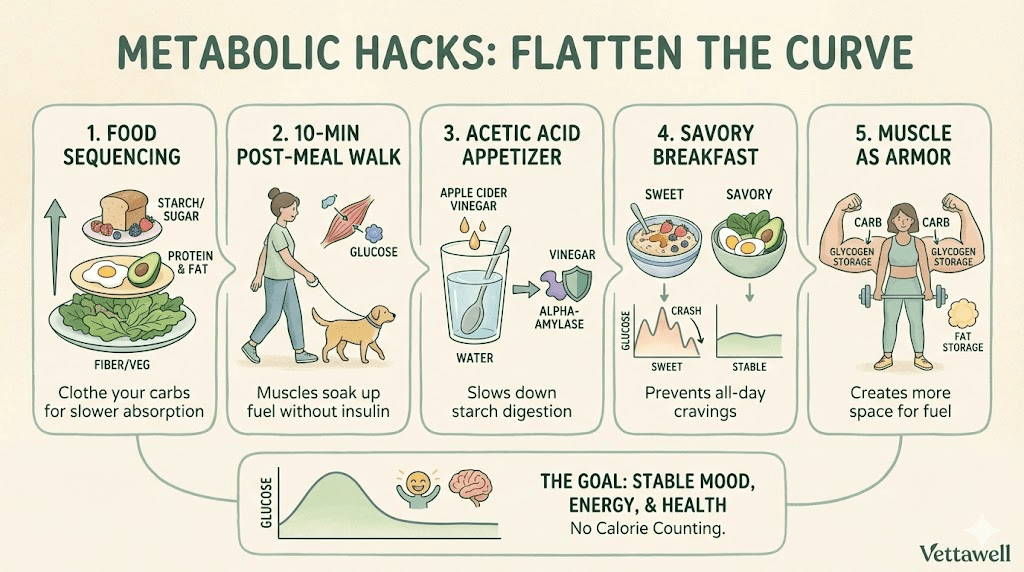
Metabolism is often taught as a calculator: Calories In minus Calories Out. That framing is incomplete. Your body is a chemical factory run by hormones, nerves, and circadian timing—and those systems can turn the “same” calories into very different outcomes. The goal of this guide is to give you five high-leverage rules that reliably flatten glucose spikes, reduce cravings, and stabilize energy without living in a tracking app.

If metabolism feels like a thermostat, stop arguing with the number and start adjusting the inputs.

Why the calorie model breaks in real life

The calorie model assumes your body burns food like a furnace. In reality, your body partitions energy: some becomes immediate fuel, some gets stored, and some changes hormones that affect hunger, stress, and sleep. Two people can eat identical meals and see different glucose curves and appetite signals. Even for the same person, the response changes with sleep debt, stress, menstrual cycle phase, and muscle mass.

So rather than trying to “out-discipline” biology, the practical move is to engineer the inputs that most strongly shape hormones—especially insulin, incretins, and stress hormones. The rules below are less about restriction and more about controlling the delivery of glucose into your bloodstream.

Key takeaways

  • Metabolism behaves more like a thermostat than a calculator: hormones determine how calories are handled.
  • You can reduce post-meal glucose spikes by changing sequence, movement, and timing—even without changing the meal.
  • A stable day starts with a stable morning: savory protein-first breakfasts reduce cravings later (the “second-meal effect”).
  • Muscle is metabolic infrastructure. More muscle means more glucose storage capacity and better insulin sensitivity over time.
  • Small, repeatable changes beat occasional intensity. Consistency turns “hacks” into physiology.

Rule 1: ‘Clothe’ your carbs (food sequencing)

Most people eat starches first because they’re hungry. That’s the worst sequence for blood sugar. “Naked carbs” on an empty stomach absorb quickly and force a bigger insulin response. The fix is simple: eat fiber and protein first, then starch last. Think of fiber/protein as the slow-release wrapper that changes the speed of absorption.

The order that works best

  1. Vegetables / fiber first (salad, greens, beans, cruciferous veg).
  2. Protein + fats second (meat, fish, eggs, tofu, yogurt, olive oil).
  3. Starches and sweets last (bread, rice, potatoes, dessert).

This is not about perfection. Even a small “pre-load” helps: a few bites of salad or some protein before the carb portion changes the curve. If you eat mixed meals, the idea is still relevant: start with the protein/veg part, finish with the starch part.

  • Office-friendly version: eat the chicken/beans/veg first, save the rice/bread for the end.
  • Restaurant version: start with a salad or veg side, then protein, then share the fries.
  • Snack version: pair fruit with protein (Greek yogurt, cottage cheese, nuts) instead of fruit alone.

CitrusBurn™: Burn More. Crave Less.

CitrusBurn Citrus Secret banner with supplement bottle and oranges — “Burn more. Crave less.”

Rule 2: Use a 10-minute ‘post-game’ walk

After you eat, glucose enters the bloodstream. If you sit immediately, your pancreas has to push harder with insulin to clear it. If you move, your muscles absorb glucose directly as fuel. You’re turning your body into a glucose sink instead of a storage machine.

What counts as “movement”

  • A brisk 10–15 minute walk after lunch or dinner.
  • Stairs at the office for 5 minutes plus a short walk.
  • Light household movement: dishes, tidying, a slow dog walk.

The point is frequency, not athleticism. If you only pick one habit from this guide, choose post-meal movement. It’s high impact and low drama.

Rule 3: The acetic-acid appetizer (vinegar pre-load)

Acetic acid (in vinegar) can blunt the glucose response to a carb-heavy meal by slowing how quickly starch is broken down and absorbed. This doesn’t mean you need a supplement. It means you can use a simple pre-meal ritual when you know a “pizza night” is coming.

How to do it safely

  • Dilute 1 tablespoon of vinegar (apple cider or regular) in a large glass of water.
  • Drink 10–15 minutes before a higher-carb meal.
  • Never take vinegar “straight” (undiluted) to protect teeth and esophagus.

Who should skip this

  • People with reflux/GERD, ulcers, or esophagitis (it may worsen symptoms).
  • Anyone on glucose-lowering medications should ask a clinician first to avoid hypoglycemia.
  • If vinegar triggers discomfort: replace this rule with food sequencing + post-meal movement.

Rule 4: Savory breakfast, stable day

A sweet breakfast can create a glucose spike-and-crash cycle that shapes the entire day. The crash increases hunger signaling and makes “willpower” feel impossible by mid-afternoon. A savory, protein-forward breakfast reduces volatility and often makes lunch decisions easier.

Better breakfast templates

  • Eggs + veg: eggs with spinach, mushrooms, tomatoes; add olive oil or avocado.
  • Greek yogurt + nuts: plain Greek yogurt with walnuts/chia; add berries if tolerated.
  • Leftovers: steak/chicken with vegetables; not glamorous, extremely effective.
  • Vegetarian: tofu scramble with vegetables; add seeds for fats.

If mornings are rushed, the strategy is still workable: you’re looking for protein + fiber, not culinary perfection. A protein shake plus a handful of nuts beats a pastry and a latte when your goal is stable energy.

Rule 5: Muscle is metabolic infrastructure

Muscle is not only aesthetic. It’s storage capacity for glycogen and a major site for glucose disposal. Higher lean mass generally means better insulin sensitivity and more tolerance for carbohydrates without the same spikes. In practice: resistance training is a long-term glucose management tool.

The minimum effective plan

  • 2–3 strength sessions per week (30–45 minutes).
  • Prioritize compound movements: squat pattern, hinge pattern, push, pull, carry.
  • Progress slowly: add a small amount of load or reps weekly.

If you already do cardio, keep it—but don’t treat cardio as the only “metabolic” training. Cardio burns fuel in the moment. Muscle changes how you handle fuel all day.

A one-day example that applies all five rules

  1. Breakfast: savory protein + fiber (eggs + vegetables).
  2. Lunch: start with salad/veg, then protein, starch last; take a 10-minute walk after.
  3. Afternoon: if hungry, choose protein + fiber (yogurt + nuts) instead of “naked carbs.”
  4. Dinner: if higher-carb, consider diluted vinegar pre-load; take a short walk after.
  5. Weekly: schedule 2–3 resistance sessions; treat them like appointments.

Troubleshooting: why the rules don’t ‘work’ for some people

If you implement these rules and still feel unstable, the most common blockers are sleep debt, high stress, and ultra-processed snacking that reintroduces spikes between meals. Also, certain medical conditions (e.g., thyroid disorders, diabetes, PCOS) change the baseline and require personalized care.

  • Start with sleep: even one week of better sleep can reduce hunger and improve glucose control.
  • Audit liquids: sweetened coffee drinks, juice, and alcohol can undo your best meal strategy.
  • Check portions of refined carbs: sequencing helps, but a very large refined-carb load can still spike.
  • If symptoms are severe: consult a clinician; persistent dizziness, fainting, or palpitations need evaluation.

Practical next steps

  1. Pick two rules to start (best combo: food sequencing + post-meal walk).
  2. Run a 14-day experiment and track only 3 signals: energy at 3 PM, cravings after dinner, sleep quality.
  3. Upgrade breakfast first; it’s the highest leverage meal for many people.
  4. Add two weekly strength sessions before adding more cardio.

Common pitfalls

  • Trying to stack all five rules at once and burning out by day three.
  • Using “healthy” sugar (smoothies, granola, sweet yogurt) as a disguised glucose bomb.
  • Skipping protein and expecting cravings to disappear through willpower.
  • Training hard while under-fueling (leading to stress hormones that increase hunger and fat storage).

Quick checklist

  • Most meals start with fiber and include protein.
  • You move for 10 minutes after the largest meal most days.
  • Breakfast is usually savory (or at least protein-forward).
  • Strength training is scheduled 2+ times/week.
  • Sleep is protected as a metabolic lever, not an afterthought.

More "Metabolic Health" Articles

A microscopic view of a glowing mitochondria being infused with golden Mediterranean herbal extracts, symbolizing cellular energy and metabolic activation.

The Mitochondrial Reset: Is Mitolyn the Cellular Key to Effortless Weight Loss in 2026?

Forget the gym for a moment. In 2026, the real battle for metabolic health is happening inside your cells. We investigate Mitolyn—the Mediterranean ritual that claims to ignite the 'Mighty Mitochondria' to burn fat 24/7.

Go deeper2026-02-17 19:15
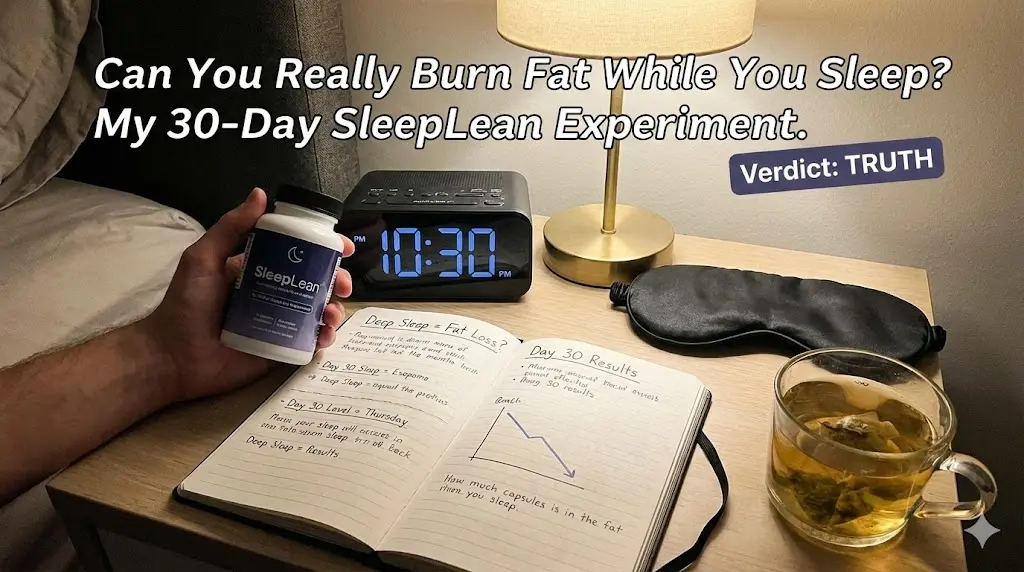
A peaceful bedroom scene at twilight with a glowing DNA helix morphing into a silhouette of a lean body, symbolizing the intersection of deep sleep and genetic metabolic activation.

The Metabolic Health Paradox: A Deep Dive into the SleepLean Protocol

In 2026, we’ve learned that the gym isn't the only place to burn fat. Discover the science of nocturnal metabolism and whether the 'SleepLean' ritual is the ultimate biological shortcut or a midnight myth.

Go deeper2026-02-13 18:49
A strong, healthy woman lifting a barbell in a sunlit, modern home gym, with digital overlays showing muscle activation and improved glucose uptake indicators.

Strength Training as a Metabolic Intervention: Why Muscle Improves Insulin Sensitivity

Discover why skeletal muscle is your body's most powerful metabolic organ and how resistance training serves as a clinical-grade intervention for reversing insulin resistance.

Go deeper2026-02-10 19:55
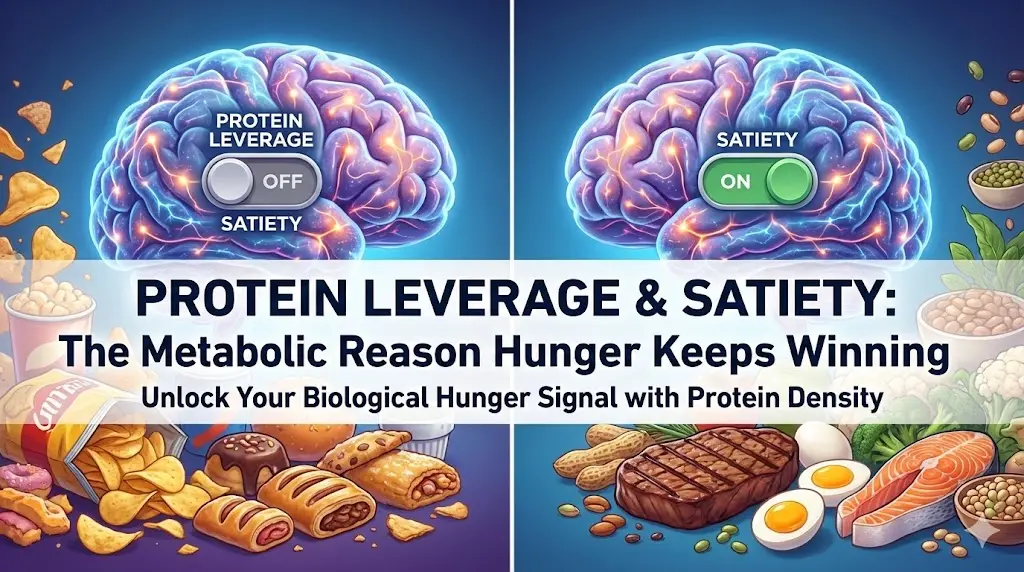
A clean, high-tech kitchen counter showing a balanced plate of grilled salmon, eggs, and leafy greens next to a digital tablet displaying a neural map of hunger hormones.

Protein Leverage and Satiety: The Metabolic Reason Hunger Keeps Winning

Explore the biological imperative behind our modern appetite. Learn why your body triggers relentless hunger until its protein requirements are met and how to use this mechanism to regain metabolic control.

Go deeper2026-02-07 20:34
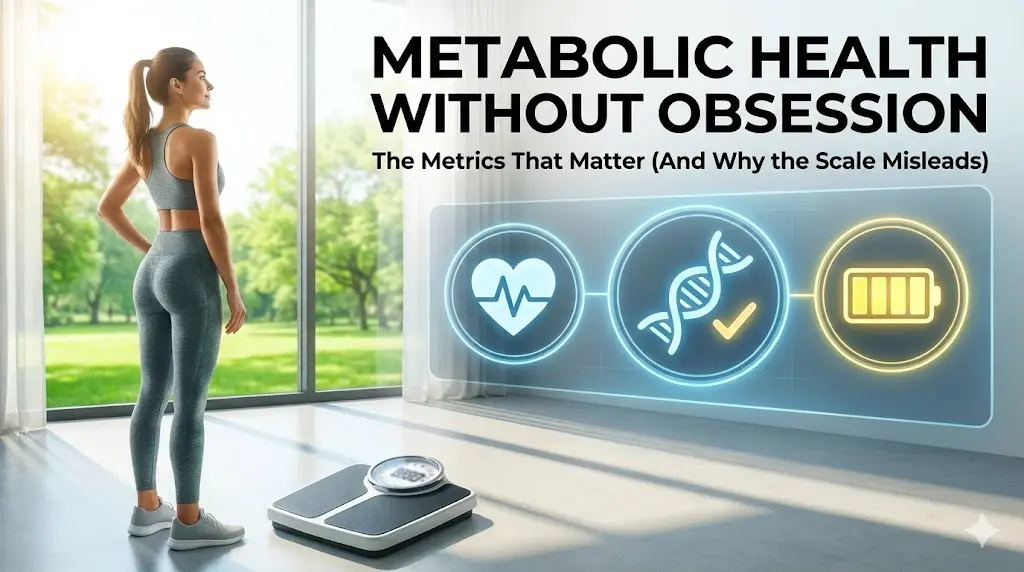
A woman confidently looking away from a bathroom scale toward a bright sunlit window, with icons representing heart rate, DNA, and energy levels floating subtly in the background.

Metabolic Health Without Obsession: The Metrics That Matter (And Why the Scale Misleads)

True vitality is found beneath the surface of the skin. Learn why weight is a secondary indicator and how to track the biological markers that actually define your metabolic age and energy.

Go deeper2026-02-05 18:19
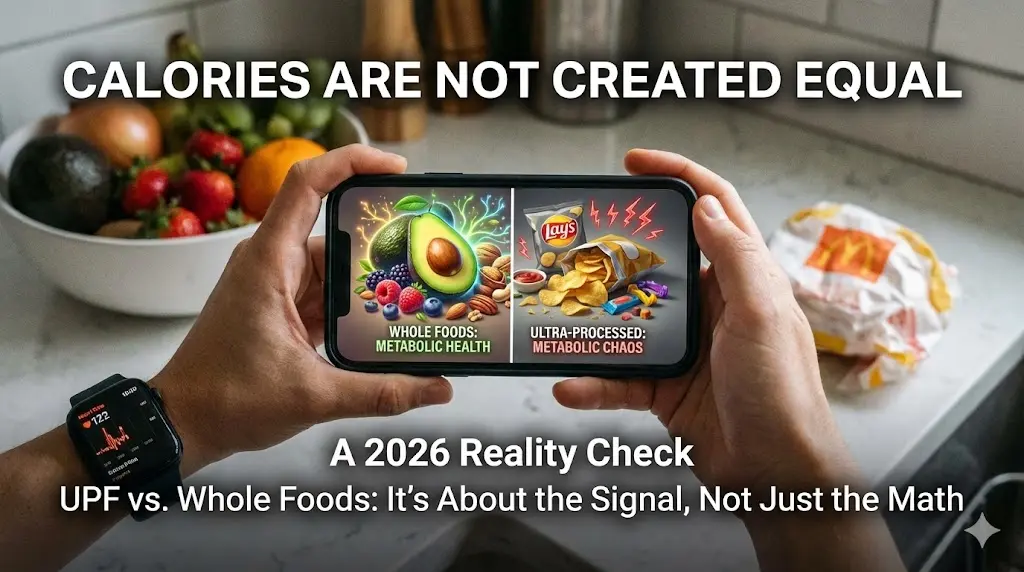
A split-screen visualization: one side shows vibrant whole foods like avocados and berries with glowing metabolic pathways, the other shows dull, gray ultra-processed snacks with jagged, red inflammatory signals.

Ultra-Processed Foods vs ‘Calories Are Calories’: A Metabolic Health Reality Check

Is the 'Calories In, Calories Out' model dead? Discover how the industrial food matrix alters your hormones, gut health, and metabolic rate beyond mere energy balance.

Go deeper2026-02-01 22:14
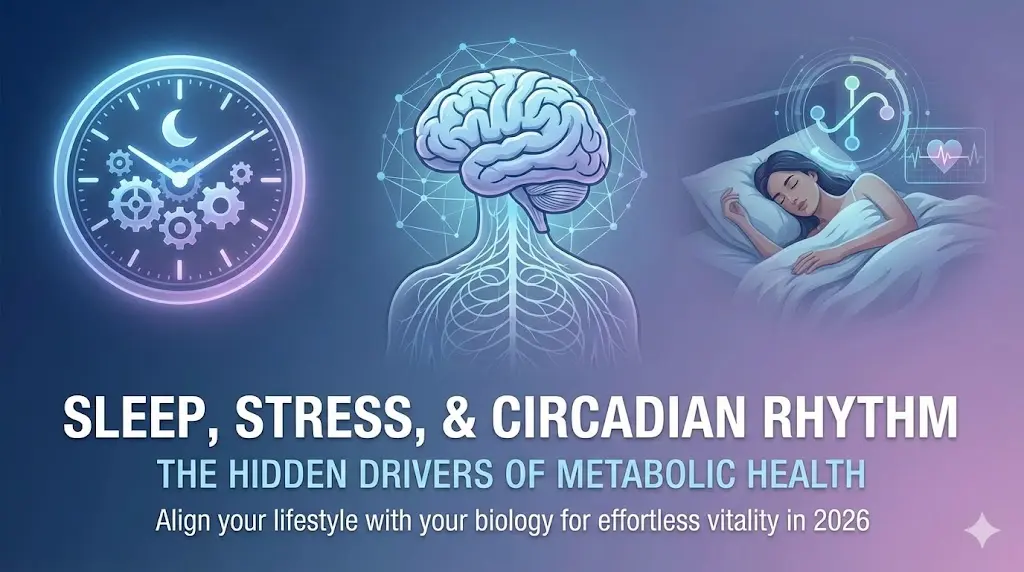
A peaceful person sleeping in a dark, cool room with a digital overlay of a glowing clock and a calm nervous system diagram, representing the union of sleep, rhythm, and metabolic balance.

Sleep, Stress, and Circadian Rhythm: The Hidden Drivers of Metabolic Health

Beyond diet and exercise, your internal clock and stress response dictate how you process energy. Discover how to align your lifestyle with your biology to unlock effortless metabolic vitality.

Go deeper2026-01-30 18:01
A close-up of a high-tech Continuous Glucose Monitor on an arm, with a soft-focus background of a healthy breakfast and a sunset, symbolizing the balance of technology and nature.

The CGM Boom: How to Interpret Glucose Spikes Without Panic

Continuous Glucose Monitors have moved from clinical tools to lifestyle essentials. Learn how to navigate your metabolic data without falling into the trap of data-driven anxiety.

Go deeper2026-01-22 14:31
A stunning digital visualization of a vibrant gut microbiome, looking like a glowing underwater forest of bacteria, with golden sparks representing Short-Chain Fatty Acids and metabolic energy.

Microbiome and Metabolic Health: What’s Real, What’s Hype, and What Helps

Demystifying the gut-metabolism axis. Explore the science behind how your internal microbial ecosystem dictates your weight, insulin sensitivity, and energy levels in 2026.

Go deeper2026-01-22 06:18
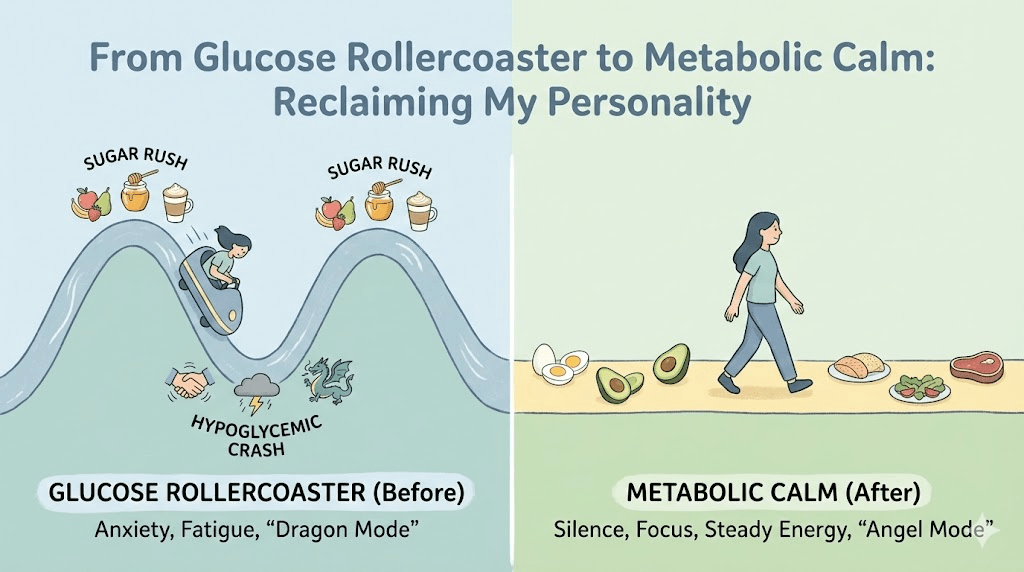
A woman sitting at a kitchen table looking pensive with a cup of tea; a half-eaten croissant sits before her, symbolizing a complicated relationship with food.

"I Thought It Was Depression, It Was My Breakfast": A Personal Story of Escaping the Glucose Rollercoaster

For years, I believed I was just an anxious, irritable person. I didn't know my mood swings weren't a character flaw—they were a chemical reaction to what was on my plate.

Go deeper2026-01-05 15:48
A conceptual image showing a double helix of DNA merging with a digital display of "Biological Age," alongside a blurred background of a laboratory, symbolizing the fusion of tech and biology.

The 2025 Men’s Health Report: Microplastics, the "Muscle Gap," and the End of BMI

Men’s health is undergoing a radical shift in 2025. We are moving away from simple testosterone checks and towards a deeper understanding of environmental toxicity and longevity. Here are the three critical insights defining the male biological landscape this year.

Go deeper2025-12-18 14:56
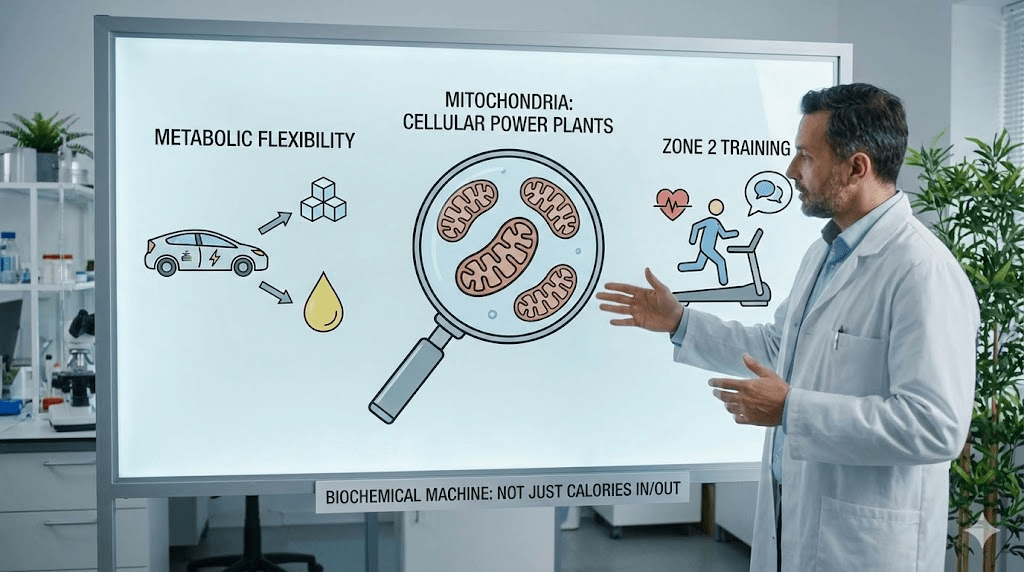
A 3D cross-section rendering of a human cell, with glowing mitochondria (power plants) highlighting the process of ATP production.

"It’s Not a Furnace, It’s a Hybrid Engine": The Complete Guide to Metabolic Flexibility and Mitochondria

We were taught that metabolism is simple math (Calories In minus Calories Out). But modern biochemistry argues that metabolism is actually about cellular efficiency. Here is the molecular deep dive into why some people burn fat while sleeping, while others gain weight just looking at bread.

Go deeper2025-11-26 11:22
A split-screen illustration: on the left, a woman looking exhausted at an office desk next to a half-eaten bagel; on the right, the same woman looking energized and happy while preparing a vegetable-rich meal.

The "3 PM Crash" Was a Warning: Sarah’s Journey to Metabolic Flexibility

Sarah thought her exhaustion and stubborn weight gain were just part of turning 40. It wasn't until she stopped counting calories and started focusing on insulin that she finally woke up.

Go deeper2025-05-03 12:34

Stay informed

Subscribe to receive the latest health insights from VettaWell

I consent to receive emails from VettaWell. Frequency varies. You can unsubscribe any time. Terms & Privacy

SMS is currently available in the United States. By entering your phone number, clicking on the authorization checkboxes, and clicking the sign-up button, you agree to receive periodic text messages, including marketing and promotional text messages, from VettaWell (ROLAND PARTNER Sp.z.o.o.) at the phone number you submitted, including texts that may be sent using an automatic telephone dialing system. Message and data rates may apply. Message frequency varies. Messages may include account and subscription notifications, appointment and reminder messages (if applicable), support and service updates, important platform notices, and occasional wellness-related updates or offers. Consent is not a condition of the purchase of any goods or services. Text HELP for help/customer support. Unsubscribe at any time by replying "STOP" to any text message that you receive from VettaWell. Read our full terms of service and privacy policy.

Back to Feed