
Most parents would never drop a teen at a nightclub and hope for the best. Yet a smartphone can create a similar level of exposure—from the safety of a bedroom. This guide breaks down The Predator in the Pocket: How Social Media is Facilitating Sexual Assault Against Minors into the mechanisms that matter in practice: how grooming works, why it’s easy to miss, and what parents can do without turning daily life into a surveillance state.
The core issue isn’t that kids are “reckless.” It’s that modern platforms are built for fast connection and constant messaging. That combination can make it easier for bad actors to find young people, build trust quickly, and then pressure them into secrecy. When something goes wrong, shame and fear often keep kids silent—especially if they think telling the truth means losing their phone, their social life, or their parents’ trust.
Key takeaways
- Online grooming often starts as friendship, not obvious danger—predators build rapport before crossing boundaries.
- Risk can rise during predictable moments: late-night scrolling, boredom, loneliness, conflict at home, or a new school year.
- Safety improves most when you combine settings + habits + relationship (not just one of the three).
- A “no-confiscation” approach makes disclosure more likely: kids speak up when they don’t fear punishment.
- If you suspect harm, prioritize support and safety first, then documentation and reporting through appropriate channels.
“Social media is a ubiquitous form of communication for children and adolescents that can breed a false sense of security and ‘friendship’ with those that they meet online.”

What the data is warning us about
Researchers and clinicians have been raising alarms that social media can function as an access point for predatory behavior—especially when minors have unrestricted direct messaging, public profiles, or are encouraged to interact with strangers through comments, DMs, and “requests.” Some clinical datasets show that a meaningful share of sexual assault cases involving minors included an online connection between victim and perpetrator, and that the share increases when the perpetrator is not a family member or known caregiver.
Those numbers are frightening, but the bigger message is practical: online contact can move offline. And it can happen even when a child is physically at home. That’s why “knowing where your kid is” is no longer the whole story. Digital environments can bring risk into the living room.
The illusion of friendship
Grooming rarely begins with a neon sign that says “danger.” It often begins with attention: a compliment, a shared interest, a sympathetic message, or someone who seems to “get” them. Predators can mirror a teen’s language and humor, move conversations to private channels, and gradually normalize secrecy or boundary violations.
- Rapport first: “I’m the only one who understands you” or “You can tell me anything.”
- Boundary testing: small requests that escalate (secrets, deleted messages, private chats).
- Isolation: nudging a teen to keep conversations hidden from parents and friends.
- Pressure and urgency: “Do it now,” “Don’t tell anyone,” or framing refusal as betrayal.
- Shame hooks: making the teen feel complicit so they’re less likely to seek help.
For many kids, the emotional reality is confusing: the attention can feel validating, especially when they’re lonely or insecure. That’s why prevention can’t rely on a one-time warning. It has to include ongoing skills: recognizing manipulation, naming discomfort, and having a clear “exit plan” when something feels wrong.
Danger in the living room
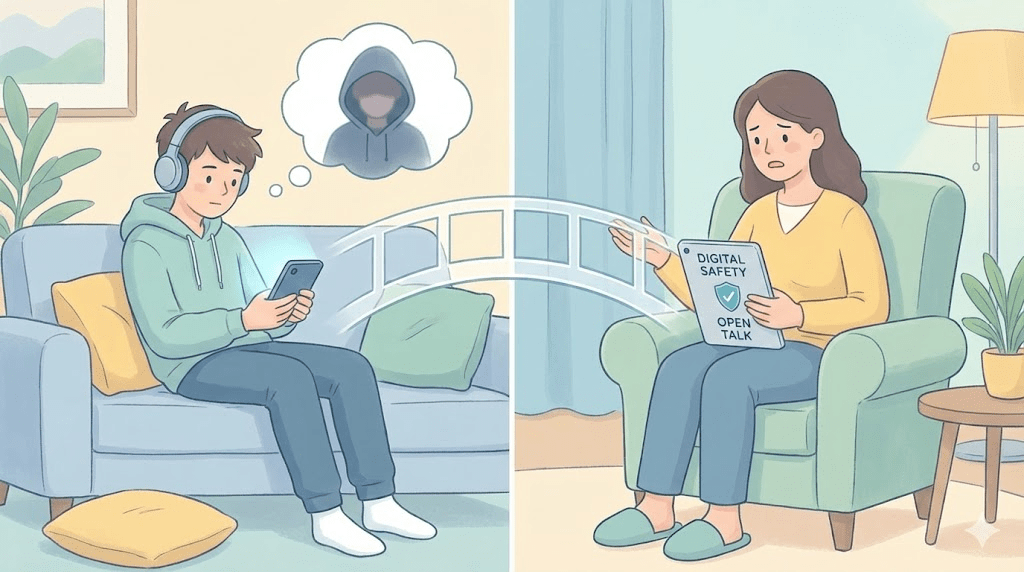
The landscape of parenting has shifted. A teen can be physically safe at home and still be exposed to harassment, coercion, and predation through DMs, group chats, live streams, and “friend” requests. And because many victims feel guilt, fear, or shame, they may not disclose—especially if the family’s default reaction is anger, panic, or punishment.
If telling the truth feels like losing everything, kids learn to keep secrets.
How parents can take control without creating a war
Experts generally recommend a multi-pronged approach: technical protections, clear household norms, and a relationship strong enough to hold hard conversations. The aim isn’t to read every message forever. The aim is to reduce exposure, raise the cost of secrecy, and make disclosure safe.
Many parents hesitate to check messages because they worry about violating privacy. A practical middle ground is to treat phones as a privilege with responsibilities: age-appropriate access, transparent rules, and periodic check-ins. You can be respectful and still be protective—especially for younger teens.
- Be explicit: “I’m not spying; I’m keeping you safe.”
- Explain what triggers a deeper check: secrecy, suspicious contacts, sudden behavior changes, or safety concerns.
- Offer increasing autonomy with age and demonstrated judgment (a clear “earn trust” pathway).
Many platforms offer teen protections, DM controls, private accounts, limits on who can contact a minor, and tools that reduce exposure to unknown adults. Settings aren’t perfect, but they can lower risk—especially when a child’s account age is accurate and their privacy defaults are tight.
- Ensure the account has the correct age and is configured for a minor where applicable.
- Prefer private profiles and restricted DMs for younger teens.
- Limit who can comment, message, tag, or add the teen to groups.
- Disable location sharing and review what metadata is visible in posts.
Teens sometimes post provocative images or suggestive jokes to get likes, fit in, or test boundaries—without realizing it can signal vulnerability to predatory attention. This is a place for calm education, not shaming. Following your child’s public content (with their awareness) can create teachable moments.
- Discuss what certain posts communicate to strangers (even if that’s not the teen’s intent).
- Teach the difference between attention and care—predators often offer attention that feels like care.
- Normalize boundaries: “You never owe anyone photos, replies, or explanations.”
One of the most important protective moves is how you respond when something goes wrong. If kids believe disclosure equals punishment (phone confiscation, screaming, public humiliation), they hide risk. A no-confiscation policy doesn’t mean “no consequences.” It means: safety comes first, and we solve problems together.
Make this promise: “If you tell me, I won’t punish you for coming to me. We’ll handle it together.”
Conversation scripts that keep the door open
Many parents avoid this topic because they don’t want to scare their kids. The goal isn’t fear—it’s clarity. Short, regular conversations work better than one intense “talk.” Use neutral language, stay curious, and ask about the teen’s world.
- “Has anyone online ever made you uncomfortable, even a little?”
- “If you got a weird message, who would you tell first?”
- “What would you want me to do if someone tried to pressure you?”
- “Let’s set a rule: if anyone asks for secrecy, that’s a red flag.”
Red flags parents can watch for
There is no single “tell,” and teens can be moody for many normal reasons. But clusters of changes—especially around phone use—can be a signal to lean in with care.
- Sudden secrecy: new passwords, hiding screens, panic when you enter the room.
- Late-night messaging, rapid mood shifts after being online, or increased isolation.
- New “friend” who is unusually intense, flattering, or demanding.
- Unexplained gifts, money, or talk of meeting someone older.
- Shame language: “You’ll hate me,” “I messed up,” “Don’t tell Dad/Mom.”
If you suspect harm: what to do (high-level)
If you believe your child may have been harmed or is at immediate risk, prioritize safety and support. Keep your response steady and non-accusatory. Avoid interrogating; instead, focus on protection, professional help, and appropriate reporting. Your child’s sense of safety with you is part of their recovery.
- Ensure immediate safety: stay with your child, remove imminent risk, and seek urgent help if needed.
- Respond with calm belief: “I’m glad you told me. You’re not in trouble.”
- Preserve information without deep digging: don’t delete messages; consider screenshots or saving details for professionals.
- Seek medical/clinical support as appropriate and contact local child advocacy or protective services resources.
- Report through appropriate channels (platform reporting + local authorities) when warranted.
Practical next steps
- Write down your family’s 3 rules (DM boundaries, privacy settings, and where phones sleep at night).
- Do a 10-minute “settings audit” together: private account, restricted DMs, correct age, location off.
- Schedule short, weekly check-ins: one “oy” and one “joy,” plus one question about online life.
- Adopt a no-confiscation disclosure policy and repeat it until your teen believes it.
- Build the village: ensure at least one other trusted adult your teen can talk to (coach, aunt/uncle, counselor).
Quick checklist
- Accounts are set to private where possible and DMs are restricted.
- Location sharing is off and personal info is minimized.
- The teen can name at least two red flags and one safe adult to tell.
- A phone-free or device-down nighttime rule exists.
- The child believes: telling a parent leads to help, not punishment.