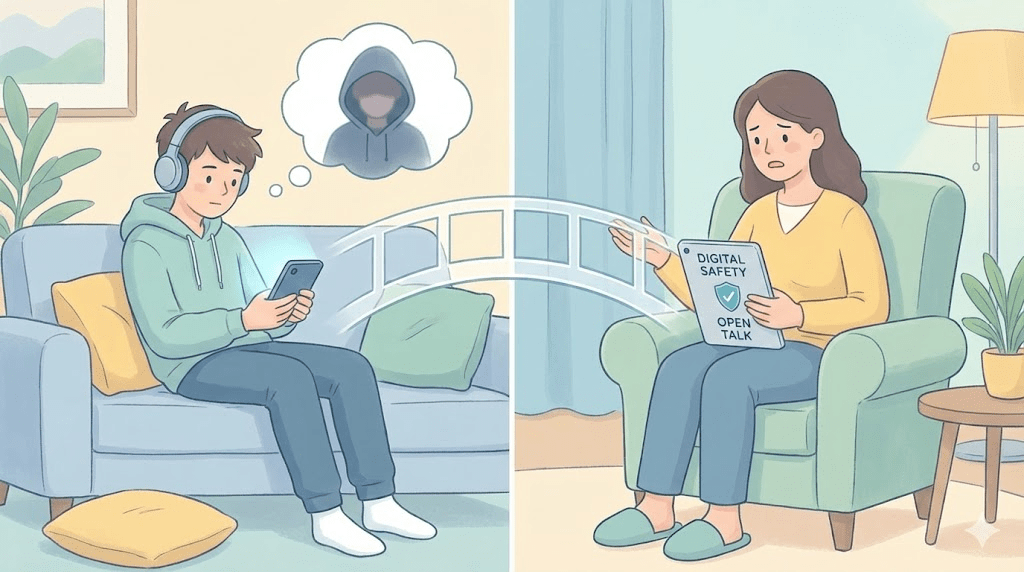

This guide unpacks Manfluencers and the Manosphere: Who Is Really Influencing Our Sons? by focusing on what actually changes outcomes: belonging, status, loneliness, and the quiet ways algorithms keep pulling kids toward the same themes. My 17-year-old son recently did something rare—he took his headphones off—yet he was still glued to YouTube, thumb scrolling as if the screen were a second heartbeat.
In that small window of shared air, I heard the name Andrew Tate. I assumed I had a decent handle on what my kids were consuming online. I didn’t. When I asked my 17-year-old and his 11-year-old brother who they followed, they listed names I barely recognized—and what stunned me wasn’t just the list, but the depth of their context. They knew about Tate’s arrest in connection with human trafficking and sexual abuse allegations (which Tate denies). They could describe the rhetoric of smaller accounts that lean into hate speech and misogyny. When I asked how they knew all that, my oldest shrugged:
“The internet is a big place, Dad.”

Key takeaways
- The “manosphere” isn’t one thing—it’s an ecosystem where status anxiety and loneliness are often monetized.
- Flashy symbols (money, cars, dominance) are bait, but the hook is frequently belonging and a promise of “rank.”
- You can’t out-argue an algorithm. You can compete by building connection, curiosity, and boundaries that feel fair.
- Short, frequent conversations work better than one big “talk,” especially when you focus on values and emotions—not just facts.
- A “village” (other adults, coaches, mentors) helps. Boys listen differently when the message isn’t coming from one source.
Entering the “Manosphere”
That conversation sent me down a rabbit hole into the “manosphere”—a loose corner of the internet filled with creators sometimes called manfluencers. The branding can sound like it’s about men’s wellbeing: confidence, discipline, dating advice, self-improvement. But many spaces slide into something else: male supremacy, cruelty, and an obsession with power. On platforms like Reddit and X (formerly Twitter), I found communities where women are discussed like property instead of people. Comment sections can normalize manipulation, contempt, and even the minimization of sexual violence. It’s a harsh thought, but it matters: this can become part of the digital air our sons breathe.
Not every creator who talks about masculinity is harmful. The problem is the pipeline: a teen watches one clip about gym motivation, then the feed serves a “dating truth,” then a segment on “women’s nature,” and suddenly the worldview becomes more extreme—because extreme content tends to generate stronger reactions. Algorithms don’t evaluate ethics; they optimize engagement.
- A “confidence” video that frames empathy as weakness.
- A clip mocking “beta” men for being kind or emotionally open.
- A story that blames women for men’s loneliness and anger.
- A promise that dominance will solve rejection and insecurity.
- A comment section that rewards cruelty with laughs, likes, and belonging.
The real appeal: it’s not just Lamborghinis
It’s easy to believe boys are drawn to these figures because of the show: money, fast cars, “status,” and the idea that women are prizes. But researchers and clinicians point to something deeper: boys want connection and a place where they don’t feel powerless. Dr. Niobe Way, a professor of developmental psychology at NYU and author of Rebels With a Cause, has studied boys for decades. She notes that while wealth and bravado grab attention, the real hook is often relational—these spaces can feel like a club that finally “gets” you.
In the social hierarchy of boyhood, many kids are terrified of landing at the bottom—socially awkward, invisible, rejected, or labeled “weak.” Manfluencers sell a narrative that promises a shortcut: a script for status, a set of rules, a feeling of control. It can look like empowerment, but it often creates a trap: boys replace real belonging with a fragile identity built on contempt, and loneliness can deepen when relationships become transactional.
When a teen is desperate for a place to belong, even a harmful “tribe” can feel safer than being alone.
If your first impulse is “I’ll just ban it,” you’re not alone. But in practice, blanket bans often backfire—especially with older teens—because it confirms the story that adults “don’t get it,” and it pushes the content underground. A more workable approach is to treat it like any other risky environment: understand what’s happening, reduce exposure, and strengthen the protective factors that keep your child grounded.
How parents can compete with algorithms
Here’s the hard truth: you cannot outpace the internet. You can change what the internet means to your son by changing what home feels like. Dr. Grey Endres, an associate professor of social work, emphasizes starting with what kids experience from us every day. “Model the behavior you want to see” can sound cliché, but it’s real: respect, empathy, and accountability land more strongly when teens see them in action.
An algorithm wins by showing your son content that makes him feel something instantly—anger, superiority, fear, excitement. Parents can “compete” by offering something those creators can’t: a relationship where he’s known. Not judged. Not corrected every minute. Known.
- Spend 10 minutes a day in the same room with no agenda—just being present.
- Ask one open question that isn’t a trap: “What’s been on your mind lately?”
- Watch a clip together occasionally and ask: “What do you think this person is selling?”
- Praise effort and character, not dominance: “I liked how you handled that.”
- Build a small, consistent ritual: late-night tea, dog walk, a weekly breakfast run.
Stop the lectures
As a dad, I default to “life lessons.” But Endres warns about the classic 20-minute dad lecture—the kind that makes a teen’s eyes glaze over while he silently vows never to bring it up again. Teens don’t need a courtroom closing argument; they need a series of short conversations that keep the door open.
A useful mindset shift is moving from prosecutor to coach. Coaches ask questions, notice patterns, and help a player review tape without humiliation. Your job isn’t to “win” the debate. Your job is to keep your kid thinking, reflecting, and connected to values that aren’t dictated by an influencer.
- Label the behavior: When you see toxicity, name it plainly—without mocking your child for watching it.
- Ask connecting questions: “How would you feel if someone talked about your sister like that?” or “What would you tell a friend if he was treated this way?”
- Separate the person from the content: “I’m not saying you’re bad. I’m saying this message is harmful.”
- Stay curious: “What part of this feels true to you?” is often more powerful than “That’s wrong.”
Defensiveness is often a signal of shame, fear of losing status, or fear of being judged. If you push harder, he doubles down. If you soften and stay curious, he has room to think. Sometimes the best move is a pause: “I hear you. Let’s come back to this later.” A calm reset can do more than another round of arguments.
The village approach
I’m lucky to have a “village” of other dads who flag trends—who’s popping up, what’s being said, and why it’s sticky. But none of us can monitor everything. The goal isn’t total censorship (it won’t work). The goal is accountability and context: helping our sons learn to recognize manipulation and keep their identity anchored in something real.
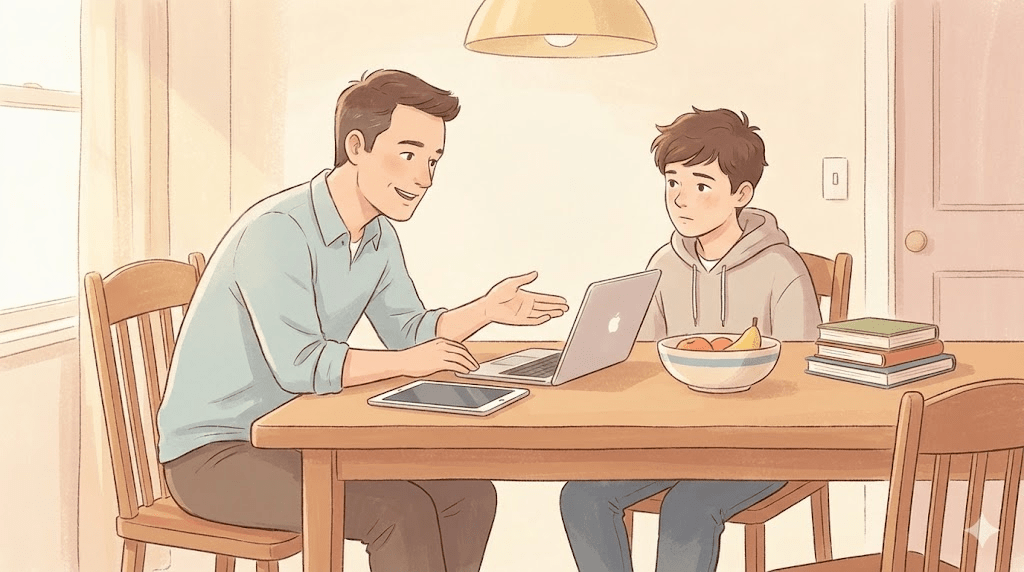
I started bringing small pieces of internet culture to the dinner table—sometimes a meme, sometimes a debate, sometimes a “hot take” clip. Not to shame them, but to practice media literacy together. When my sons talk, I try to listen like a researcher instead of a judge. That doesn’t mean accepting toxic ideas; it means keeping the conversation alive long enough for real influence to happen.
You don’t have to be perfect. You just have to be present enough that your son doesn’t have to outsource his identity to strangers.
Practical next steps
- Name the pattern: Notice what precedes the spiral—stress, rejection, boredom, loneliness, late-night scrolling.
- Replace one risky window: Pick one time of day (often late night) and add a consistent alternative—walk, shower, snack, music, stretching.
- Use short check-ins: Two minutes, often. “Anything weird in your feed lately?” beats one intense confrontation.
- Teach a regulation tool: Breathing, a cold splash, a quick outside reset—anything that lowers the emotional “heat” before discussion.
- Build a boundary that feels fair: Time, place, or purpose. Example: “No phones in the bedroom after 10:30.”
- Add one trusted adult: Coach, uncle, older cousin, family friend—someone your son respects.
Common pitfalls
- Arguing facts when the real need is belonging and status safety.
- Treating every mention of an influencer as a crisis—teens stop sharing when they expect panic.
- Mocking or insulting the content (or your kid’s interest in it), which triggers defensiveness and secrecy.
- Over-monitoring without relationship: surveillance without connection rarely builds trust.
- Trying to “win” the conversation instead of keeping it ongoing.
Quick checklist
- We can name the top 2–3 triggers that lead to late-night spirals.
- We have one daily regulation practice (walk, breathing, workout, cold splash).
- We have clear device boundaries: time, place, and purpose.
- We have at least one other trusted adult involved (mentor/coach/family friend).
- We’ve had at least one curious conversation this week (not a lecture).