"It’s Just Anxiety": How Maya Finally Found the Real Cause of Her "Burnout"
Maya, a 43-year-old marketing director, prided herself on being high-energy. She managed a demanding role, two teenagers, and a household calendar that looked like a logistics operation. Stress was familiar territory—and she had always been good at carrying it.
Then, over the course of six months, her body started behaving like a system with a faulty circuit. It began with sleep: she’d jolt awake at 3:15 AM, heart racing, drenched in sweat, mind suddenly alert in the worst way. Soon after came the brain fog. In meetings, she would lose her train of thought mid-sentence, grasping for words like strategy or deadline. She wasn’t just tired. She felt strangely unreal—like her thoughts were arriving late.
She didn’t feel “anxious” about life. She felt like her body was misfiring.
Key takeaways
- When symptoms feel sudden, cyclical, or physically intense, it’s worth considering hormonal and medical contributors, not only stress.
- “Burnout” can be real—and it can also be a label that hides underlying drivers like sleep disruption, thyroid issues, anemia, medication effects, or perimenopause.
- Tracking timing (especially relative to your cycle) can reveal patterns that a 15-minute appointment misses.
- Perimenopause can present with anxiety-like symptoms: insomnia, palpitations, mood volatility, and cognitive changes.
- The goal isn’t to self-diagnose—it’s to ask better questions and get appropriate evaluation.
The symptoms that didn’t fit the story
Maya tried to rationalize it at first. Busy season at work. Teenagers. Too much caffeine. Not enough yoga. But the symptoms had a specific signature: they were physical, disruptive, and they came in waves.
Her “burnout” looked like this
- 3 AM awakenings with a pounding heart and heat surges.
- Palpitations that felt out of proportion to her stress level.
- Cognitive glitches: word-finding trouble, short-term memory lapses, reduced focus.
- Mood swings that felt like a switch flipping—irritability, rage, then guilt.
- A changing cycle: shorter, lighter periods and shifting timing.
The hardest part was the dissonance. Her life hadn’t suddenly become unmanageable. Her physiology had.
The “stress” diagnosis
When the palpitations became daily, Maya booked an appointment with her general practitioner. The visit was efficient: listen to her heart, check blood pressure (slightly elevated), ask a few questions, then conclude. “You’re at a busy stage of life,” the doctor said. “This sounds like generalized anxiety and burnout. An SSRI could help take the edge off.”
Maya left with a prescription and a knot in her stomach. She’d experienced anxiety before. This felt different—less like worry and more like a body alarm that wouldn’t shut off.
When a diagnosis doesn’t match your lived experience, that mismatch is data—not rebellion.
The turning point: when coping stops working
She tried the medication for four weeks. The palpitations persisted and the fog felt heavier. The breaking moment wasn’t clinical—it was personal. She forgot to pick up her son from soccer practice, something she hadn’t done in a decade. It scared her. Not because it was catastrophic, but because it was uncharacteristic.
Instead of going back to the same loop, Maya decided to become her own case manager. Not by diagnosing herself, but by collecting data the way she would for any project: systematically.
The move that changed everything: tracking
She downloaded a symptom-tracking app and logged sleep, palpitations, mood, sweating, caffeine, and cycle timing. After a few weeks, a pattern emerged so clearly it felt almost rude that no one had asked about it earlier.
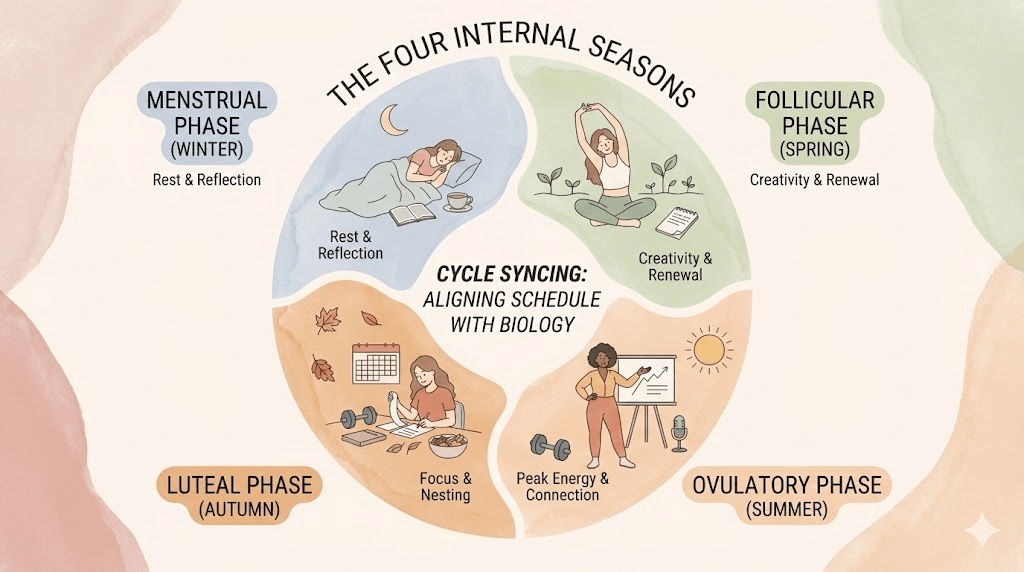
- Her worst symptoms spiked about 10 days before her period.
- The same week included the most sleep disruption and the sharpest irritability.
- Her cycle had become shorter and lighter, and the timing variability increased.
- Once bleeding started, she often felt a little more stable again.
The real culprit: perimenopause
Armed with three months of logs, Maya booked an appointment with a clinician experienced in midlife hormonal transitions. The clinician reviewed her tracking and nodded: “You aren’t going crazy, and you aren’t failing. This pattern is consistent with perimenopause.”
Perimenopause is the transition phase before menopause, and it can begin years earlier than many people expect. It isn’t only about hot flashes or missed periods. It can show up as sleep fragmentation, mood volatility, palpitations, and cognitive changes—especially when progesterone and estrogen fluctuate unpredictably.
Why it can look like “anxiety”
When hormones fluctuate, the nervous system can become more reactive. Sleep disruption amplifies everything: stress tolerance, emotional regulation, cravings, and attention. In that state, many people feel anxious because the body is in a heightened physiological mode—even if their thoughts are not spiraling.
Sometimes the mind isn’t creating anxiety. The body is producing the sensation of it.
What a good evaluation includes
Maya’s clinician didn’t stop at a label. They discussed differential causes and whether anything else needed to be ruled out—thyroid issues, anemia, arrhythmias, medication effects, sleep apnea, and other conditions that can mimic or compound “burnout.” This step matters: hormone transition can be real and other factors can coexist.
Questions Maya learned to ask
- Could this be related to perimenopause or cycle-related hormone changes?
- What else should we rule out given palpitations and night sweats (thyroid, iron, etc.)?
- What red flags would mean I need urgent evaluation?
- If we treat hormones, how will we track response and adjust safely?
- What lifestyle changes will support sleep and nervous system recovery while treatment begins?
The solution: treat the root, support the system
Maya’s plan wasn’t about “sedating anxiety.” It was about stabilizing the drivers and rebuilding recovery capacity. Under clinician supervision, she discussed options and chose an approach aligned with her symptoms, history, and risk profile.
- Clinician-guided hormone support (when appropriate): some women benefit from carefully selected hormone therapy; it isn’t right for everyone and requires individualized risk assessment.
- Sleep-first strategy: consistent wake time, a wind-down buffer, and reducing late-day stimulants—because sleep loss multiplies reactivity.
- Magnesium (as advised by her clinician): used for relaxation/sleep support in some people; dosing and suitability vary.
- Protein-forward meals: steadier blood sugar reduced irritability and late-day cravings.
- Strength training: not for aesthetics—because muscle supports metabolic resilience and mood stability.
What changed first
The earliest shift wasn’t weight or motivation—it was stability. Within weeks, her 3 AM awakenings became less frequent. The palpitations softened. Her cognition improved enough that she stopped fearing meetings. She still had stress, but she wasn’t being biologically amplified by a nightly shortage of recovery.
The aftermath: a different definition of self-advocacy
Maya doesn’t tell her story to criticize mental health treatment—SSRIs help many people. She tells it because one label (“anxiety”) can sometimes flatten a more complex reality. The takeaway isn’t “don’t accept help.” It’s: make sure the help matches the problem.
“You have to be the CEO of your own body. If a diagnosis doesn’t feel right, keep digging.”
Practical next steps
- Track symptoms and cycle timing for 8–12 weeks (sleep, mood, palpitations, bleeding pattern).
- Bring data to appointments: what happens when, how severe, and what improves it.
- Ask about perimenopause if you’re in your 40s with new insomnia, mood volatility, or cycle changes.
- Prioritize sleep protection: consistent wake time, reduced late-day caffeine, and a 60–90 minute wind-down buffer.
- If palpitations, chest pain, fainting, or severe symptoms occur, seek medical evaluation promptly.
Common pitfalls
- Normalizing debilitating symptoms as “just part of being a woman” or “just stress.”
- Treating a physical pattern as purely psychological and skipping medical evaluation.
- Changing five things at once, then not knowing what helped (or what harmed).
- Ignoring sleep as a primary lever—then wondering why mood and focus won’t stabilize.
- Assuming hormone transition explains everything without ruling out other contributors (thyroid, anemia, arrhythmia, etc.).
Quick checklist
- I can describe my symptoms with timing (especially relative to my cycle).
- I have a list of questions for my clinician that includes hormonal and medical possibilities.
- My plan protects sleep (wake time + wind-down buffer).
- My meals include protein and fiber most days to support stability.
- I know which symptoms would require urgent evaluation.
Important note: This article is educational and not medical advice. If you have severe symptoms, new or worsening palpitations, chest pain, shortness of breath, fainting, heavy bleeding, or thoughts of self-harm, seek professional help immediately. For ongoing symptoms, work with a qualified clinician to evaluate causes and build an individualized plan.