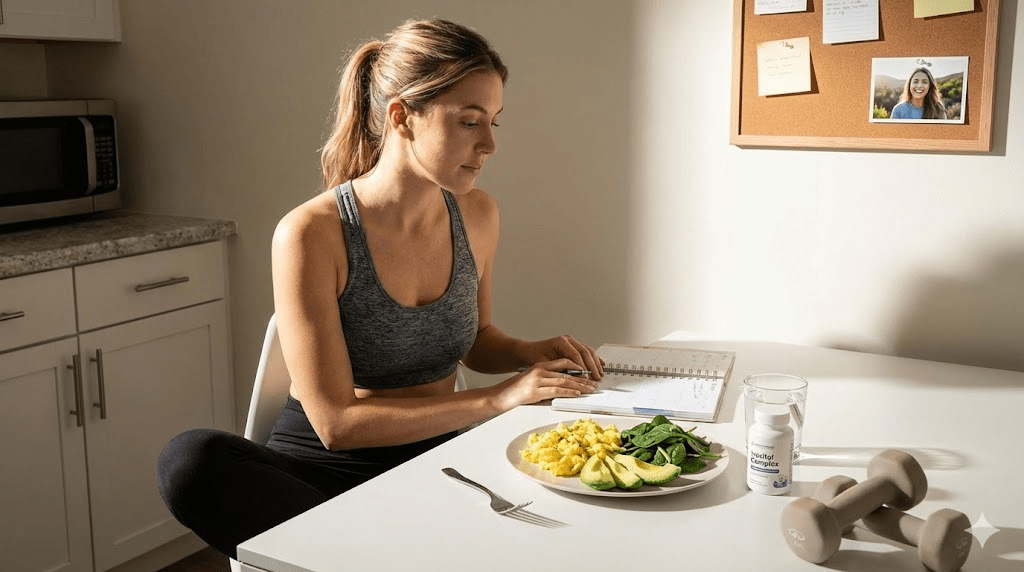
Beyond the Bubble Bath: A Holistic Guide to Radical Self-Care for Women
For too long, “self-care” for women has been marketed as a consumer product—bubble baths, wine, expensive skincare, and the idea that you can purchase your way out of burnout. Relaxation matters, but true self-care is often less photogenic: it’s the ongoing practice of understanding your body, protecting your energy, and advocating for care that matches your biology.
Radical self-care is health infrastructure. It’s sleep that actually restores you, strength that protects your bones, boundaries that reduce chronic stress, and basic tracking that helps you catch problems early. It’s shifting focus from how you look (aesthetics) to how you function (physiology)—and treating your body like the engine that powers everything you want to do.
Self-care isn’t an escape from your life. It’s how you build a life that doesn’t require constant escaping.
Key takeaways
- Think in systems, not treats: sleep, stress, movement, nutrition, and medical prevention work together.
- Your menstrual cycle can function like a monthly “report card”—patterns are data, not inconveniences.
- Heart health is not a men’s issue; women’s symptoms can be subtler and easier to dismiss.
- Strength training is a long-term insurance policy for bones, metabolism, and independence.
- The “invisible load” is real physiology: chronic mental load often shows up in sleep, appetite, mood, and cycles.
1) Your cycle is a vital sign
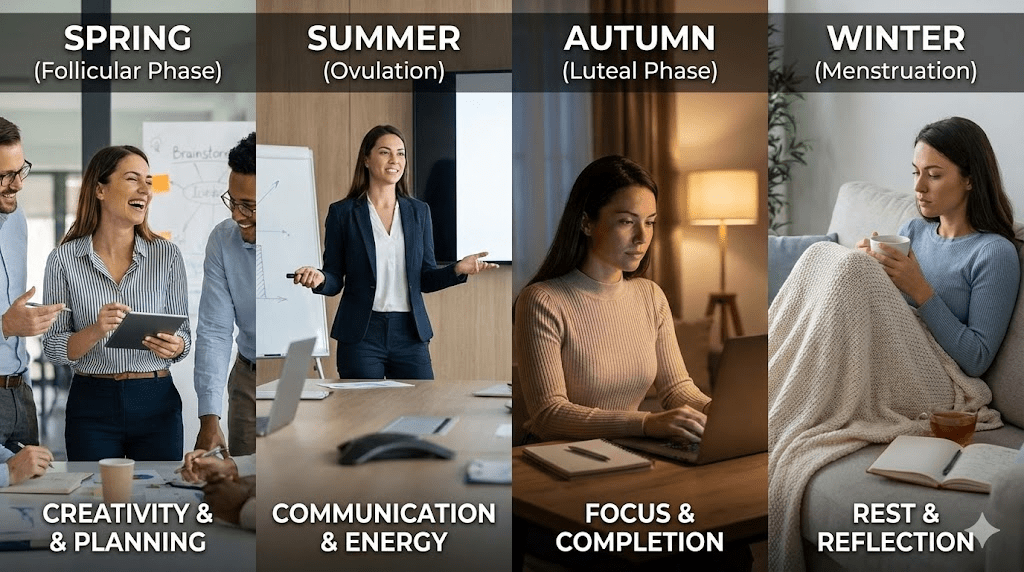
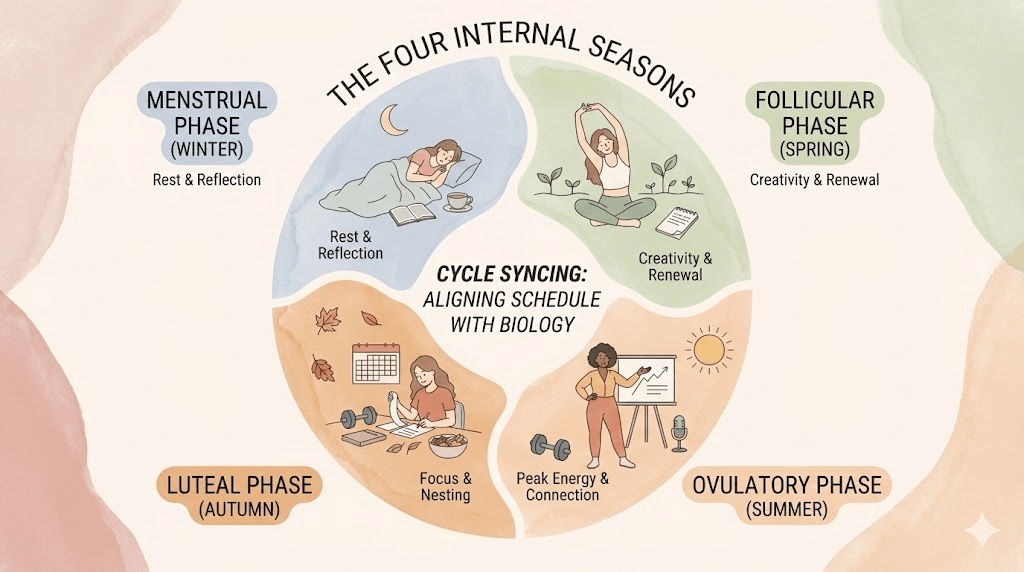
Many clinicians view the menstrual cycle as a meaningful health signal—not because a cycle has to be “perfect,” but because shifts in timing, bleeding, and pain can reflect how the body is doing overall. A cycle is an ongoing feedback loop involving the brain, ovaries, thyroid, stress physiology, metabolism, and inflammation.
If you were taught to “push through” severe symptoms, it’s worth revisiting that belief. Debilitating pain, extremely heavy bleeding, cycles that suddenly change, or months without a period can be worth discussing with a qualified clinician. It doesn’t mean something is wrong—but it does mean it’s information worth taking seriously.
What to track (for 8–12 weeks)
- Cycle length: roughly how many days from Day 1 to Day 1; note big shifts.
- Bleeding pattern: light/moderate/heavy days; clots; bleeding between periods.
- Pain level: mild/moderate/severe; whether pain disrupts work/school/sleep.
- Mood + anxiety: especially premenstrual changes that feel intense or new.
- Energy + cravings: when do they spike or crash?
- Ovulation signals (optional): cervical mucus, temperature, or ovulation tests—useful data even if you’re not trying to conceive.
Common is not the same as normal. If symptoms regularly limit your life, that’s a signal worth investigating.
Why ovulation matters beyond pregnancy
Ovulation is more than a fertility marker. It supports the production of progesterone, a hormone involved in sleep quality, mood regulation, and aspects of bone and cardiovascular health. If you’re consistently not ovulating (or you suspect you aren’t), it’s worth discussing with a clinician—especially alongside symptoms like very irregular cycles, acne, hair changes, or significant weight shifts.
2) The silent threat: heart health
Heart disease remains a major risk for women, and it can be missed because symptoms do not always resemble the “Hollywood heart attack.” Some women experience classic chest pressure; others notice fatigue, shortness of breath, nausea, or pain in the jaw, neck, or back. The priority is not self-diagnosis—it’s awareness and timely evaluation when something feels off.
In women, cardiovascular distress may present as
- Extreme fatigue that is sudden or unusual for you.
- Shortness of breath during normal activities or at rest.
- Nausea, indigestion, or upper-abdominal discomfort that feels different than typical.
- Jaw, neck, shoulder, or back pain (especially with exertion).
- Chest pressure or tightness (even if not sharp pain).
If you ever suspect an urgent cardiac event, seek emergency medical care. For long-term prevention, basic metrics matter: blood pressure, lipids, glucose/insulin-related markers, family history, and pregnancy-related complications.
Maintenance habits that actually help
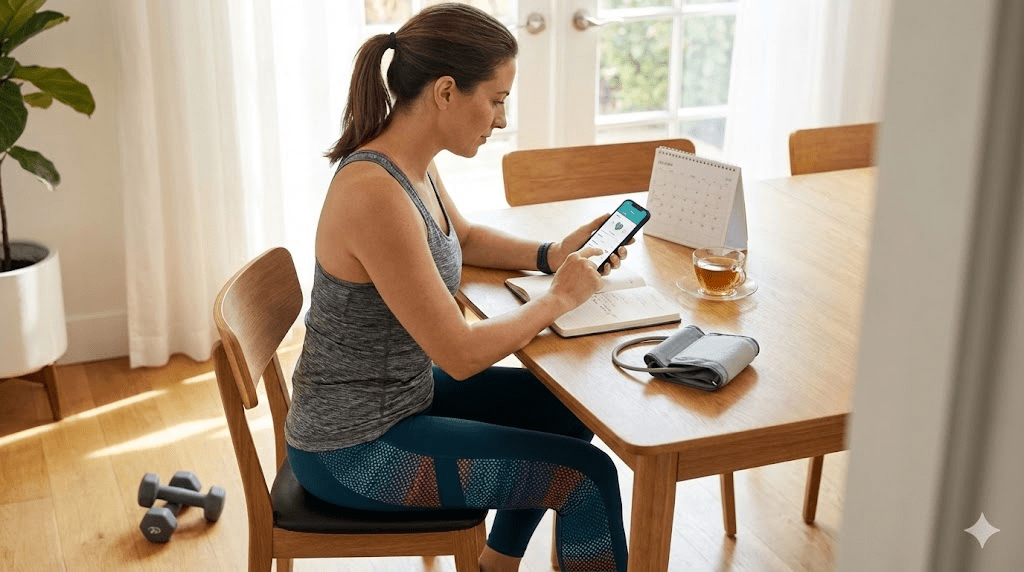
- Know your blood pressure: not just once a year—periodically, at home if possible.
- Treat pregnancy history as data: complications like hypertension during pregnancy can influence long-term risk and should be part of your medical record.
- Build aerobic capacity + strength: walking, cycling, swimming, and resistance training are complementary, not competing.
- Prioritize sleep: consistently short sleep can worsen appetite regulation and cardiometabolic markers.
3) Strength training as an insurance policy
Strength training is not a “fitness trend.” It’s one of the most reliable ways to protect bone density, preserve muscle, and support metabolic health across the lifespan. As estrogen declines with age, bone density can drop; resistance training is one of the best tools women have to bank strength and resilience.
Why muscle matters (even if you don’t care about aesthetics)
- Muscle is a metabolic organ: it helps manage blood sugar and supports insulin sensitivity.
- Bone loading: lifting and impact stimulate bones to retain mineral density.
- Injury prevention: stronger hips, glutes, and core support joints and reduce pain.
- Aging protection: strength is a predictor of independence and quality of life.
You don’t need a perfect program. You need a repeatable one. Two to four sessions per week of progressive resistance training—done consistently—beats a complicated plan done rarely.
A simple starting template
- Pick 4 movement patterns: squat, hinge, push, pull (plus carries if you can).
- Train 2–3 days per week for 30–45 minutes.
- Aim for gradual progression: slightly more reps, weight, or control over time.
- Pair training with adequate protein and sleep to support recovery.
4) Managing the “invisible load”
Many women carry a heavier mental load—the invisible management of schedules, emotions, household needs, and social coordination. Over time, chronic low-grade stress can show up as sleep disruption, irritability, sugar cravings, cycle changes, and a sense of constant urgency.
If you’ve been told to handle it all, notice the hidden assumption: that your nervous system has unlimited capacity. It doesn’t. Radical self-care includes boundary setting and delegation because those are physiological interventions—reducing stress inputs changes the body’s output.
Boundary moves that lower stress in real life
- Make the load visible: list tasks that live in your head; decide what can be dropped or shared.
- Default “no” language: “I can’t take that on right now,” without over-explaining.
- Time protection: one non-negotiable block per week that is yours (movement, therapy, walk, rest).
- Sleep as policy: protect bedtime like an appointment, not a suggestion.
If your calendar is full of obligations, your body will eventually create a limit—through fatigue, anxiety, or illness.
A holistic checklist: what to track beyond the cycle
Self-care becomes powerful when it’s measurable. You don’t need obsessive tracking—just a few signals that tell you whether your system is trending toward stability or depletion.
- Sleep: hours + quality (do you wake restored?).
- Energy: stable vs. crash-prone; note afternoon slumps.
- Mood: anxiety/irritability patterns across the month.
- Movement: strength sessions per week + daily steps/walking.
- Nutrition basics: protein and fiber most days; hydration; iron-rich foods if needed.
- Stress signals: jaw/shoulder tension, headaches, digestion changes, rumination.
When to seek care (high-level)
This article is educational and not medical advice. If you experience severe pelvic pain, heavy bleeding, missed periods without explanation, chest pressure, shortness of breath, fainting, or any symptoms that feel urgent, seek professional medical evaluation. For chronic symptoms that affect daily life, a clinician can help assess possible contributors and create a plan that matches your history and goals.
Practical next steps
- Track symptoms and cycle timing for 8–12 weeks to identify patterns (energy, mood, pain, bleeding).
- Choose one “pillar” to strengthen this month: sleep, strength, nutrition, or stress boundaries—not all four at once.
- Add 2 strength sessions per week using a simple template (squat/hinge/push/pull).
- Schedule one preventive action: blood pressure check, annual visit, or a conversation with your clinician about any red-flag symptoms.
- Set one boundary that protects recovery: a caffeine cutoff, a no-work hour before bed, or one phone-free meal per day.
Quick checklist
- I can describe my cycle patterns and symptoms without guessing.
- I do strength training at least 2x/week (or I have a plan to start).
- I know my blood pressure or have a plan to check it.
- My sleep routine includes at least one consistent wind-down cue.
- I’ve reduced one recurring stress input through delegation or boundaries.