
VettaWell logoVettaWell

Calm wellness updates via email and SMS.

Legal

  • Privacy Policy
  • Terms of Service
  • Email WhiteList

Navigation

  • Feed
  • About
  • Authors
  • Editorial Standards
  • EventsNEW
  • Subscribe
  • Contact
  • Contribute
  • Careers

© 2025 VettaWell. All rights reserved.

VettaWell logoVettaWell
FeedAboutAuthorsEditorial StandardsEventsNEWSubscribe
Back to Authors
Portrait placeholder for Jonah Keane with a clean, modern backdrop

Jonah Keane

Metabolic Health Writer & Lifestyle Data Analyst

About Jonah Keane

Jonah writes about metabolic health with a bias toward systems: how meals, movement, sleep, and stress interact over time. He translates data-heavy topics into habits readers can implement without turning life into a spreadsheet.

Topics Jonah focuses on

  • Glucose literacy in plain language
  • Meal structure: protein, fiber, and timing
  • Low-friction movement that improves insulin sensitivity

A practical framework

  1. Stabilize breakfast or first meal
  2. Add a 10–15 minute walk after one meal per day
  3. Protect sleep consistency as a metabolic lever
The most underrated metabolic tool is consistency—not intensity.

Experience highlights

Jonah has worked on lifestyle analytics projects that examined how daily behaviors correlate with energy, appetite, and adherence. He prefers measured claims and clear uncertainty.

What you'll see in his articles

  • Simple if/then rules for meals and snacks
  • Non-obsessive tracking strategies
  • Common myths and what to do instead

Latest articles by "Jonah Keane"

A woman sitting at a kitchen table looking pensive with a cup of tea; a half-eaten croissant sits before her, symbolizing a complicated relationship with food.

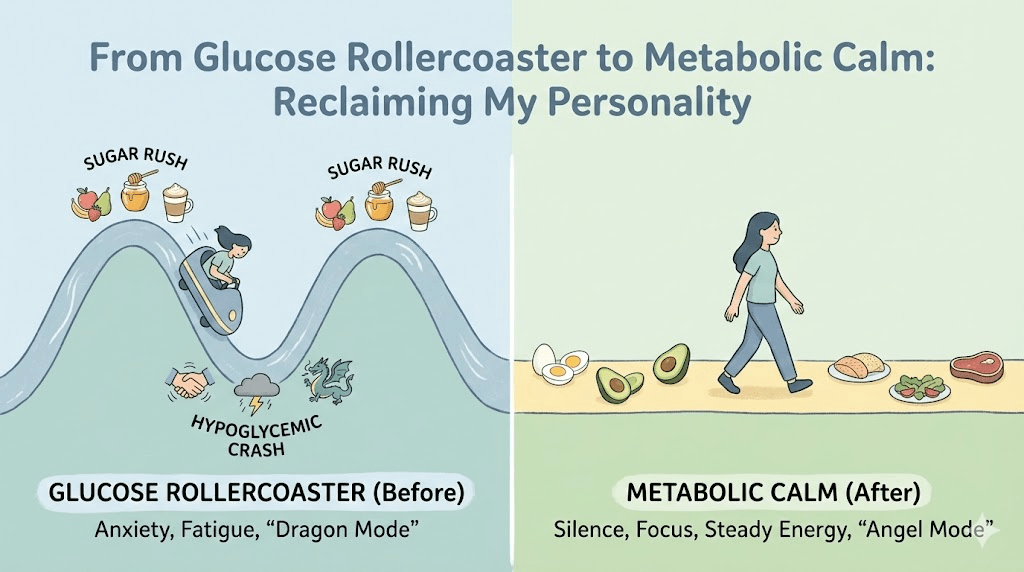
"I Thought It Was Depression, It Was My Breakfast": A Personal Story of Escaping the Glucose Rollercoaster

For years, I believed I was just an anxious, irritable person. I didn't know my mood swings weren't a character flaw—they were a chemical reaction to what was on my plate.

Go deeper2026-01-05 15:48
A 3D cross-section rendering of a human cell, with glowing mitochondria (power plants) highlighting the process of ATP production.

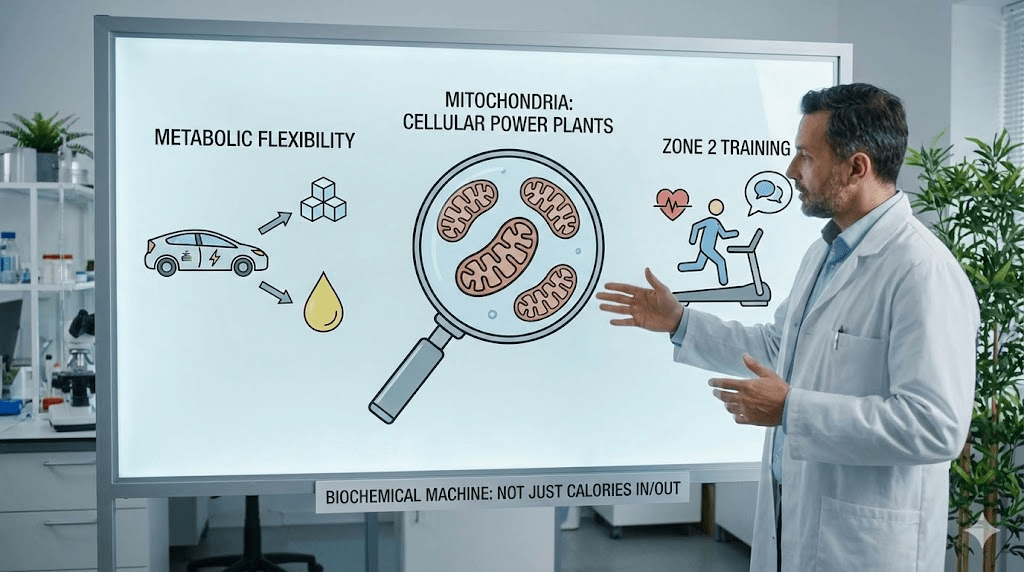
"It’s Not a Furnace, It’s a Hybrid Engine": The Complete Guide to Metabolic Flexibility and Mitochondria

We were taught that metabolism is simple math (Calories In minus Calories Out). But modern biochemistry argues that metabolism is actually about cellular efficiency. Here is the molecular deep dive into why some people burn fat while sleeping, while others gain weight just looking at bread.

Go deeper2025-11-26 11:22
A medical illustration of the human brain highlighting the hypothalamus, with signaling pathways connected to adipose (fat) tissue, representing the gut-brain axis.

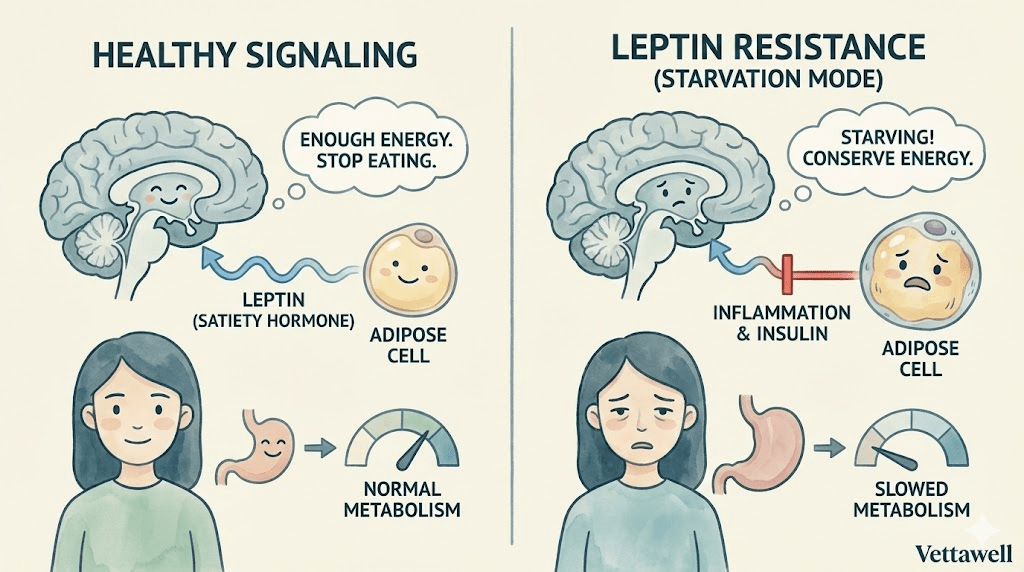
The "Starvation" Signal: Why Your Brain Can't See Your Body Fat

You have plenty of stored energy, so why are you always hungry? The answer lies in Leptin Resistance—a hormonal glitch that makes the brain believe a person with obesity is actually starving to death.

Go deeper2025-11-24 10:32
A cozy composition on a wooden table: fresh rosemary sprigs, a glass spray bottle, a bowl of rice water, and a wooden comb, creating an atmosphere of natural self-care.

"Grandma’s Secrets" That Actually Work: 5 Kitchen Rituals for Luxurious Hair

Forget expensive salon treatments for a minute. Sometimes the most powerful tools for hair growth and shine are sitting right in your pantry. We compiled a digest of time-tested recipes that even science backs up.

Go deeper2025-09-18 14:03
A detailed medical illustration showing a human brain with highlighted sections of the Amygdala and Prefrontal Cortex, illustrating neural pathways.

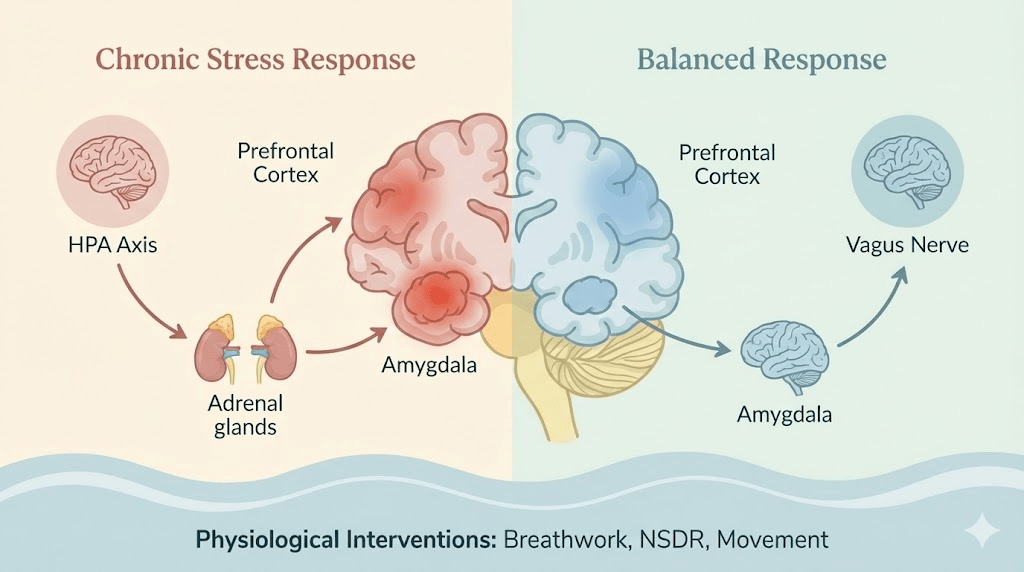
Beyond "Just Relax": The Neurobiology of Chronic Stress and How to Rewire Your Brain

Chronic stress isn't just a feeling; it’s a physiological state that physically alters brain structure. We examine the HPA axis, the shrinking prefrontal cortex, and evidence-based protocols to reset the nervous system.

Go deeper2025-09-10 03:21
A split-screen microscopic rendering: On the left, a healthy hair strand with smooth, overlapping scales (cuticle); on the right, a swollen strand with cracked, lifted scales due to water absorption.

The "Air-Dry" Mistake: Why Water Is Actually the Most Damaging Chemical for Your Hair

We are taught that heat tools are the enemy and air-drying is the holy grail of hair health. But trichologists warn of a hidden danger called "Hygral Fatigue"—where the simple act of staying wet for too long destroys your hair from the inside out.

Go deeper2025-08-04 18:44
Back to Authors