The Brain’s "Night Shift": How the Glymphatic System Detoxifies Your Mind
Sleep looks like an evolutionary mistake. For roughly a third of your life you’re unconscious, slower to react, and—at least in the wild—more vulnerable. For centuries that created a puzzle: why would biology “waste” so much time doing nothing?
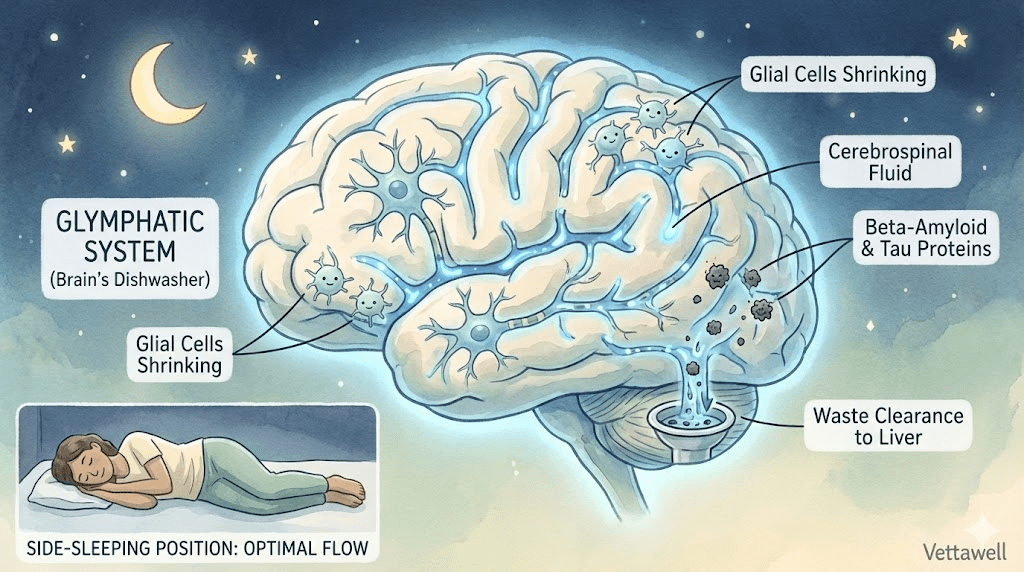
One of the most compelling answers emerged from modern neuroscience: we sleep, in part, to clean the brain. In the early 2010s, researchers led by neuroscientist Dr. Maiken Nedergaard described what is now called the glymphatic system—a brain-wide waste clearance network that acts like a plumbing and rinse cycle for the central nervous system.
Sleep isn’t only rest. It’s maintenance.
This discovery didn’t mean we suddenly “solved” sleep. But it helped explain something many people feel intuitively: after poor sleep, the brain doesn’t just feel tired—it feels dirty: foggier, slower, more irritable, less emotionally resilient. The glymphatic system offers a biological storyline for that experience.
Key takeaways
- The glymphatic system is a waste clearance pathway that moves fluid through brain tissue to help remove metabolic byproducts.
- The system appears to be most active during deep (non-REM) sleep, when brain cells change shape and fluid movement increases.
- Waste products associated with neurodegeneration (including beta-amyloid and tau) are among the molecules studied in glymphatic clearance research.
- Sleep deprivation can impair brain clearance signals and is associated with short-term changes in these waste markers; long-term cognitive outcomes are complex and multifactorial.
- You can support the brain’s “night shift” with regular sleep timing, reduced alcohol, treating sleep breathing issues, and protecting deep sleep.
What is the glymphatic system, in plain English?
Your body has a lymphatic system—vessels that help clear waste and manage immune function. But the brain is protected by the blood–brain barrier and has different constraints. The glymphatic system is a brain-specific clearance network that uses cerebrospinal fluid (CSF) to help wash through brain tissue and carry waste away.
The name is a mash-up: “glial” (support cells in the brain) + “lymphatic.” It reflects the idea that glial cells help coordinate a lymph-like clearance process inside the brain.
A simple metaphor
Imagine your brain is a city. Neurons are the buildings and businesses producing “trash” (metabolic byproducts) all day. The glymphatic system is the sanitation department that works most efficiently at night, when traffic is low and streets are easier to wash.
How the “brain wash” works
The mechanics are one of the most fascinating parts. During deep non-REM sleep, brain activity changes and the space between cells appears to expand. That expansion allows CSF to move more freely through the brain’s interstitial spaces, mixing with interstitial fluid and helping carry away waste products.
Why deep sleep matters
- Deep (slow-wave) sleep is strongly linked to restoration: physical repair, immune signaling, and memory consolidation.
- Evidence suggests glymphatic clearance is enhanced during deep sleep, compared to waking states.
- If deep sleep is fragmented (frequent awakenings), your “wash cycle” may be interrupted—like stopping a dishwasher mid-run.
Being “unconscious” isn’t the same as being restored. Architecture matters: deep sleep, continuity, and timing.
What the system clears
Among the molecules studied are beta-amyloid and tau—proteins associated with Alzheimer’s disease when they accumulate abnormally. Research suggests that sleep and glymphatic function are related to how these proteins are processed and cleared. This has fueled a major shift in how scientists think about sleep and long-term brain health.
Important nuance: Alzheimer’s disease is not a single-variable problem. Genetics, vascular health, inflammation, metabolic status, and many other factors contribute. Glymphatic clearance is best thought of as one important piece of a larger risk and resilience puzzle.
The Alzheimer’s connection (what we know—and what we don’t)
Studies have found that acute sleep deprivation can be associated with measurable changes in markers related to amyloid or tau dynamics, and poor sleep over time is associated with worse cognitive outcomes in many populations. The glymphatic system provides a plausible pathway: if clearance is reduced night after night, waste products may accumulate more easily.
What you should take from this
- Sleep is a brain maintenance behavior, not just a comfort habit.
- Chronic sleep disruption is a meaningful risk signal—especially when paired with other risks (hypertension, diabetes, untreated sleep apnea).
- The goal isn’t to panic about one bad night; it’s to protect years of sleep continuity.
What blocks the night shift
If you want the glymphatic “cleaning cycle” to run well, the question becomes practical: what interferes with deep sleep and continuity? Several common factors can blunt the wash.
1) Alcohol: sedation without restoration
Alcohol can make you pass out faster, which is why it feels like a sleep aid. But it often fragments sleep later in the night and can suppress REM and deep sleep in ways that reduce recovery quality. In animal research, alcohol exposure has been shown to impair glymphatic function; in humans, the more reliable takeaway is simpler: alcohol tends to degrade sleep architecture, which is the opposite of what brain clearance needs.
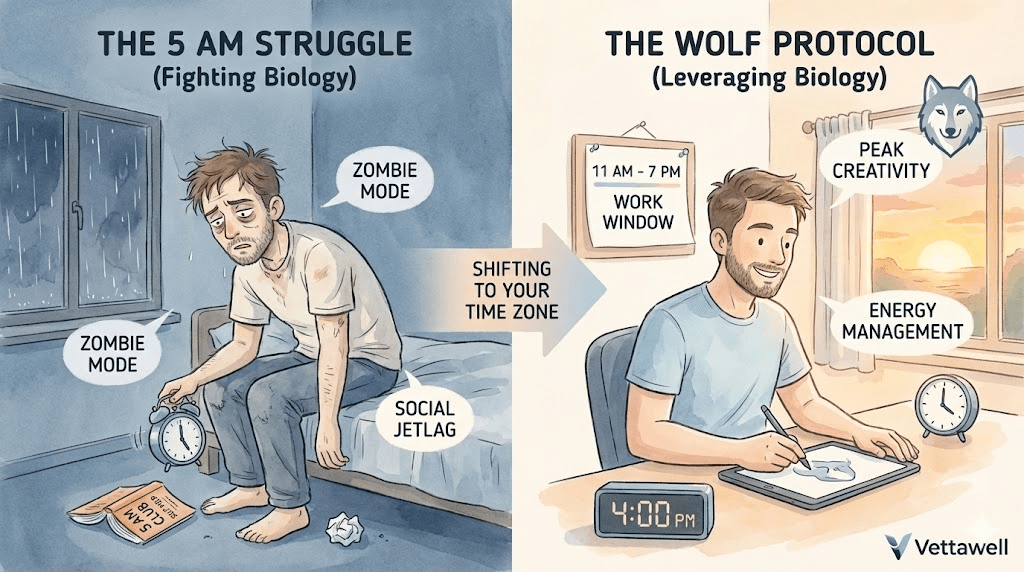
2) Irregular sleep timing: social jetlag
The brain runs on timing. When bed and wake times swing wildly across the week, your circadian rhythm gets mixed signals. That can reduce sleep depth and continuity, especially on nights when you’re trying to “force” sleep at an unusual time.
3) Sleep-disordered breathing: the silent disruptor
Snoring, obstructive sleep apnea, and frequent micro-awakenings can shred deep sleep even if you think you slept for 7–8 hours. If your sleep is fragmented by breathing disruptions, the brain’s maintenance windows shrink. This is one of the most underdiagnosed reasons people wake up foggy despite “enough” time in bed.
4) Chronic stress and hyperarousal
If your nervous system is stuck in a high-alert state, it’s harder to reach deep sleep. People often describe this as being tired but wired—sleep onset is difficult, or sleep becomes light and reactive.
5) Heat, light, and late stimulation
- A warm bedroom can reduce deep sleep for many people.
- Bright light late at night can delay melatonin signaling.
- High-intensity work right before bed keeps the brain in “day mode.”
Sleep position: does it matter?
You may have heard that side-sleeping helps the glymphatic system. Much of this idea comes from animal studies (especially rodents) suggesting that glymphatic transport is more efficient in the lateral (side) position compared with back or stomach positions.
In humans, sleep position likely matters less than the fundamentals—deep sleep, continuity, and breathing quality. If side-sleeping helps you snore less, breathe better, and sleep deeper, it’s a meaningful upgrade. If it makes you uncomfortable and reduces sleep, it’s not worth forcing.
The best sleep position is the one that improves breathing and continuity—not the one that wins an internet debate.
How to optimize the cleanse (without turning sleep into another job)
You don’t need a biohacking lab to support your brain’s night shift. You need a few high-leverage behaviors that protect deep sleep and reduce fragmentation.
The “non-negotiables” for most people
- Consistent wake time (your strongest circadian anchor).
- Light in the morning (10–20 minutes outdoors if possible).
- Dim evenings (lower intensity, fewer bright screens).
- Cool, dark room (temperature and darkness support depth).
- Caffeine cut-off (often 8–10 hours before bed for sensitive sleepers).
Support deep sleep specifically
- Create a buffer zone before bed: 60–90 minutes with lower stimulation.
- Avoid heavy late meals if they disrupt your sleep, but don’t go to bed hungry if that wakes you.
- Add a gentle downshift ritual: shower, stretch, reading, breathwork, or calm music.
- If you wake up consistently, evaluate breathing: snoring, gasping, morning headaches, dry mouth.
A practical 7-day experiment
If you want to test this without overwhelm, run a one-week “clean sleep” experiment and observe your cognition, mood, and energy.
- Pick a fixed wake time and keep it within ±30 minutes all week.
- Stop caffeine 8–10 hours before bed (or earlier if you’re sensitive).
- Keep alcohol to zero or minimal for the week.
- Make your bedroom cooler and darker than usual.
- Add a 10-minute wind-down ritual (same sequence nightly).
- Track: sleep continuity (awakenings), morning clarity, and afternoon focus.
- At the end, compare how you feel to your baseline week.
A short FAQ
Is eight hours mandatory for brain cleansing?
There’s no single universal number. Many adults do best in the 7–9 hour range, but the quality of sleep (depth, continuity, timing) matters. If you’re consistently waking refreshed and functioning well, you’re likely in a good zone.
Can naps replace deep sleep at night?
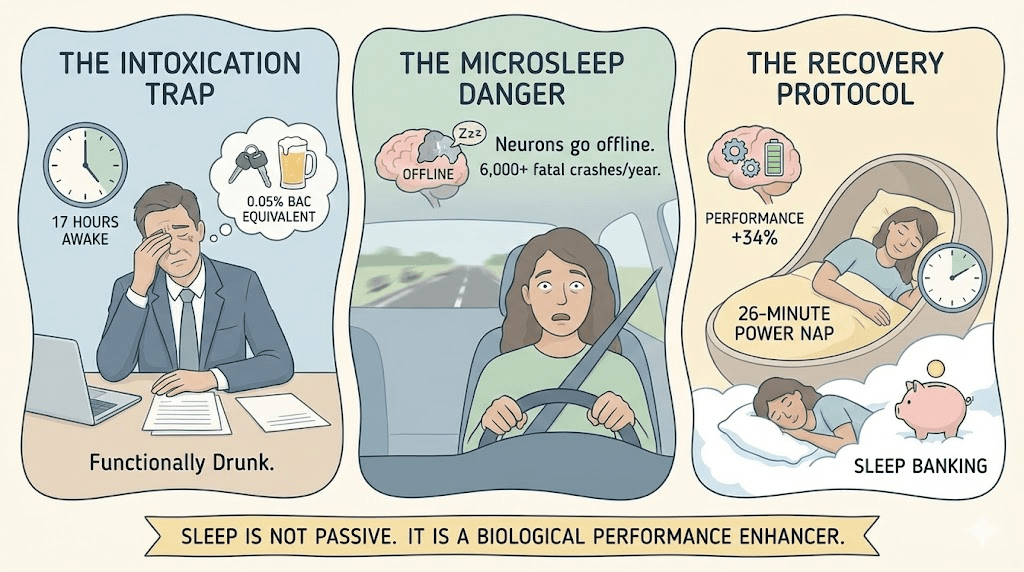
Naps can improve alertness and mood, but they don’t fully substitute for consolidated nighttime sleep. If naps are late or long, they can reduce sleep drive at night.
What about supplements?
Supplements may help some people, but they are not the foundation. If the basics—timing, light, temperature, caffeine, stress, breathing—are off, supplements rarely fix the system. If you use them, treat them as support, not strategy.
Practical next steps
- Set a consistent wake time for the next 14 days (weekends included).
- Create a 60–90 minute pre-sleep buffer: dim lights, no work, lighter stimulation.
- Reduce alcohol, especially within 3–4 hours of bed, and notice changes in awakenings.
- Move daily (even a 20–30 minute walk) to improve sleep pressure and recovery.
- If you snore loudly, wake gasping, or feel exhausted despite 7–8 hours, consider evaluation for sleep-disordered breathing.
Common pitfalls
- Trying to “make up” sleep with weekend oversleep, creating social jetlag.
- Using alcohol as a sleep tool, then wondering why sleep feels unrefreshing.
- Treating bedtime as flexible but wake time as fixed (the reverse is usually easier).
- Over-caffeinating in the morning to compensate for poor sleep, then repeating the cycle.
- Ignoring chronic snoring, mouth breathing, or frequent awakenings as “normal.”
Quick checklist
- Wake time is stable (±30 minutes most days).
- Caffeine cut-off is at least 8–10 hours before bed (or earlier if needed).
- Bedroom is cool, dark, and quiet enough for deep sleep.
- Evenings include a wind-down buffer (not last-minute work).
- Breathing quality is addressed (snoring/apnea signs are not ignored).
Important note: This article is educational and not medical advice. If you have persistent insomnia, severe daytime sleepiness, or symptoms of sleep apnea, consult a qualified healthcare professional.