The Genius Wave Effect: A 2026 Deep Dive Into Theta Audio, Money Mindset, and the New ‘Signal’ Economy
Welcome to 2026—where the old manifestation era of ‘say it three times and hope’ has been replaced by a new obsession: the signal. People are no longer asking, “What should I visualize?” They’re asking, “What state is my nervous system broadcasting while I visualize?”
That shift is why products like The Genius Wave are spreading so fast. The promise is simple and seductive: play a 12‑minute sound track, drop into a theta-dominant state, and watch your mind become more creative, calmer, and—yes—more aligned with abundance.
But 2026 is also the year of skepticism. Biohackers, therapists, and spiritual entrepreneurs all want the same thing: results without delusion. So let’s do what most reviews don’t do—separate the marketing mythology from the mechanism, the user experience, and the realistic outcomes.
In 2026, ‘manifestation’ is less about what you want and more about the state you’re in while you want it.
Key takeaways
- The Genius Wave is positioned as a 12‑minute audio protocol designed to encourage a theta-like state (relaxation + imagery + reduced mental noise).
- Theta is not a magic wealth frequency. It’s a brain state commonly associated with meditation, memory processes, and imaginative cognition—often useful for creativity and emotional regulation.
- Evidence for audio “entrainment” is mixed. Some studies suggest modest benefits for anxiety/sleep/focus; others find no strong effect. Expect variability.
- The best results come when you treat it as a state-creation tool, not a lottery ticket: pair it with journaling, behavior changes, and a clear plan.
- If you’re sensitive to audio, have seizure risk, or experience strong anxiety reactions to altered states, use caution and consult a clinician.
What The Genius Wave actually is (the simple version)
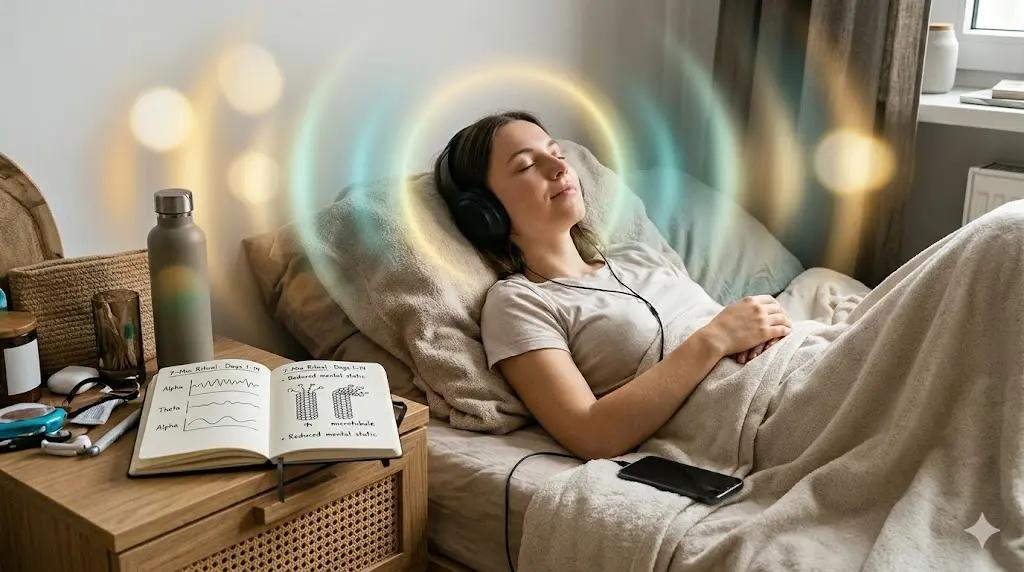
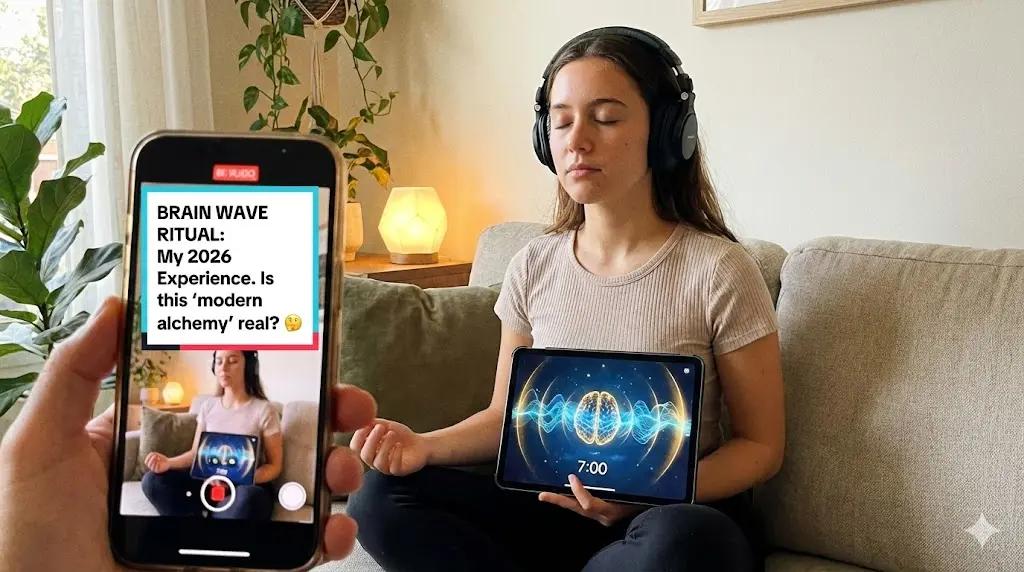
The Genius Wave is marketed as a digital audio experience—something you listen to (usually with headphones) for a short daily session. The core claim is that the sound pattern encourages your brain to drift into a theta‑dominant state. In practical terms, the product sits at the intersection of three 2026 mega-trends:
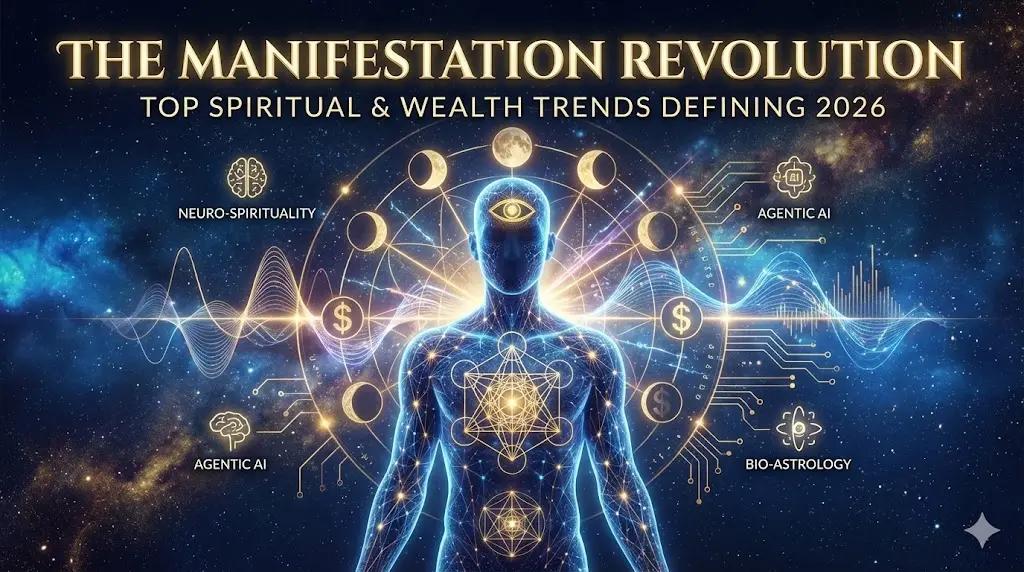
- Neuro-spirituality: using brain states as a gateway to deeper visualization and emotional rewiring.
- Nervous-system-first manifestation: regulating the body first, then working with beliefs.
- Micro-rituals: short, consistent sessions instead of hour-long practices that no one sustains.
If you strip away the dramatic language, the offer is an attempt to solve a real problem: most people can’t concentrate long enough to actually do visualization or scripting. Their mind is too noisy. The product’s pitch is: “Here—use sound to quiet the noise fast.”
Trend #1 in 2026: From ‘affirmations’ to ‘state engineering’
Traditional LOA content focused on words: affirmations, mantras, mirror talk. The 2026 evolution focuses on states: breathwork, somatic regulation, HRV tracking, and—now—audio protocols that attempt to shape attention.
Why? Because your brain doesn’t rewrite beliefs while it’s in a threat response. If your body feels unsafe, affirmations can feel like lying. State engineering changes the order of operations:
- Step 1: downshift the nervous system (safety signal).
- Step 2: access imagery + emotion (theta-like window).
- Step 3: insert new identity cues (scripts, intentions, decisions).
- Step 4: take one real-world action that proves the identity is not fantasy.
Trend #2: Theta as the new ‘creative currency’
Theta gets a mystical reputation online, but it’s also a practical concept. In many contexts, theta activity is linked with internal attention: memory processing, daydream-like imagery, meditation depth, and creative recombination of ideas.
In the abundance niche, theta is framed as a ‘wealth frequency.’ In a more grounded model, theta is a creative incubation state: the mental zone where you stop brute-forcing and start seeing connections.
What a theta-like session often feels like
- Your jaw unclenches and your breathing slows down.
- Thoughts still exist, but they feel farther away—less sticky.
- Images, memories, and ‘random’ insights pop up more easily.
- You feel emotionally softer—less defensive, less impatient.
- Time feels slightly distorted (12 minutes can feel like 3 or 30).
Theta isn’t a cheat code for money. It’s a cheat code for internal quiet, and quiet is where insight lives.
The science check (without the hype)
Let’s be precise. Audio can influence experience in at least two ways:
- Direct physiological calming: slow rhythm + predictable sound reduces arousal and helps the body downshift.
- Attention shaping: repeated tones can give your brain a single object to lock onto, reducing mental wandering.
The controversial part is entrainment—the idea that sound can reliably ‘drive’ brainwaves into a specific frequency. Research on binaural beats and similar methods exists, but outcomes vary based on the person, the protocol, and the measurement method. Many studies show small or inconsistent effects, and some show improvements in anxiety or sleep in certain settings.
A rational 2026 stance is this: audio is not magic; it is a context amplifier. If you already have a practice (journaling, meditation, visualization), audio can deepen it. If you have no practice, audio alone may feel pleasant but won’t rewrite your life.
Real-world reviews: what people love vs. what frustrates them
Most user feedback about programs like this tends to cluster into a few predictable buckets. (Important: outcomes vary wildly; treat any testimonial—positive or negative—as one data point, not universal truth.)
What fans often report
- A fast drop in mental chatter—especially for people who struggle to meditate.
- A ‘creative surge’ afterward: more ideas, clearer priorities, less avoidance.
- Better sleep onset when used as an evening ritual (not too late).
- A stronger feeling of motivation—because the nervous system feels calmer.
Common complaints
- “I felt relaxed but nothing changed.” (This is usually a missing action plan problem.)
- “I expected instant wealth.” (This is a marketing expectations problem.)
- “It didn’t work for me.” (Individual variability and inconsistent use are common.)
- “Support/access issues.” (Digital products often live or die by customer experience.)
How to use it like a pro (the 12-minute ritual framework)
If you treat this like a background track while scrolling, you’ll get background results. The highest ROI use is a structured micro-ritual that turns state into behavior.
The 12-minute protocol
- Minute 0–1 (Drop): Sit down, feet on floor, one hand on chest. One slow inhale, one long exhale. Tell your body: “No action needed right now.”
- Minute 1–12 (Listen): Eyes closed or soft gaze. Don’t force anything. If thoughts appear, label them: ‘thought’—and return to sound.
- Minute 12–15 (Capture): Immediately write 3 bullet points: (1) what you feel, (2) one insight, (3) one action for today.
- Minute 15–20 (Proof action): Do a 5-minute task that matches your intention—send the email, schedule the call, review finances, apply, publish, train.
If you don’t translate ‘state’ into ‘behavior,’ the state becomes entertainment.
The abundance angle (how this connects to wealth without fantasy)
Wealth isn’t only money. It’s capacity: focus, emotional regulation, and the ability to follow through. The ‘abundance’ benefit of a theta ritual is often indirect:
- Less self-sabotage: when arousal drops, you make fewer impulsive decisions.
- More creative options: calm brains generate more solutions, not just more worry.
- Better consistency: micro-rituals are easier to repeat than hour-long practices.
- Higher tolerance for uncertainty: regulated people can take smart risks.
In other words, a theta-like state doesn’t “attract money” like a magnet. It can reduce the internal noise that blocks skill-building, planning, and execution—the boring mechanics that actually create money.
Who this is for (and who should skip it)
Best fit
- You struggle with meditation because your mind won’t stop talking.
- You want a short daily ritual that lowers stress and improves clarity.
- You’re building a business or career and need help with focus and follow-through.
- You like somatic tools and want a structured ‘state shift’ before journaling.
Consider skipping (or be cautious)
- You expect a guaranteed financial outcome without changing behavior.
- You have a history of seizure disorders or strong sensitivity to sensory stimulation (consult a clinician).
- You experience panic when your body sensations change (start gently, daylight sessions).
- You’re looking for treatment for a medical or psychiatric condition—this is not a substitute for professional care.
The bottom line: how to judge it fairly
Judge The Genius Wave like you would judge any state tool: by consistency, fit, and downstream behavior. If it helps you become calmer, clearer, and more decisive, it’s doing its job. If you listen passively while staying in the same habits, nothing will change—because nothing is being asked to change.
The most honest framing is this: it’s a focus-and-state tool dressed in manifestation language. Used intelligently, that can be powerful. Used as a substitute for action, it becomes just another digital hope product.
Practical next steps
- Run a 14-day experiment: one 12-minute session per day at the same time.
- Pair the session with a 3-minute journal: feelings, insight, one action.
- Track one objective metric (sleep onset time, focus block completion, reduced late-night snacking).
- If the experience increases anxiety or discomfort, stop and consult a qualified professional.
Quick checklist
- I use the audio intentionally (not while scrolling).
- I capture one insight and take one action after each session.
- I track sleep and focus outcomes for two weeks.
- I keep expectations realistic: state → behavior → results.
- If symptoms worsen, I prioritize safety and professional guidance.
Important note: This article is educational and not medical advice. Results vary widely and depend on your baseline stress, sleep, habits, and consistency. If you have concerning symptoms or a medical condition, consult a qualified healthcare professional.